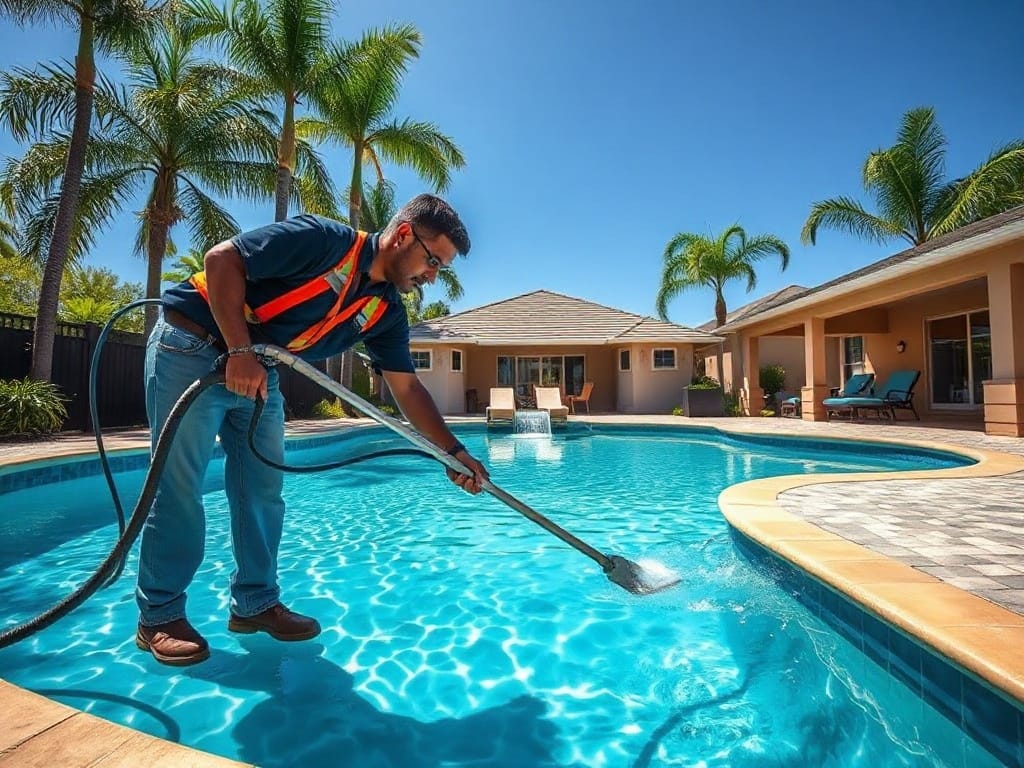
Owning a pool in Cooper City, FL, is one of the best investments a homeowner can make in South Florida’s year-round sunshine. Whether your home is tucked inside Embassy Lakes, backing up to a preserve in Pine Ridge, or nestled in one of the city’s many family-friendly subdivisions, your pool sees nearly constant use — and nearly constant chemical and mechanical stress. Pool service Cooper City residents rely on needs to be consistent, knowledgeable, and built around the specific conditions of Broward County water and weather. This guide covers everything you need to know about maintaining a healthy, crystal-clear pool in Cooper City year-round.
What Professional Pool Service Covers in Cooper City
A professional weekly service visit to a Cooper City pool covers the full range of maintenance tasks your pool needs to stay safe, balanced, and inviting. Understanding what is included — and what is not — helps you evaluate service proposals and avoid surprises on your monthly invoice.
Every standard weekly visit should include complete water chemistry testing using a calibrated multi-point test kit or photometer. This means testing free chlorine, combined chlorine, pH, total alkalinity, calcium hardness, cyanuric acid (stabilizer), and — for saltwater pools — salt concentration. Chemistry results drive chemical additions: chlorine shock or maintenance dose, pH increaser or decreaser, alkalinity buffer, calcium increaser, and stabilizer as needed. Guessing at chemistry instead of testing is the most common cause of persistent cloudy water and algae outbreaks in Cooper City pools.
Physical maintenance tasks during a weekly visit include skimming the water surface for leaves, insects, and debris; brushing pool walls, steps, and corners to disrupt biofilm before it becomes visible algae; and vacuuming the pool floor either manually or via an automatic cleaner head-check. Skimmer baskets and the pump strainer basket are emptied and rinsed, and filter pressure is checked against the baseline clean reading to determine whether a backwash or deep clean is due. Equipment is visually inspected — pump operation, timer settings, automatic cleaner performance, and any signs of leaks or unusual noise from the equipment pad.
What is typically not included in a standard weekly visit: equipment repairs, filter cartridge replacement, chemical remediation for severe algae (billed as a separate pool clean), and resurfacing or tile work. Confirm these scope boundaries with any service company before signing a recurring contract.
Cooper City’s Water Chemistry Challenges
Cooper City’s water supply comes from the Biscayne Aquifer, which produces some of the hardest tap water in Broward County. High mineral content — particularly calcium and magnesium — means Cooper City pools are prone to calcium scale formation on tile lines, in-pool surfaces, and inside plumbing and equipment. A pool filled with local tap water and left without proactive calcium management will develop rough, white calcium deposits within months of filling.
Proper calcium hardness management is one of the most overlooked aspects of pool chemistry in South Florida. The ideal range is 200 to 400 ppm. Below 150 ppm, water becomes chemically aggressive and begins etching plaster, grout, and chrome fittings. Above 500 ppm, the risk of scale on every wetted surface increases dramatically. In Cooper City, the challenge is almost always managing calcium that is too high, not too low — especially in smaller pools where evaporation concentrates the minerals faster than in large-volume pools.
pH drift is the other persistent chemistry challenge here. The combination of heavy bather loads, intense UV radiation breaking down chlorine, heavy summer rains diluting and shifting chemistry, and warm water that accelerates every chemical reaction creates constant upward and downward pH pressure. Maintaining pH between 7.4 and 7.6 is essential: below 7.2 causes eye irritation, equipment corrosion, and accelerated liner wear; above 7.8 dramatically reduces chlorine effectiveness and opens the door for algae and bacteria.
Cyanuric acid (CYA) stabilizer deserves special attention in Cooper City. CYA protects chlorine from UV degradation — essential in South Florida’s intense sun — but it accumulates over time and cannot be removed except by diluting or replacing pool water. High CYA (above 80 ppm) creates chlorine lock, a condition where chlorine is present in the water but chemically unavailable to sanitize. This is a frequent cause of persistent algae problems in pools that appear to have plenty of chlorine. An experienced service company monitors CYA levels and recommends a partial drain-and-refill before levels become problematic.
Keeping Algae Out of Your Cooper City Pool
Algae is the most common pool problem in South Florida, and Cooper City’s climate makes it a year-round challenge rather than a seasonal one. Water temperatures rarely drop below the mid-60s even in January, and from April through October, temperatures in the upper 80s create near-ideal conditions for algae growth. Add in Broward County’s high ambient humidity, shade from mature trees in established neighborhoods like Pine Ridge, and the inevitable chemistry fluctuations caused by summer thunderstorms, and you have a perfect environment for algae to take hold the moment chlorine drops.
Green algae — the most common type — blooms when free chlorine falls below 1 ppm. It appears first as a slight green tint to the water or a slippery film on pool walls. Left untreated, a Cooper City pool can turn fully green within 48 to 72 hours. Yellow (mustard) algae is harder to kill because it is chlorine-resistant; it clings to shaded walls and floor surfaces and requires phosphate removal and aggressive brushing alongside chemical treatment. Black algae is the most stubborn variety, sending roots into porous plaster surfaces; once established, it requires professional treatment and sometimes surface resurfacing to fully eliminate.
Prevention is far more cost-effective than remediation. A typical Cooper City pool clean to recover from a full green algae bloom costs $150 to $350, involves 10 to 50 pounds of shock, and may require three to seven days of recovery before the pool is swimmable again. Weekly professional service that maintains consistent chemistry eliminates this scenario almost entirely. Phosphate removal treatments added quarterly reduce the nutrient load that feeds algae growth between service visits.
Cooper City Neighborhoods We Serve
Cooper City is a compact southwest Broward city with a high concentration of pools per household, particularly in its planned communities and gated subdivisions. Most neighborhoods were built between the 1980s and early 2000s with standard gunite pool construction; newer phases have updated equipment including variable-speed pumps and LED lighting.
Embassy Lakes is one of Cooper City’s most prominent communities, with lakes, walking trails, and an active HOA. Embassy Lakes pools tend to be well-maintained, with homeowners who take pride in their backyard spaces. The neighborhood’s tree canopy introduces higher-than-average leaf and debris loads during dry season, which increases skimmer basket fill frequency between weekly visits.
Pine Ridge sits along the western edge of Cooper City near Flamingo Road and features a mix of older and updated homes with generous lot sizes. Mature pine and oak trees mean Pine Ridge pools see significant debris accumulation and occasional tannin staining from fallen leaves and seed pods, which requires regular phosphate and stain treatment as part of the service program.
Rock Island and the surrounding streets near the Cooper City town center offer a mix of residential pool sizes, from compact inground pools to full family-sized installations with attached spas. These homes often have older equipment from original construction and benefit from proactive equipment audits to identify pumps and filter systems nearing end of useful life.
Flamingo Gardens Estates and neighborhoods near the Flamingo Gardens botanical garden benefit from the green buffer but also deal with wind-carried seed pods and botanical debris during bloom season. Pool owners in these areas sometimes find their skimmer baskets filling faster than expected between service visits during spring and fall.
We also serve pool owners throughout central Cooper City, along Sheridan Street, Griffin Road, and University Drive corridors, and in newer subdivisions along the city’s southern and western edges bordering Pembroke Pines and Davie.
Storm Season Pool Care in Cooper City
Cooper City sits well inland compared to coastal Broward communities, but Broward County averages more than 55 inches of rainfall per year, the bulk falling between June and October. Summer thunderstorms don’t just dilute pool chemistry — they introduce contaminants, organic material, and nitrogen compounds that provide algae with food. Every heavy rain event should prompt a chemistry check and adjustment within 24 hours.
During active hurricane season, preparation is essential. When a tropical storm or hurricane watch is issued for Broward County, pool owners should lower the water level by 12 to 18 inches to accommodate anticipated rainfall and runoff. In Cooper City’s areas near the C-9 and C-10 drainage canals, overflow protection is a legitimate concern during major storm events. Loose patio furniture, umbrellas, potted plants, and pool equipment covers should be secured or brought inside to prevent them from becoming projectiles or landing in the pool.
Post-storm service is typically a separate visit in most service agreements, billed on a per-visit basis. A proper post-storm service includes removing all storm debris, testing and correcting chemistry (which can shift dramatically after a rain event), shock treatment, filter backwash, and equipment inspection. Skimping on post-storm service is one of the leading causes of algae blooms in South Florida pools during and after hurricane season.
Pool Equipment Maintenance in Cooper City
Most pools in Cooper City were built with single-speed pumps that run 8 to 12 hours per day and consume significant electricity. Broward County homeowners who upgrade to variable-speed pumps typically see monthly electricity savings of $50 to $120 depending on pool size, run time, and FPL utility rates. Variable-speed pumps also run quieter, generate less heat, and last longer than single-speed units because they spend most of their operating hours at lower RPM settings.
Filter maintenance depends on the filter type. Sand filters are the most common in older Cooper City homes and require backwashing when pressure rises 8 to 10 psi above the clean baseline — typically every four to six weeks in a well-maintained pool. Cartridge filters, more common in newer installations and pools with water features or spas, require cartridge removal and deep rinsing every three to six months and full cartridge replacement annually as media degrades. Diatomaceous earth (DE) filters offer the finest filtration but require DE powder recharging after each backwash and annual disassembly for heat exchanger and grid inspection.
Pool heaters in Cooper City are used primarily to extend the swimming season into the cooler months (November through February) rather than as year-round necessities. Gas heaters heat water faster than heat pumps but cost more to operate; heat pumps are more economical for steady-state heating when ambient air temperatures stay above 55 degrees Fahrenheit. Annual service of a gas heater should include burner inspection, heat exchanger check for calcium scale, and gas pressure verification. Heat pump service should include coil cleaning and refrigerant pressure confirmation.
Salt Water vs. Chlorine Pools in Cooper City
Saltwater pools have become increasingly popular in Cooper City over the past 15 years, and many homeowners assume they are maintenance-free or chemical-free. Neither is accurate. A saltwater pool uses an electrolytic chlorine generator (salt cell) to convert dissolved salt into chlorine, but the pool still contains chlorine — and still requires all the same chemistry management: pH, alkalinity, calcium hardness, cyanuric acid, and phosphate control, just like a traditional chlorine pool.
Salt cells require specific maintenance that traditional chlorine pools do not. The cell must be inspected and cleaned of calcium scale every three to four months; a fouled cell loses efficiency and fails to generate adequate chlorine, leading to algae blooms that surprise homeowners who assumed the saltwater system was handling everything. Most salt cells last three to seven years depending on water chemistry management; consistently high calcium or low pH dramatically shortens cell lifespan. Replacement cells for major brands range from $400 to $800 installed.
For Cooper City homeowners with saltwater pools, a service company experienced with saltwater system chemistry is essential. The high calcium content in Biscayne Aquifer water accelerates cell scaling compared to regions with softer water, meaning Cooper City salt cell owners should expect inspection every three months rather than the every-six-months recommendation manufacturers state for softer-water markets.
Choosing a Pool Service Company in Cooper City
Florida law requires pool service companies to hold a valid Pool/Spa Servicing license issued by the Florida Department of Business and Professional Regulation (DBPR). You can verify a company’s license status online through the DBPR website in under two minutes. Working with an unlicensed pool service company creates liability exposure for the homeowner if a service-related injury or equipment failure occurs on your property.
When evaluating pool service companies for your Cooper City home, ask specifically about their Cooper City service days, whether they provide written chemistry logs after each visit, and how they handle equipment failures discovered during a service visit. A professional company will photograph equipment issues, document them in a service report, and provide written estimates for any repair work before proceeding — not just fix things and add line items to your invoice.
Price comparisons should account for what is included in the monthly rate. A $95-per-month service that includes all chemicals differs substantially from a $75-per-month service that charges separately for chlorine, pH chemicals, and shock. In Cooper City’s climate, monthly chemical costs for an average residential pool run $40 to $80 depending on pool size, bather load, and seasonal chemistry demands. Chemistry-inclusive pricing is generally the better value for most homeowners in South Florida.
Pool Service Fort Lauderdale: Serving Cooper City with Broward Expertise
Our team at Pool Service Fort Lauderdale has served residential pool owners throughout Broward County for years, and Cooper City is a core part of our service territory. We understand the specific chemistry challenges of Biscayne Aquifer water, the debris loads that Embassy Lakes and Pine Ridge tree canopies create, the equipment heritage of Cooper City’s 1980s and 1990s pool builds, and the storm-season demands of Broward County’s summer weather.
Every service visit comes with a documented chemistry log you can review, a clear scope of work completed, and direct technician contact for any questions between visits. We don’t rotate crews across your account — the same technician handles your pool each week, so they know your equipment’s quirks, your pool’s seasonal chemistry patterns, and any ongoing issues before they arrive on your property.
We offer weekly service, bi-weekly service, one-time cleanups, and equipment repair referrals throughout Cooper City. Whether you have a 10,000-gallon splash pool, a 30,000-gallon family pool with spa and waterfall feature, or a saltwater system with a variable-speed pump, we have the chemistry knowledge and equipment experience to keep it performing at its best every week of the year.
Frequently Asked Questions About Pool Service in Cooper City
How often does a pool in Cooper City need professional service? Weekly service is the standard for residential pools in South Florida. The combination of year-round use, intense UV, warm water temperatures, and heavy summer rainfall creates constant chemistry pressure that bi-weekly or monthly service cannot adequately manage. Most Cooper City homeowners who switch from bi-weekly to weekly service see an immediate improvement in water clarity and a reduction in emergency algae calls.
What does pool service typically cost in Cooper City? Weekly full-service including chemicals runs $120 to $175 per month for an average residential pool in Cooper City, depending on pool size, equipment type, and the service company’s pricing model. Chemistry-separate pricing typically starts at $75 to $95 per month plus chemical costs. Always get a written scope of service before committing to a contract.
Is saltwater pool maintenance different in Cooper City? Yes. The high calcium content in Biscayne Aquifer water accelerates salt cell scaling compared to regions with softer water supply. Cooper City saltwater pool owners should expect to clean or inspect the salt cell every three months rather than every six months as recommended for softer-water markets.
What causes my Cooper City pool to turn green so quickly? Rapid algae growth is almost always caused by free chlorine falling below 1 ppm combined with water temperatures above 75 degrees Fahrenheit. In Cooper City, both conditions can occur simultaneously even in December. The trigger is usually a gap in service, heavy rain diluting chemistry, or a malfunctioning chlorine feeder or salt cell that stopped generating adequate chlorine.
Does my Cooper City HOA need to approve my pool service company? Most Cooper City HOAs allow homeowners to choose any licensed pool service company, but some gated communities — including parts of Embassy Lakes — require service vehicles to register with the HOA management office. Check your HOA governing documents or contact your property manager to confirm any vendor registration requirements before your first service visit.
Do you offer one-time pool cleanups in Cooper City? Yes. If your pool has turned green, has not been serviced in several weeks, or needs a post-storm recovery, we can schedule a one-time cleanup visit. A standard green-to-clean service in Cooper City typically requires one to three visits over five to seven days to fully recover water clarity, depending on the severity of the algae bloom and the starting chemistry.
Schedule Pool Service in Cooper City Today
Your Cooper City pool deserves consistent, professional care from a team that knows Broward County water and South Florida’s year-round pool demands. From Embassy Lakes to Pine Ridge to Rock Island, we serve Cooper City homeowners with the hands-on chemistry expertise and reliability that keeps pools crystal-clear every week. Contact us today to discuss a weekly service program built around your pool, your community, and your schedule.