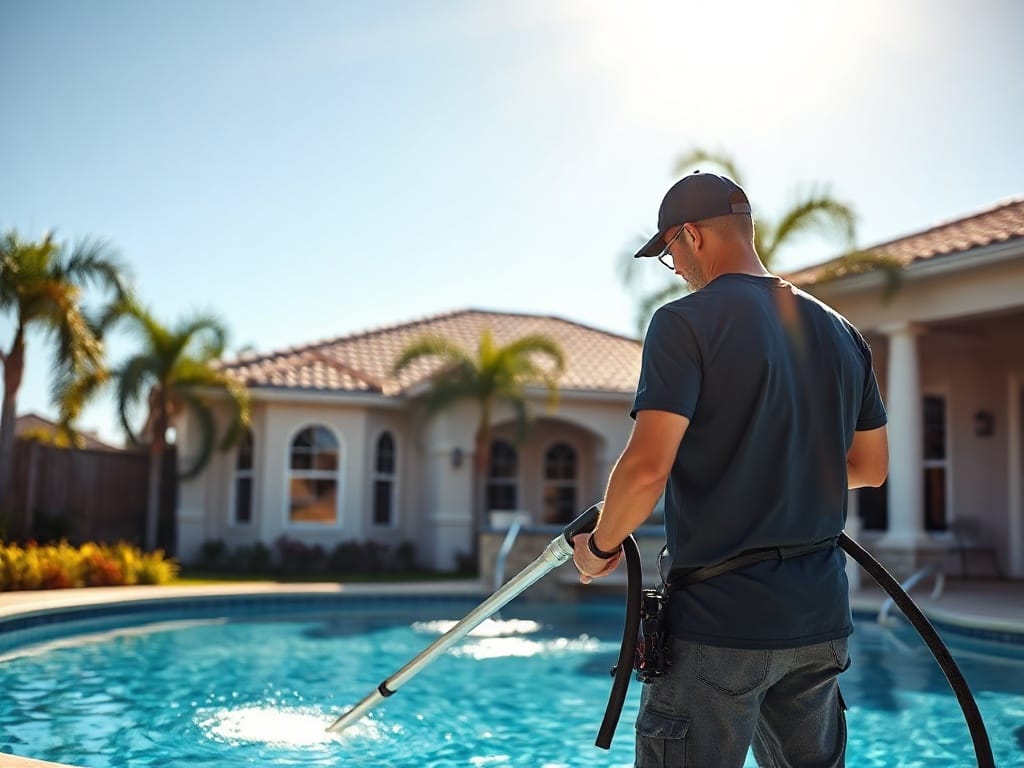
Coral Springs, FL is one of Broward County’s largest and most meticulously planned cities — a master-planned community built on the idea that green space, tree-lined streets, and quality of life should define a South Florida neighborhood. Pools are a fixture in Coral Springs, from the gated luxury estates of Heron Bay to the family-friendly subdivisions along Sample Road and Wiles Road. Pool service Coral Springs homeowners need must be reliable, chemistry-driven, and equipped to handle the specific demands of Broward County water and year-round South Florida heat. This guide walks you through everything that goes into keeping a Coral Springs pool healthy every week of the year.
What Professional Pool Service Includes in Coral Springs
A professional weekly service visit in Coral Springs covers the complete maintenance scope your pool needs to stay safe, balanced, and visually inviting. Knowing exactly what is included in your service agreement — and what falls outside it — is the first step toward a productive long-term relationship with any pool company.
Every visit should begin with full water chemistry testing using a calibrated photometer or multi-point test kit: free chlorine, combined chlorine, pH, total alkalinity, calcium hardness, cyanuric acid (CYA stabilizer), and salt concentration for saltwater pools. Chemistry data drives every chemical addition — chlorine dose, pH correction, alkalinity adjustment, calcium increaser, or stabilizer — and a company that skips testing and eyeballs chemical additions is the most common reason Coral Springs pools have ongoing clarity and algae problems.
Physical maintenance tasks during a standard visit include surface skimming for leaves and debris, wall and step brushing to break up biofilm before it hardens into visible algae, and floor vacuuming or automatic cleaner inspection. Skimmer baskets and the pump strainer basket are emptied and rinsed. Filter pressure is recorded and compared to the clean baseline to determine whether backwashing or a cartridge rinse is due. The equipment pad receives a visual inspection: pump audible check, timer and automation review, cleaner operation, and a scan for leaks at union fittings.
Scope items typically billed separately: equipment repairs, filter media replacement, green-pool chemical remediation (requires heavy shock loads and multiple follow-up visits), tile cleaning, and plaster or coping repairs. Clarify these boundaries in writing before committing to any service agreement in Coral Springs.
Pool Service Cost in Coral Springs: What to Expect
In Coral Springs, pool service costs generally align with broader trends across Broward County, but local factors do influence pricing nuances. For most residential pools, you can expect weekly service contracts to fall somewhere in the range of $100 to $150 per month. This estimate covers routine maintenance tasks such as chemical balancing, skimming, vacuuming, and equipment checks. Larger estate pools, common in communities like Heron Bay, will naturally push the price higher due to their increased surface area and more complex systems, sometimes exceeding that range by a significant margin.
Several factors drive these price variations. Pool size is the most obvious—maintaining a standard 12-by-24-foot pool requires less labor and fewer chemicals than managing a sprawling backyard aquatic setup. Equipment type also plays a crucial role. Pools equipped with single-speed pumps tend to be simpler to service but may lead to higher energy costs, whereas those with variable-speed pumps, heaters, and automation systems demand more specialized knowledge and calibration, which can increase service charges. The frequency of visits is another consideration; weekly service is standard, but some homeowners opt for bi-weekly or monthly visits, which affects the overall cost. Additionally, addressing a green pool or performing a “rescue” cleanup after neglect or a storm event can be significantly more expensive than routine maintenance, given the extra labor and chemical treatments required.
When considering affordability, it’s important to distinguish between a genuinely cost-effective service and one that cuts corners. A provider that skips thorough chemistry testing or fails to calibrate equipment correctly may offer a lower upfront price, but this often results in costly algae outbreaks, premature equipment wear, or even the need for replastering due to chemical imbalances. In the long run, investing in a reputable company that adheres to proper protocols protects your pool and your wallet.
Comparing Coral Springs to nearby Fort Lauderdale, pricing is largely comparable due to similar market conditions and demographics. However, slight differences may arise based on service density and travel time for technicians. Coral Springs’ more suburban layout means some areas near Wiles Road or the outskirts of Heron Bay might incur marginally higher fees than densely populated pockets closer to downtown Fort Lauderdale, where companies can service multiple clients in a tighter radius. Overall, understanding these factors will help you set realistic expectations and select a service that balances cost with quality and reliability.
Water Chemistry Challenges Specific to Coral Springs
Like all of Broward County, Coral Springs draws its municipal water supply from the Biscayne Aquifer — one of Florida’s primary freshwater sources and one that delivers naturally hard water with elevated calcium and magnesium content. This has direct consequences for every pool in the city. High calcium tap water accelerates scale formation on pool tile, interior plaster, and equipment components including heat exchangers, salt cells, and pump impellers.
The ideal calcium hardness range for a residential pool is 200 to 400 ppm. In Coral Springs, tap water regularly tests at the higher end of that range, meaning even freshly filled pools start with calcium levels that require monitoring. As pool water evaporates through South Florida’s heat and wind, dissolved minerals concentrate — every gallon of evaporation leaves its mineral load behind. Pools that lose 1 to 2 inches of water per week (typical for Coral Springs in summer) concentrate calcium steadily over months and years without partial drain-and-refill maintenance.
pH management is equally demanding here. Coral Springs pools face constant pH drift from multiple directions: CO2 off-gassing raises pH naturally; rain events lower it; bather activity introduces nitrogen compounds and lowers it further; and aeration from waterfalls, jets, and fountains drives pH upward. Maintaining the 7.4 to 7.6 target range requires weekly testing and adjustment — not monthly or “whenever it looks off.”
Cyanuric acid (CYA) accumulation is a chronic issue in South Florida pools. CYA protects chlorine from UV degradation, which is essential in Coral Springs’s near-constant sunshine, but it builds up with every stabilized chlorine tablet or granule addition and cannot be chemically removed — only diluted by replacing pool water. CYA above 80 ppm creates chlorine lock: chlorine is measurable in the water but largely inactive as a sanitizer. This is among the most common hidden causes of algae outbreaks in Coral Springs pools that otherwise appear to have adequate chlorine levels.
Algae Prevention in Coral Springs Pools
Coral Springs’s location in northwest Broward County means warm water temperatures year-round, high ambient humidity, and afternoon thunderstorms from late May through October that introduce organic nutrients and dilute chemistry. These conditions support algae growth in any pool that is not consistently maintained — and in Coral Springs, algae can go from invisible to a full green bloom in under 72 hours when conditions align.
Green algae is the most common variety and is directly tied to free chlorine levels dropping below 1 ppm. The slippery green film that homeowners notice on pool steps or walls is usually the first visible sign, followed quickly by overall water color shift. Mustard algae is chlorine-resistant and tends to appear on shaded surfaces — corners, behind ladder legs, along the waterline — and requires targeted phosphate treatments and aggressive brushing alongside superchlorination. Black algae, while less common, is the most difficult to eradicate because it embeds roots into porous plaster and requires mechanical removal and repeated concentrated chlorine treatment.
Phosphate control is an underappreciated component of long-term algae prevention in Coral Springs pools. Phosphates enter pool water through tap water, fertilizer runoff, decaying vegetation, and some pool chemicals. They serve as a primary nutrient source for algae. A quarterly phosphate treatment removes this food source and makes it significantly harder for algae to bloom even when chlorine dips temporarily. Many Coral Springs pool owners who add phosphate treatment to their service program report a noticeable reduction in algae calls over the following season.
Professional vs. DIY Pool Maintenance in Coral Springs
In Coral Springs, where the sun shines intensely and the humidity rarely lets up, maintaining a pool is a year-round challenge that often exceeds what most homeowners anticipate. The area’s high UV index and warm ambient temperatures accelerate the consumption of pool chemicals and create an environment ripe for rapid biological growth. While many pool owners attempt DIY maintenance, these natural factors often outpace their efforts. A weekly professional service schedule is more than just a convenience here; it’s a necessary routine to keep pools safe, balanced, and inviting.
One of the most common oversights by DIY pool owners in Coral Springs involves managing cyanuric acid (CYA) levels. Many rely on stabilized chlorine tablets, which continuously add CYA to the water. Over time, this buildup can reach levels that effectively “lock” chlorine, rendering it less effective at sanitizing the pool. Without professional testing, this critical chemical imbalance often goes unnoticed, leading to recurring algae problems and cloudy water. Technicians also catch early warning signs of equipment wear—such as unusual pump noises, dropping PSI readings, or a slow-moving cleaner—that homeowners typically miss until these issues become costly repairs.
The question of how often to service a pool is also crucial here. Broward County standards generally recommend weekly visits for residential pools, and for good reason. Extending service intervals to biweekly opens a window wide enough for algae to establish itself, especially in Coral Springs pools that receive direct sunlight for most of the day. That initial bloom can be difficult and expensive to eradicate once it takes hold, making consistent weekly maintenance the smarter investment.
While robotic cleaners have gained popularity and are a helpful supplement, they are not a substitute for professional service. These automated devices focus primarily on floor cleaning and do not address the chemistry of the pool, test cyanuric acid levels, inspect pressure gauges, or verify salt cell output in saltwater systems. These diagnostic steps require calibrated equipment and the experience to interpret trends over time—expertise that comes only with regular, professional attention.
Ultimately, the argument for professional pool service in Coral Springs isn’t just about saving time or avoiding effort. It’s about maintaining consistent water chemistry and catching equipment issues early, before they escalate. Without calibrated test kits and weekly comparative data, replicating the precision and preventative care that a professional technician provides is genuinely difficult for most homeowners. This is why, in a climate as demanding as ours, professional service remains the gold standard for pool maintenance.
Coral Springs Neighborhoods We Serve
Coral Springs spans more than 24 square miles and encompasses dozens of distinct neighborhoods, from gated luxury communities in the northwest to established family subdivisions in the city’s original core. Pool demographics vary widely across the city, and an experienced service company understands the differences between a 1980s gunite pool in the original Coral Springs grid and a 2010s resort-style pool in Heron Bay.
Heron Bay is Coral Springs’s premier gated master-planned community in the northwest corner of the city, straddling the Coral Springs-Parkland border. Heron Bay homes tend to have larger, newer pools with premium equipment packages — resort-style features, sun shelves, attached spas, saltwater systems, and automated controls. Many Heron Bay homes also have professional landscaping that introduces regular leaf and debris loads. The community’s HOA requires service contractors to carry appropriate licensing and insurance, and some sections require vendor registration in advance.
Ramblewood Estates occupies central-west Coral Springs and features medium to large residential pools in a neighborhood that has matured over the past 30 years. Ramblewood pools tend to be gunite construction with sand or cartridge filtration; many have been through one or more surface refinishes and equipment upgrades. The mix of mature tree cover and Florida sunshine creates a balanced debris and algae environment that responds well to a consistent weekly service program.
The Crossings and Wyndham Lakes in east-central Coral Springs offer a mix of older and updated pool homes on smaller lot footprints. These pools are often compact inground installations, 10,000 to 18,000 gallons, and are heavily used by families with young children — meaning high bather loads and corresponding chemistry pressure. Chlorine demand in heavily used family pools can be twice that of a lightly used adult household pool of the same size.
Box Canyon and the neighborhoods around Coral Ridge Drive and NW 29th Street represent some of Coral Springs’s original planned community housing stock from the late 1960s and 1970s. These older pools are due for or have recently undergone resurfacing; their equipment rooms often contain older single-speed pump motors that are prime candidates for variable-speed upgrades.
We service pool homes throughout Coral Springs, including communities along Sample Road, Wiles Road, Royal Palm Boulevard, and Coral Springs Drive, and in zip codes 33065, 33067, 33071, and 33076.
Pool Service Contracts and Emergency Repair in Coral Springs
A well-constructed pool service contract in Coral Springs should clearly outline the frequency of visits, specifying whether weekly, biweekly, or monthly maintenance is included. It’s essential that the contract delineates the exact scope of work—detailing what’s covered in routine service, such as skimming, brushing, vacuuming, and filter checks, versus tasks billed separately like equipment repairs or acid washes. Chemical costs deserve special attention; some contracts include chemicals in the flat rate, while others bill them at cost. Transparency here prevents surprises on your invoice. Termination terms are equally important; a reasonable contract allows either party to cancel with a 30-day notice. Anything requiring more than 60 days’ notice without cause is a red flag, locking homeowners into lengthy commitments with limited flexibility.
Beware of vague contract language such as “pool cleaning and chemicals as needed,” which leaves too much to interpretation and can mask additional fees. Equally concerning are undisclosed chemical markups that inflate costs without your knowledge. Automatic annual renewals tucked into fine print are another common pitfall, especially when they include price escalations that aren’t clearly communicated upfront. As a Coral Springs homeowner, you deserve a contract that’s straightforward and fair, avoiding these hidden traps.
When it comes to emergency pool repairs, timing is critical. Pools don’t break down on a schedule—pumps often fail right before big events like graduation parties, and salt chlorine generators can throw error codes during holiday weekends. Any reputable pool service company in Coral Springs should have a clear emergency response protocol and be upfront about whether emergency calls incur additional fees. Companies able to provide prompt, reliable answers demonstrate a level of professionalism and preparedness that sets them apart. Considering Coral Springs’ location—roughly 30 to 45 minutes from Fort Lauderdale’s coast—response time varies significantly depending on the company’s local presence. Technicians who regularly service areas along Wiles Road or Coral Ridge Drive can typically respond faster than those based solely in Fort Lauderdale, saving you valuable time when you need help most.
In addition to reliable service and emergency care, many Coral Springs homeowners are exploring eco-friendly pool care options that complement professional maintenance. Variable-speed pumps, for example, reduce energy consumption substantially and are often eligible for rebates through Broward County utilities. Mineral sanitizer systems can lower chlorine dependence, improving water quality with fewer harsh chemicals, while biodegradable algaecide alternatives protect your pool without harming nearby landscaping. These greener choices require precise chemical balance and monitoring—tasks best handled by trained technicians who understand the nuances of the Biscayne Aquifer’s influence on local water chemistry and the specific challenges of South Florida’s climate.
Storm Season Pool Care in Coral Springs
Coral Springs receives heavy summer rainfall — Broward County’s annual average exceeds 55 inches, concentrated from June through September. Heavy rain events don’t just add water to the pool; they dilute existing chemistry, lower pH, introduce phosphates and nitrogen compounds from surrounding landscaping, and can overwhelm a pool’s plumbing system if the water level rises too high. A post-rain chemistry check and adjustment should be part of every service protocol in Coral Springs during the wet season.
During named storms or hurricane warnings, the preparation checklist for Coral Springs pool owners includes lowering the water level 12 to 18 inches (creating capacity for rainfall runoff), adding a triple dose of algaecide to the water before the storm arrives, removing and storing all deck furniture and accessories, and shutting off automated equipment at the circuit breaker to protect against power surge damage from lightning strikes that are common in northwest Broward County storms.
Post-storm recovery is a specialized service that addresses the aftermath: debris removal, chemistry reset (storms can push pH, chlorine, and alkalinity wildly off target), filter backwash, and equipment inspection. Most Coral Springs service agreements treat post-storm visits as add-on calls rather than including them in the flat monthly rate. Budget for one to three post-storm visits per hurricane season as a normal operating cost of pool ownership in South Florida.
Pool Equipment Maintenance in Coral Springs
Variable-speed pumps are the single most cost-effective equipment upgrade available to Coral Springs pool owners with older single-speed motors. The energy savings are substantial — FPL customers running variable-speed pumps at optimized low-speed settings for circulation and higher speeds only during active cleaning cycles report monthly utility reductions of $50 to $120 on average, depending on pool size and prior run times. Variable-speed pumps also generate far less heat and vibration, extending equipment room lifespan.
Filter systems in Coral Springs pool homes span all three common types. Sand filters are the most prevalent in homes built before 2000 and require backwashing every four to six weeks during normal operation; the sand media itself needs replacement every five to seven years as it compacts and loses flow efficiency. Cartridge filters, standard in many pools built since 2005, deliver finer filtration than sand and eliminate the water waste of backwashing, but require cartridge removal and pressure washing every three to four months and full cartridge replacement annually. DE filters provide the finest water polishing and are commonly found in pools with attached spas or water features where clarity standards are highest.
Pool heaters in Coral Springs are primarily season-extension tools, used from November through March to maintain comfortable swimming temperatures on cooler Florida mornings and evenings. Heat pumps are the dominant choice for Coral Springs homeowners given the mild winter climate — ambient air temperatures rarely drop below the heat pump’s operating threshold for extended periods. Gas heaters remain the preferred option for spa heating, where rapid temperature rise is valued over operating economy.
Saltwater Pools in Coral Springs: What Owners Need to Know
Saltwater pool ownership has grown rapidly in Coral Springs over the past decade, driven largely by the appeal of softer-feeling water and the perception that saltwater systems reduce the maintenance burden. The reality is more nuanced. Saltwater pools produce chlorine continuously via electrolytic salt cells, delivering steady low-level sanitation — but they still require the full complement of chemistry management: pH, alkalinity, calcium hardness, CYA, and phosphates all need the same monitoring and adjustment as any chlorine pool.
Salt cell maintenance is the unique demand of saltwater ownership. Coral Springs’s hard Biscayne Aquifer water accelerates calcium scale buildup on salt cell plates compared to softer water regions. The result: cells that might need cleaning every six months in a soft-water market need cleaning every two to three months in Coral Springs. A fouled cell generates chlorine below its rated output, silently setting the stage for algae growth. Every annual service inspection should include a full salt cell removal, scale inspection, and acid wash if needed.
Automation systems — which control pool pumps, lighting, sanitization, and heating from a smartphone or wall panel — are common in Coral Springs’s higher-end pool installations. These systems streamline pool management but introduce their own service requirements: flow sensor calibration, controller firmware updates, and integration checks with salt cells and variable-speed pumps. An experienced service company can optimize automation scheduling to reduce energy costs while maintaining chemistry standards.
Choosing a Pool Service Company in Coral Springs
Florida’s DBPR requires all pool service companies to hold an active Pool/Spa Servicing Contractor license. License verification takes under two minutes on the DBPR website and protects you from liability exposure if an unlicensed contractor causes property damage or injury on your property. This verification step is especially important in Coral Springs, where Heron Bay and other HOA communities may require proof of licensing and insurance before allowing vendor access.
Chemistry logs are a basic expectation from any professional pool service company. A written or digital record of each visit’s chemistry readings, chemical additions, and service tasks performed is your evidence trail if a problem develops and your benchmark for monitoring whether your pool is trending toward or away from ideal parameters. Companies that don’t provide chemistry records after each visit are not providing professional-grade service.
Monthly pricing in Coral Springs ranges from $75 to $175 depending on pool size, service scope, and whether chemicals are included. Full-service with chemistry typically runs $120 to $160 for an average 15,000 to 20,000 gallon residential pool. Be skeptical of prices significantly below this range — below-market pricing usually means cut corners on chemistry testing, abbreviated visit times, or chemical costs charged separately at retail markup.
When selecting a pool service company in Coral Springs, it’s important to confirm that the technicians hold a valid Florida Pool/Spa Contractor license issued by the Construction Industry Licensing Board (CILB). This license is not just a formality—it’s a legal requirement for anyone performing service or repair work on pools and spas in Broward County. Holding this license means the company has met state-mandated standards for knowledge, experience, and financial responsibility. You can verify a contractor’s license status easily through the Florida Department of Business and Professional Regulation (DBPR) license lookup tool online. This step helps ensure you’re dealing with a legitimate, qualified professional who understands local regulations and industry best practices.
Equally vital is whether the technician or company has a Certified Pool Operator (CPO) certification. This credential signals that the individual has been trained specifically in pool chemistry, sanitation, and safety protocols. In Coral Springs, where we rely on the Biscayne Aquifer for water supply and face challenges like algae growth in our subtropical climate, handling pool chemicals correctly is critical. A CPO-certified technician will know how to balance water chemistry precisely, preventing damage to your equipment and ensuring a safe swimming environment.
Liability insurance and workers’ compensation coverage are not just bureaucratic details; they protect you and your property. If a technician accidentally damages your pool pump or cracks a fitting during service, or if an injury occurs on your property while work is underway, these insurances cover the costs and legal risks. Without them, you could be held financially liable for repairs or medical expenses, which is a risk no homeowner in Coral Springs should take lightly.
While Better Business Bureau (BBB) accreditation can be a helpful signal of a company’s reliability, it’s not the full story. Local online reviews on platforms like Google and Nextdoor often provide more nuanced, neighborhood-specific insights—especially from communities around Heron Bay or near Wiles Road where residents share firsthand experiences. Be wary of companies that avoid providing a license number, insist on cash-only payments, or refuse to offer a written service agreement. These are common red flags that suggest the company may not be operating transparently or professionally. Taking these factors into account will help you choose a pool service provider you can trust for both routine maintenance and unexpected repairs.
Pool Service Fort Lauderdale: Serving Coral Springs with Broward Expertise
At Pool Service Fort Lauderdale, we’ve built our business around the specific chemistry and climate demands of Broward County pools. Coral Springs is one of our core service areas — we know the hard water from the Biscayne Aquifer, the debris patterns in Heron Bay’s canopy neighborhoods, the salt cell maintenance demands of the area’s many saltwater systems, and the storm-season rhythms of northwest Broward County.
Our service model is built around consistency and transparency. The same technician handles your pool every week — no rotating crews, no guessing about your pool’s equipment history or chemistry baseline. Every visit produces a chemistry log with the readings and adjustments made, available for your review. Equipment issues are photographed, documented, and communicated before any repair work is authorized.
We offer weekly maintenance service, one-time pool cleanups, post-storm recovery visits, and equipment inspection and repair referrals throughout Coral Springs. Whether you’re in Heron Bay, Ramblewood Estates, The Crossings, or anywhere else in the city, contact us to discuss a service program that fits your pool and your schedule.
Frequently Asked Questions About Pool Service in Coral Springs
How often do pools in Coral Springs need professional service? Weekly service is strongly recommended for residential pools in Coral Springs. South Florida’s year-round warmth, high UV index, summer rainstorms, and heavy bather season create chemistry pressure that bi-weekly service cannot reliably manage. Pools on weekly service maintain more consistent chemistry, experience fewer algae events, and require less emergency chemical remediation over the course of a year.
What does weekly pool service cost in Coral Springs? Expect to pay $120 to $175 per month for full-service weekly maintenance including chemicals in Coral Springs. Chemistry-separate pricing starts around $75 to $95 per month before chemical costs, which typically add $40 to $80 monthly depending on pool size and usage. Always clarify whether chemicals are included before comparing quotes from different companies.
Does Heron Bay allow outside pool service contractors? Yes, Heron Bay homeowners can hire any licensed and insured pool service company. Some Heron Bay sections require contractor vehicles to register with the HOA management office prior to first entry. Contact your Heron Bay property manager to confirm the current vendor access protocol and any insurance certificate requirements before scheduling your first service visit.
Why does my Coral Springs pool develop algae so quickly in summer? Summer algae blooms in Coral Springs are driven by the combination of water temperatures in the upper 80s, intense afternoon thunderstorms that dilute chemistry and introduce phosphates, high bather loads during school vacation, and CYA accumulation that reduces effective chlorine activity. Consistent weekly chemistry management — particularly maintaining free chlorine above 2 ppm and CYA below 80 ppm — prevents the majority of summer algae events.
Can I maintain my Coral Springs pool myself? Some homeowners in Coral Springs successfully handle their own pool maintenance, particularly in cooler months when chemistry is more stable and algae pressure is lower. During the full South Florida summer (May through October), the chemistry management demands — multiple adjustments per week, post-storm recovery, CYA monitoring — are substantial enough that most homeowners find weekly professional service to be the more practical and cost-effective option when accounting for their time and chemical costs.
Do you service pools in all Coral Springs zip codes? Yes. We serve pool owners throughout Coral Springs, including zip codes 33065, 33067, 33071, and 33076, as well as the portions of Heron Bay that fall within Parkland’s 33076 zip code. Contact us to confirm service availability for your specific address and schedule a service day that works for your neighborhood.
How much does weekly pool service cost in Coral Springs, FL? In Coral Springs, weekly pool service typically ranges from $120 to $180 per month on a contract basis, which aligns closely with pricing throughout Broward County. Several factors influence the final cost, including the size of your pool—larger pools require more time and chemicals—and the complexity of your equipment, such as salt systems or automated cleaners. Whether chemical treatments are included also affects pricing; some companies charge extra for chemicals, while others bundle them into the service. If your pool has been neglected and requires green-pool remediation, expect additional surcharges to address algae and water balance issues. It’s important to remember that the lowest advertised price often means corners are cut, particularly with water chemistry testing. Skipping or using uncalibrated test equipment can lead to algae outbreaks, which end up costing far more in repairs and downtime than the initial savings are worth.
What pool safety regulations apply to residential pools in Coral Springs, FL? In Coral Springs, residential pools must comply with Florida Statute 515, known as the Residential Swimming Pool Safety Act. This law requires pool barriers—typically a fence at least 4 feet high—with a self-closing, self-latching gate to prevent unsupervised access. Additionally, door alarms are often required on doors providing direct pool access from the home. Pools must also be equipped with safety drain covers that meet the Virginia Graeme Baker Act standards to prevent entrapment hazards. Enforcement of these regulations falls under Coral Springs’ Building and Code Enforcement Department, as the city operates within Broward County’s jurisdiction. While many professional pool service companies here will point out obvious issues with pool barriers during routine maintenance visits, a formal safety inspection is a separate, more thorough process. Ultimately, staying compliant with these rules is not just a legal obligation but a critical safety measure for households with young children.
Get Started with Pool Service in Coral Springs
Coral Springs pools deserve professional care from a company that understands the city’s water, weather, and neighborhood demands. From Heron Bay to Ramblewood Estates to the original Coral Springs grid, we provide the consistent weekly chemistry management and responsive service that keeps your pool healthy and inviting every week of the year. Reach out today to discuss a service program built for your Coral Springs pool.