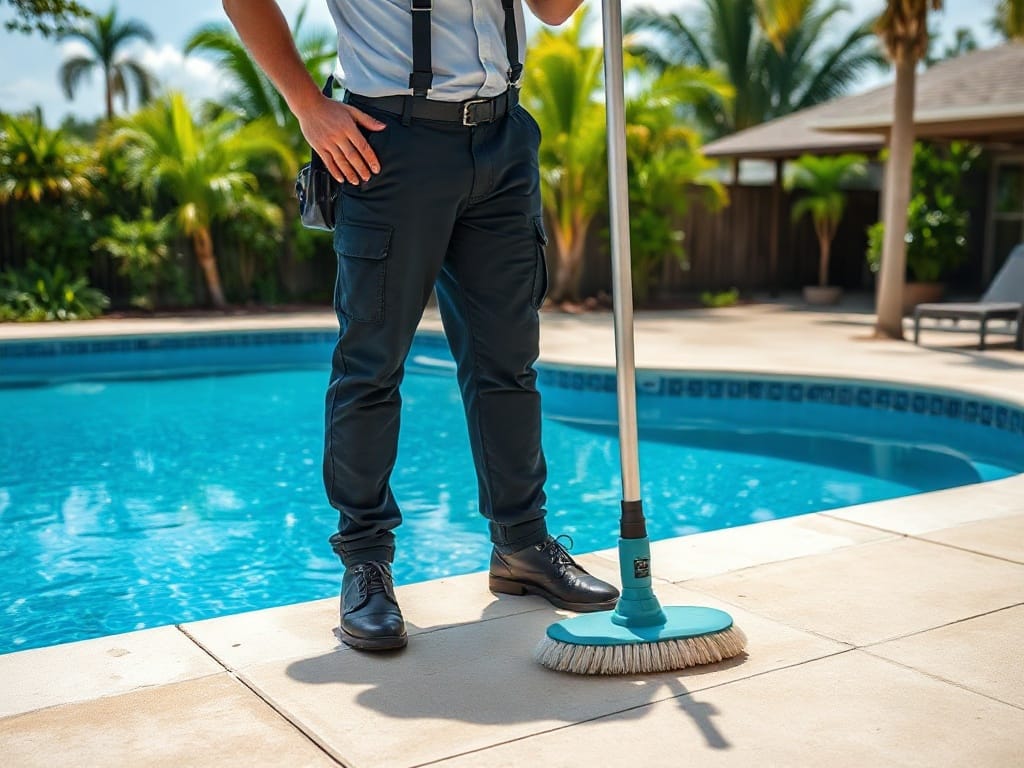
Lauderdale Lakes is a compact, densely settled city in central Broward County, bordered by Oakland Park to the north, Tamarac to the west, and Fort Lauderdale to the south and east. Its residential neighborhoods — developed primarily through the 1960s and 1970s — are home to a large population of year-round homeowners who use their pools throughout all twelve months of the South Florida calendar. For Lauderdale Lakes pool owners, pool service Lauderdale Lakes FL means consistent chemistry management, reliable weekly attention, and a service company that understands the specific demands of an inland Broward pool in a year-round occupancy household. This guide covers what Lauderdale Lakes pool owners need to know to keep their pools clean, balanced, and ready for use every week of the year.
What Professional Pool Service Covers in Lauderdale Lakes
A professional weekly pool service visit in Lauderdale Lakes covers the full maintenance scope that a South Florida pool requires to remain healthy and safe for regular use. Because Lauderdale Lakes households are primarily year-round residents — not seasonal occupants — pools here are in consistent active use, which means bather load chemistry pressure, sunscreen and body oil accumulation, and the demand for reliable sanitizer levels never really lets up.
A complete weekly visit includes full water chemistry testing: free chlorine, combined chlorine, pH, total alkalinity, calcium hardness, cyanuric acid, and salt for saltwater systems. Following the test, all chemistry is adjusted to target. Physical service includes surface skimming, wall and step brushing, floor vacuuming or automatic cleaner inspection, skimmer and pump basket emptying, filter pressure check, and a visual equipment inspection. This full-scope weekly visit is the baseline of responsible pool care in Lauderdale Lakes’ climate — not a premium tier.
Items billed separately from standard weekly service include equipment repairs, filter media replacement, algae remediation requiring heavy chemical treatment and follow-up visits, and one-time cleanup visits after storms or extended neglect. Confirming scope and billing terms in writing before starting service avoids disputes about what is included at the monthly rate.
Water Chemistry in Lauderdale Lakes: Hard Water Year-Round
Lauderdale Lakes pool water comes from Broward County’s Biscayne Aquifer municipal supply — hard water with naturally elevated calcium and magnesium that creates scale formation risk on tile lines, plaster surfaces, and salt cell plates. Calcium hardness should be maintained between 200 and 400 ppm. In Lauderdale Lakes’ inland location, pools do not benefit from the minor dilution effects that oceanside communities receive from periodic rainfall-driven partial water exchange. Evaporation during summer drives calcium concentration upward in pools that do not receive proactive dilution management, and levels above 500 ppm over extended periods lead to visible scale accumulation that damages surfaces over time.
pH management is central to weekly service in any South Florida pool. Lauderdale Lakes pools should be maintained between 7.4 and 7.6. The Biscayne Aquifer’s naturally alkaline source water trends pH upward, and the consistent warm temperatures that Lauderdale Lakes experiences year-round mean pH drift happens faster than in pools located in cooler climates. Pools with automated equipment running long daily cycles — common in year-round households — experience additional pH upward pressure from aeration during filtration. Weekly pH testing and correction is not optional; it is the foundational chemistry task of every service visit.
Cyanuric acid accumulation is a routine concern in Lauderdale Lakes pools maintained on stabilized chlorine tablets. CYA does not break down under normal pool conditions and builds steadily with each tablet addition. When CYA climbs above 80 ppm, chlorine effectiveness drops substantially — a pool can show 3 ppm free chlorine and still be unable to suppress algae growth because the high CYA level neutralizes the sanitizer’s effectiveness. The corrective action is a partial drain-and-refill, which a service company tracking CYA quarterly will recommend before it reaches the problematic range. Pools that have never had a partial drain-and-refill and have relied on stabilized tablets for several years should have their CYA tested and assessed as a priority.
Older Pool Stock in Lauderdale Lakes: Equipment Age and Assessment
Lauderdale Lakes’ residential construction peaked in the 1960s and 1970s, and a significant share of private pools in the city were installed during that same era or in the decades immediately following. This means a large proportion of Lauderdale Lakes pool equipment is operating at or well beyond its designed service life. Understanding what that means in practical terms is important for any homeowner taking on a new service relationship or trying to establish realistic maintenance expectations for an older installation.
Single-speed pumps installed before roughly 2005 run at constant high RPM regardless of the filtration task at hand — they are less energy-efficient than modern variable-speed pumps and create higher operating costs per filtering hour. More importantly, they are old. A single-speed pump installed in the 1990s that is still running has significantly exceeded the typical 8 to 12 year service life expectation. These pumps tend not to fail with warning; they fail suddenly, often in the middle of the summer swim season. A service company performing an initial assessment on a Lauderdale Lakes property should note pump age and condition clearly, so the homeowner can plan a proactive replacement rather than respond to an emergency failure.
Older plaster finishes — pool surfaces that have not been resurfaced in 15 or more years — develop a rough, porous texture that makes algae attachment significantly easier and more persistent. A chemically clean pool with aged plaster will show algae staining faster and more stubbornly than one with a fresh surface. While plaster resurfacing falls outside weekly service scope, a good service company will document plaster condition honestly and explain what a deteriorating surface means for the chemistry effort required to keep the pool looking clean. Lauderdale Lakes homeowners with pools installed in the 1970s or 1980s that have never been replastered should have that conversation proactively.
Filter equipment of the same vintage is subject to the same assessment logic. Older sand filters with original sand media — sand that has never been changed — have long since lost their rated filtration efficiency. Sand media should be replaced every five to seven years under normal South Florida use conditions. A filter running on decade-old media is circulating water without effectively removing the fine particles and contaminants that a fresh bed of #20 silica sand would capture. Cartridge filter elements have a shorter replacement cycle — typically one to two years with regular cleaning. These are not large expenses relative to the cost of the pool itself, but they are often deferred longer than they should be.
Year-Round Pool Use in Lauderdale Lakes
Unlike communities with high concentrations of seasonal residents, Lauderdale Lakes is an overwhelmingly year-round residential city. Pools here are used in January and July alike, and the chemistry demands of an actively used pool do not follow a seasonal schedule. Bather load introduces nitrogen compounds, body oils, sunscreens, and organic matter that consume chlorine and drive combined chlorine (chloramines) upward even in winter months when bather frequency might be somewhat reduced. A pool used by a family year-round in Lauderdale Lakes needs the same disciplined weekly chemistry management in February that it needs in August.
This continuous use pattern also means that any equipment failure has immediate impact on the household’s pool experience. A pump that fails in a seasonal community might go unnoticed for weeks; in Lauderdale Lakes, it is noticed within days. This makes the proactive equipment condition documentation described above not just a financial planning tool but a practical quality-of-life consideration for families who depend on their pool being operational throughout the year.
For households where the pool is used heavily by children, combined chlorine management becomes particularly important. Combined chlorine above 0.5 ppm produces the characteristic chlorine smell and eye irritation that many people mistakenly attribute to “too much chlorine” — in fact it results from too little free chlorine relative to the bather load. Superchlorination (shocking) breaks combined chlorine down and restores free chlorine effectiveness. In a heavily-used year-round Lauderdale Lakes pool, periodic shock treatment is a routine chemistry tool, not an emergency response.
Lauderdale Lakes Neighborhoods and the City’s Lakes
Lauderdale Lakes takes its name from the several freshwater lakes within and adjacent to the city, including Lake Lauderdale. Residential properties near these lakes — particularly those with rear yards or fences abutting the lakefront — accumulate windblown organic debris from the water and lake-bank vegetation at a higher rate than interior-lot properties. This translates to heavier skimmer and basket debris loads after windy days, higher phosphate loading from organic decomposition products, and slightly more frequent algae pressure for pools in close proximity to the water.
Phosphate removal treatment is a useful preventive tool for lakefront and lake-adjacent Lauderdale Lakes pools. Phosphates are a primary nutrient source for algae, and when they build in a pool above roughly 100 ppb, algae suppression becomes harder even with adequate chlorine levels. Quarterly phosphate testing and removal keeps the nutrient baseline low enough that routine weekly chlorine management remains effective without requiring chemical escalation.
The city’s residential neighborhoods west of SR-7 (US-441) and east toward the Fort Lauderdale boundary share the same basic chemistry and equipment demands. The primary differentiator between accounts is pool age and equipment vintage — a 1970s installation in the neighborhoods west of the Turnpike presents different service considerations than a renovated pool in the same area. A service company doing an honest first-visit assessment documents both accurately and sets realistic expectations for what weekly service will accomplish and what will require capital investment in the pool itself.
Hurricane Season Pool Care in Lauderdale Lakes
Lauderdale Lakes’ inland location provides somewhat more buffer from direct storm surge than oceanfront and Intracoastal communities, but tropical storms and hurricanes that make landfall on the Broward coast deliver significant rainfall and wind damage well inland. Pool hurricane preparation is a June 1 through November 30 standing discipline for Lauderdale Lakes homeowners, not a last-minute scramble when a named storm appears on the forecast.
Standard pre-storm protocol: lower the pool water level 12 to 18 inches below the waterline to accommodate heavy rainfall without overflow, add a shock treatment and triple-dose algaecide to sustain chemistry through the storm period, remove all loose deck furniture and accessories from the pool area, and shut off equipment circuit breakers to protect pumps, motors, and automation systems from power surges. Do not run the equipment during the storm.
Post-storm recovery in Lauderdale Lakes pools typically involves chemistry reset after rainfall dilution, debris removal, and equipment restart inspection. Older Lauderdale Lakes pool equipment deserves particular attention on equipment restart after a storm — checking pump priming, inspecting for debris in impeller housings, and confirming automation settings before resuming normal run cycles. A post-storm service visit from your pool company within 24 to 48 hours of the storm’s passing is the most efficient way to restore the pool to normal operating condition before algae can establish in the chemistry gap the storm created.
Algae Prevention in Lauderdale Lakes Pools
Algae prevention in Lauderdale Lakes pools follows the same fundamentals as throughout Broward County: consistent weekly chlorine management, pH control, and CYA monitoring. The specific pressure point in Lauderdale Lakes is the combination of year-round bather load, summer water temperatures above 85 degrees, and the older plaster surfaces common in the city’s pool stock. Rough plaster provides more surface area for algae attachment than smooth, fresh surfaces — meaning that chemistry management that is adequate for a newer pool may be insufficient for an older Lauderdale Lakes installation with degraded plaster.
Green algae blooms in Lauderdale Lakes pools are almost always traceable to one of three root causes: chlorine allowed to drop to zero or near-zero between service visits (often from a service schedule gap or equipment failure), CYA that has climbed high enough to neutralize chlorine effectiveness, or a partially fouled salt cell in a saltwater pool that is producing less chlorine than the controller display suggests. A service company that correctly diagnoses root cause rather than simply treating the visible algae prevents recurrence; one that treats the bloom without investigating cause will be back for another remediation visit within weeks.
Choosing a Pool Service Company in Lauderdale Lakes
Florida DBPR license verification is the baseline requirement for any pool service company in Lauderdale Lakes — a 30-second check on the DBPR website that confirms a company is operating legally and has met the state’s minimum training and examination requirements. Beyond licensing, Lauderdale Lakes homeowners with older pool installations should specifically ask prospective service companies whether they document equipment condition during their first visit and how they communicate equipment concerns that fall outside the weekly service scope. A company that does an honest first-visit assessment and documents aging equipment clearly is a more valuable long-term partner than one that simply starts weekly service without raising the equipment condition questions a 50-year-old pool may require.
Ask about chemistry logging. A service company that records test results after every visit and makes them accessible to you provides accountability and a historical record that is valuable for diagnosing recurring problems, planning for dilution cycles, and tracking seasonal chemistry patterns. It is also protection against the common complaint that a pool deteriorated during service without the homeowner knowing why — chemistry logs make the timeline factual rather than disputed.
Pricing for weekly full-service with chemicals in Lauderdale Lakes runs $120 to $175 per month for standard residential pools, consistent with Broward County norms. Chemistry-separate pricing starts at $75 to $95 per month before chemical costs. Lauderdale Lakes’ typically smaller pool footprints — characteristic of 1960s and 1970s residential construction — mean that most accounts fall in the lower to mid range of this pricing band.
Pool Service Fort Lauderdale: Serving Lauderdale Lakes Year-Round
At Pool Service Fort Lauderdale, we serve Lauderdale Lakes pool owners with the consistent weekly service that year-round residential households depend on. We understand Broward County’s hard-water chemistry, the equipment age considerations common in Lauderdale Lakes’ pool stock, and the year-round chemistry discipline that active family pool use requires.
Chemistry results are documented after every service visit. Your assigned technician maintains continuity on your account — equipment history, chemistry patterns, and any known concerns are tracked and not lost between visits. Equipment issues are documented, photographed, and communicated to you for a decision before any repair work is authorized.
We offer weekly maintenance service, one-time cleanup visits for post-storm or long-neglect recovery, and equipment inspection referrals throughout Lauderdale Lakes. Contact us to discuss a weekly service program built around your pool and your household.
Frequently Asked Questions About Pool Service in Lauderdale Lakes
How often should a Lauderdale Lakes pool be serviced? Weekly service is the correct frequency for residential pools in Lauderdale Lakes. South Florida’s year-round warm water temperatures mean algae pressure does not stop during winter months, and year-round household use creates consistent bather load chemistry demand. Bi-weekly service schedules in Lauderdale Lakes leave too long a gap between chemistry corrections and are a primary driver of recurring algae problems in pools that otherwise receive adequate care during the service visit itself.
Our pool is from the 1970s — what should we expect from a service company? A service company doing an honest first visit on a 1970s Lauderdale Lakes pool should assess and document pump age and condition, filter media age, plaster condition, and any visible equipment corrosion or degradation. You should receive a clear-eyed picture of what weekly service will maintain versus what will require capital investment in the pool itself. A company that starts weekly service without raising these questions is not giving you the complete picture that older pool ownership in Lauderdale Lakes requires.
Why does my Lauderdale Lakes pool smell like chlorine even though we just serviced it? The characteristic chlorine smell in pool water is almost always caused by combined chlorine (chloramines) rather than free chlorine — it indicates that chlorine has been consumed by organic compounds introduced by bathers rather than remaining available as sanitizer. The fix is superchlorination (shocking), which breaks down combined chlorine and restores free chlorine effectiveness. In a year-round household with regular swimmers, periodic shock treatment should be a routine part of the service program, not an emergency response to an odor complaint.
What does pool service cost in Lauderdale Lakes? Weekly full-service with chemicals runs $120 to $175 per month for standard residential pools. Lauderdale Lakes’ typically smaller pool footprints from the 1960s-1970s construction era mean most accounts fall toward the lower end of this range. Chemistry-separate pricing starts at $75 to $95 per month. Equipment repair and filter media replacement are billed separately at time of service.
How do we know when our pool needs a partial drain-and-refill? The primary indicator is cyanuric acid (CYA) above 80 ppm, which progressively neutralizes chlorine effectiveness. Secondary indicators include total dissolved solids rising to a level where water clarity and chemistry responsiveness are affected. In Lauderdale Lakes pools using stabilized chlorine tablets without regular dilution, CYA can reach the problematic range within one to two years of continuous use. A service company tracking CYA quarterly will recommend a partial drain before problems appear rather than after algae establishes.
Do properties near the Lauderdale Lakes lakes need different pool service? Properties with rear yards adjacent to Lake Lauderdale or other city waterways accumulate windblown organic debris and phosphates at a higher rate than interior-lot properties. The practical difference is higher skimmer debris loads after windy days and elevated phosphate levels that increase algae pressure when chlorine dips. Quarterly phosphate testing and removal treatment is a worthwhile addition to the standard weekly service protocol for lakefront and lake-adjacent Lauderdale Lakes pool accounts.
Get Started with Pool Service in Lauderdale Lakes
Lauderdale Lakes pool owners — whether in a 1970s home with an older pool or a more recent renovation — deserve consistent, honest professional service throughout the year. Year-round residential use means there is no off-season from chemistry management, and a service company that understands the equipment age profile and hard-water chemistry of Lauderdale Lakes pools provides significantly more value than one offering generic South Florida service. Contact Pool Service Fort Lauderdale today to discuss a weekly maintenance program built around your pool.