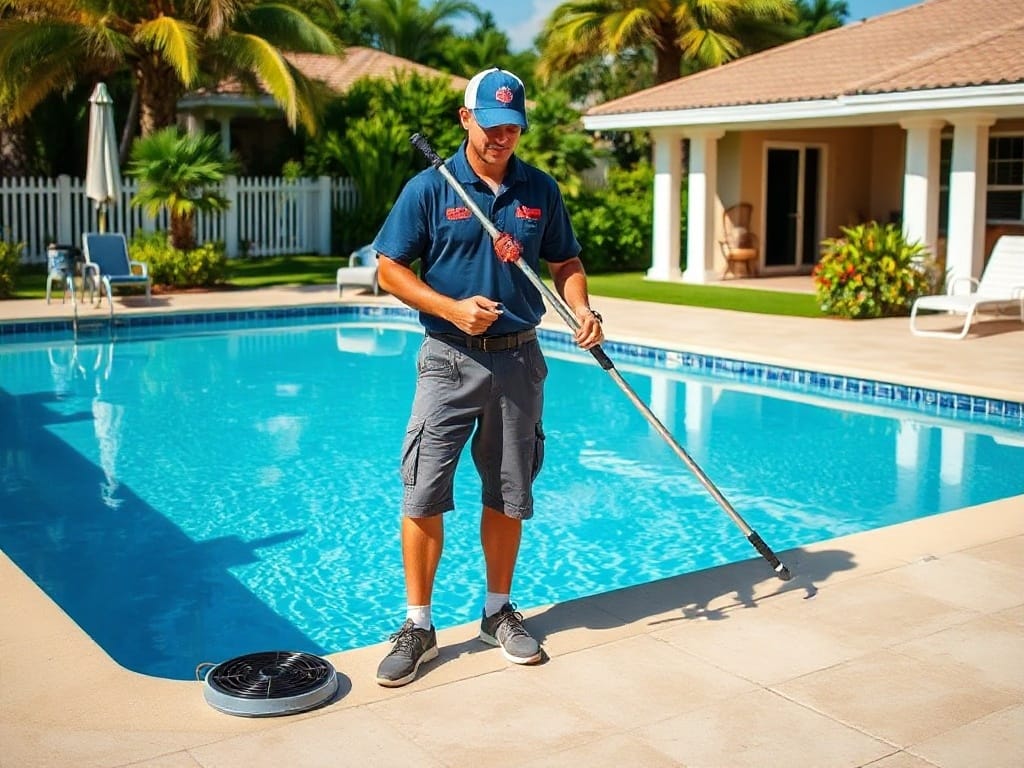
Pompano Beach is a coastal city in northern Broward County — the self-described “Fishing Capital of the World” — stretching from the Atlantic Ocean west through a mix of waterfront estates, established inland neighborhoods, and suburban residential zones. Its geography spans oceanfront and Intracoastal properties with direct exposure to coastal salt air, inland neighborhoods insulated from the most intense marine environment, and a waterfront marina district along the Intracoastal that defines the city’s character as much as its beaches. For Pompano Beach pool owners, pool service Pompano Beach FL involves the same hard-water chemistry management common throughout Broward alongside the coastal equipment corrosion considerations that the city’s marine environment demands — particularly for homes near the ocean, Intracoastal, and the canals that run throughout the city’s eastern zones. This guide covers what Pompano Beach homeowners need to know to keep their pool properly maintained year-round.
What Professional Pool Service Covers in Pompano Beach
A complete weekly service visit in Pompano Beach covers full water chemistry testing — free chlorine, combined chlorine, pH, total alkalinity, calcium hardness, cyanuric acid, and salt for saltwater systems — with all parameters adjusted to target. Physical service includes surface skimming, wall and step brushing, floor vacuuming or automatic cleaner inspection, skimmer and pump basket emptying, filter pressure check, and visual equipment inspection with particular attention to corrosion indicators in coastal zone accounts.
Items billed separately include equipment repairs, filter media replacement, algae remediation, and post-storm recovery. For coastal Pompano Beach properties, annual equipment inspection should be included in the service program as a scheduled event rather than performed only in response to visible problems — corrosion in marine environments progresses on a schedule that a reactive approach consistently misses until damage is significant.
Water Chemistry in Pompano Beach: Hard Water Year-Round
Pompano Beach pool water comes from Broward County’s Biscayne Aquifer municipal supply — hard water with elevated calcium and magnesium. Calcium hardness should be maintained between 200 and 400 ppm. Summer evaporation drives calcium concentration upward in pools that do not receive periodic dilution; scale formation on tile lines, plaster surfaces, and salt cell plates is the endpoint of unmanaged hardness. Pompano Beach’s coastal location means pools near the ocean and Intracoastal experience ambient salt air that can affect equipment surfaces, but pool water chemistry from the municipal supply is consistent with the rest of Broward County’s hard-water profile.
pH management is central to weekly service throughout Pompano Beach. Pools should be maintained between 7.4 and 7.6. The Biscayne Aquifer’s alkaline source water and aeration from filtration equipment consistently push pH upward, requiring weekly acid additions in most accounts. Coastal aeration from ocean breezes compounds this effect for oceanfront and near-ocean properties. High pH reduces chlorine effectiveness, accelerates scale formation, and causes swimmer discomfort — the weekly pH correction is the foundational chemistry task at every service visit.
Cyanuric acid tracking and periodic partial drain-and-refill cycles are the same Broward-wide discipline throughout Pompano Beach. CYA above 80 ppm reduces chlorine effectiveness; the corrective action is a partial drain-and-refill. Service companies should track CYA quarterly and recommend dilution proactively. Pompano Beach has a mix of seasonal and year-round residents, and pools used seasonally that return to use in winter benefit from a chemistry reset — including CYA assessment — as part of the reactivation service.
Salt Air and Equipment Corrosion in Pompano Beach
Pompano Beach’s eastern neighborhoods — the oceanfront corridor, the Intracoastal waterfront communities, and the residential streets within roughly a mile of the beach — sit in a chronic salt air environment that accelerates corrosion on pool equipment at a rate that inland Broward service protocols do not address. Salt air deposits sodium chloride on pump housings, filter casings, heater cabinets, automation controller enclosures, and electrical connections continuously. In Pompano Beach’s coastal zone, this is not an occasional event — it is a daily process driven by prevailing onshore winds off the Atlantic.
The practical effects are progressive: surface rust on steel components, oxidation of aluminum housings, corrosion at electrical terminals and junction boxes leading to intermittent sensor failures and automation errors, and eventually structural degradation of equipment enclosures that allows moisture intrusion into sensitive electronics. Pool equipment in Pompano Beach oceanfront and Intracoastal-adjacent homes reaches corrosion-related failure significantly sooner than identical equipment installed in the city’s western inland neighborhoods.
Annual corrosion inspection — checking pump motor vent screens for salt clogging, inspecting heater cabinet seams and louvers for rust progression, applying dielectric grease to electrical connections, and flagging any enclosure damage that allows direct moisture exposure — is the preventive practice that extends equipment service life in Pompano Beach’s coastal zone. It adds five to ten minutes to an annual review and can prevent equipment failures that arrive without warning at the worst possible time.
Hillsboro Inlet and Waterfront Pools in Pompano Beach
Hillsboro Inlet — the navigable inlet connecting the Intracoastal Waterway to the Atlantic at the northern end of Pompano Beach — is the city’s defining maritime landmark and the center of its fishing and boating culture. Residential properties in the Hillsboro Inlet area, along the north side of the inlet and in the communities extending south along the Intracoastal toward central Pompano Beach, occupy some of the most heavily salt-air-exposed residential addresses in Broward County. For pool owners in this zone, the corrosion management practices described above are not optional enhancements — they are maintenance requirements that the exposure environment demands.
Canal-front residential communities throughout Pompano Beach’s eastern zones share similar exposure profiles with slightly less intensity than direct oceanfront and inlet-adjacent properties. The Intracoastal and connecting canals create the same windblown salt air and phosphate loading from waterway organic material that affect pools throughout Broward’s coastal zone. Pre-storm water level reduction is particularly important for canal-adjacent Pompano Beach properties given canal level behavior during heavy rainfall events associated with tropical weather.
Pompano Beach Neighborhoods We Serve
Pompano Beach oceanfront and east of Federal Highway (US-1) is the highest-intensity salt air zone in the city. Pools in this corridor — whether oceanfront condominiums with private deck pools or single-family homes in the beach neighborhood streets — face the most aggressive corrosion environment of any residential pools in northern Broward County. Annual equipment corrosion inspection is standard practice here.
Palm Aire is an established country club community along Palm Aire Drive in central-west Pompano Beach — a mix of condominiums and single-family homes with private pools built primarily through the 1970s and 1980s around the Palm Aire golf courses. Equipment age in Palm Aire’s older single-family sections follows the same profile as other northern Broward 1970s-1980s residential communities, with the older pump, filter, and plaster considerations that apply across that construction era.
Collier City and interior Pompano Beach neighborhoods west of Federal Highway represent the city’s more inland residential stock — similar Biscayne Aquifer hard-water chemistry, reduced (but not absent) salt air exposure compared to the coastal zone, and a range of pool vintages spanning the city’s development history.
North Pompano Beach communities near the Deerfield Beach border and Hillsboro Inlet area represent some of the city’s most desirable waterfront residential addresses, with the full coastal-zone equipment demands that proximity to the inlet and ocean creates.
We serve pool owners throughout Pompano Beach, including the coastal corridor, Palm Aire, and all residential neighborhoods in zip codes 33060, 33062, 33064, and 33069.
Hurricane Season Pool Preparation in Pompano Beach
Pompano Beach’s coastal location places it directly in the path of hurricanes approaching from the east — the Atlantic and Gulfstream corridor from which most South Florida storm threats originate. Standard pre-storm protocol: lower pool water 12 to 18 inches, add shock and triple-dose algaecide, remove all loose deck furniture and accessories, shut off equipment circuit breakers. For oceanfront and Intracoastal properties, securing or storing any automation system components with external mounting that could be affected by storm surge or flying debris is additional preparation worth considering.
Post-storm chemistry reset, equipment inspection before restart, and a service visit within 24 to 48 hours applies throughout Pompano Beach. Coastal and Intracoastal properties should also inspect for salt spray intrusion into equipment enclosures following major storm events — a storm that drives concentrated salt spray into cabinet seams can accelerate months’ worth of normal corrosion progression in a single event.
Choosing a Pool Service Company in Pompano Beach
Florida DBPR license verification is the baseline. Pompano Beach coastal zone homeowners — oceanfront, Intracoastal, and Hillsboro Inlet area — should specifically ask prospective service companies about their annual corrosion inspection protocol and what it covers. A company that cannot describe what they check during a corrosion inspection is not performing one. Ask whether they apply dielectric grease to electrical connections, what they look for on heater cabinet seams, and how they document findings. These are simple questions that reveal whether coastal zone service experience is real or assumed.
Pricing for weekly full-service with chemicals in Pompano Beach runs $120 to $175 per month for standard residential pools. Oceanfront and Intracoastal properties with higher equipment inspection requirements may run at the upper end or above. Chemistry-separate pricing starts at $75 to $95 per month.
Pool Service Fort Lauderdale: Serving Pompano Beach Year-Round
At Pool Service Fort Lauderdale, we serve Pompano Beach pool owners from the oceanfront corridor to Palm Aire to the inland neighborhoods throughout the city. We understand Broward’s hard-water chemistry, the equipment corrosion demands of Pompano Beach’s coastal and Intracoastal zones, and the year-round maintenance discipline this climate requires. Chemistry documented every visit. Equipment concerns communicated before repair work is authorized. Contact us to discuss a weekly service program built around your Pompano Beach pool.
Frequently Asked Questions About Pool Service in Pompano Beach
How often should a Pompano Beach pool be serviced? Weekly service is the standard for all residential pools in Pompano Beach. Year-round warm water temperatures, bather load chemistry demand, and the ongoing hard-water management requirement of Broward’s municipal supply mean chemistry pressure does not stop in winter. Coastal properties have the added dimension of continuous salt air equipment exposure that requires consistent monitoring — another reason weekly visits rather than bi-weekly schedules are appropriate.
Does living near Pompano Beach or the Intracoastal affect pool equipment? Yes. Salt air in the coastal zone deposits sodium chloride on pool equipment surfaces daily — pump housings, filter casings, heater cabinets, and electrical connections are all affected. The rate of corrosion damage on equipment near the ocean or Intracoastal is significantly faster than for identical equipment in inland Broward. Annual equipment inspection that includes corrosion assessment, dielectric grease application on electrical connections, and early identification of rust progression is the standard preventive practice for Pompano Beach coastal zone pool accounts.
What makes Hillsboro Inlet area pools different to maintain? Hillsboro Inlet area properties sit at the junction of the Atlantic Ocean and the Intracoastal Waterway — one of the highest salt air exposure locations in Broward County for residential pools. Equipment corrosion rates here are among the most aggressive in northern Broward. Service companies managing these accounts should treat annual corrosion inspection as a standard line item in the service program rather than an occasional check, and should communicate corrosion progression findings to homeowners in writing so replacement planning can occur proactively.
What does pool service cost in Pompano Beach? Weekly full-service with chemicals runs $120 to $175 per month for standard residential pools. Coastal zone properties with higher equipment inspection requirements may run at the upper end. Chemistry-separate pricing starts at $75 to $95 per month. Equipment repairs and annual corrosion inspection are typically billed separately from the weekly service rate.
Our Pompano Beach pool has a seasonal occupancy pattern — what changes when we’re away? Vacant-period pool management in Pompano Beach requires the same consistent weekly service as occupied-period care — South Florida’s summer climate creates algae conditions that can turn a clear pool green within 48 to 72 hours of a chemistry lapse. For coastal Pompano Beach properties, summer vacant periods also leave the equipment exposed to ongoing salt air without an on-site owner to notice developing corrosion issues. A service company managing a vacant Pompano Beach coastal account should include equipment visual inspection at each visit and communicate any corrosion concerns to the owner remotely.
How does hard water affect our Pompano Beach pool long-term? Broward County’s Biscayne Aquifer water is naturally high in calcium. Over time, without dilution through partial drain-and-refill cycles, calcium hardness climbs above the 400 ppm target range, leading to scale deposits on tile lines, pool plaster surfaces, and salt cell plates. Scale on tile is a cosmetic and cleaning problem; scale on salt cell plates reduces chlorine output; scale on plaster surfaces accelerates surface deterioration. Managing calcium hardness proactively through quarterly monitoring and periodic dilution prevents these outcomes. A service company that never recommends a partial drain-and-refill is not tracking calcium hardness the way responsible service requires.
Get Started with Pool Service in Pompano Beach
Pompano Beach pool owners — from the oceanfront corridor to Palm Aire to the inland neighborhoods — deserve consistent professional service that accounts for the city’s coastal chemistry and equipment demands. Contact Pool Service Fort Lauderdale today to discuss a weekly maintenance program built around your Pompano Beach pool.