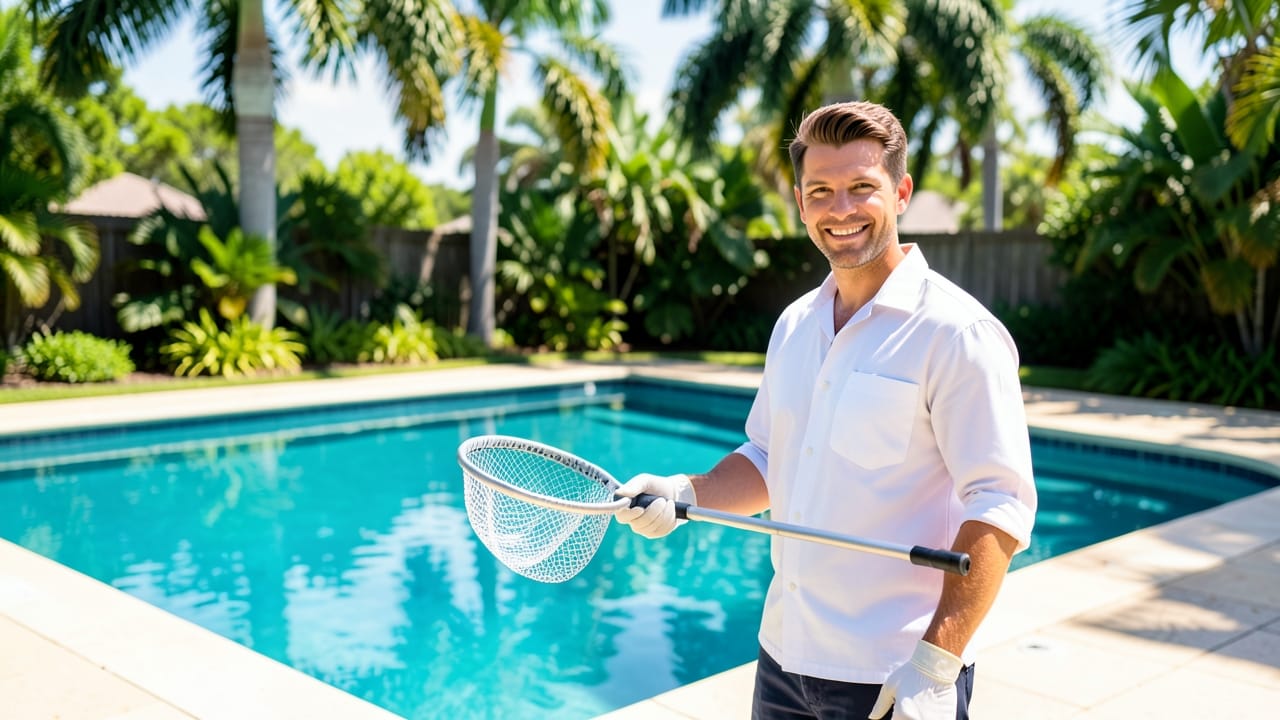
How to Open a Pool for the Season in Fort Lauderdale, FL
Every spring here in Fort Lauderdale, I get the same calls. “How do I get my pool ready for the season?” “The cover’s been on all winter — now what?” “My pool’s green — is it salvageable?” Opening a pool after the off-season isn’t as simple as pulling off the cover and jumping in. There’s a proper way to handle the process, and I’m sharing what I’ve learned over the years running pool maintenance in neighborhoods from Colee Hammock to Imperial Point.
To open a pool for the season in Fort Lauderdale, FL, begin by removing the cover and cleaning debris, then inspect and clean the pool equipment, balance the water chemistry, and run the filtration system continuously for 24-48 hours. It’s essential to check for leaks or damages and adjust chemical levels to ensure safe swimming conditions. Regular maintenance and professional inspection are recommended to keep the pool in optimal condition throughout the season.
The First Step: Removing the Pool Cover in Spring
The cover removal alone often trips folks up. Sometimes the cover’s stuck tight with debris, or water has pooled on top. Around Downtown Fort Lauderdale, I’ve seen covers weighing hundreds of pounds after the rainy season. You’ll want to carefully remove leaves and standing water first — a shop vac or a submersible pump can help here.
In my experience, trying to yank a heavy cover off without prep is a recipe for damage to your liner or equipment. Once the cover’s off, it’s prime time to inspect for tears, mold build-up, or critters that might have taken shelter underneath. I had a customer near Harbor Beach find a family of frogs hiding under their cover — a harmless surprise, but it showed how long the cover had been neglected.
Keep the cover drying in the sun for a day or two before storing it away for the year. A damp cover stashed in the garage invites mildew, which only means headaches when it’s time to cover up again in the fall.
Spring Pool Opening Checklist: What I Do First
Once the cover’s off, I start with the gear. I check the pump, filter, heater, and any automation systems. In Fort Lauderdale’s salty air, corrosion can sneak in even during winter downtime. It’s a good idea to replace worn seals or O-rings early to avoid leaks.
Next, I vacuum the pool floor and brush the walls. If you’ve got a green pool in spring, you need to act fast to clear algae before it sticks around. I’ll explain more on that below.
Here’s a quick spring pool opening checklist I follow nearly every time:
- Remove and clean pool cover
- Inspect and service pump and filter system
- Vacuum and brush pool surfaces
- Test water chemistry and balance
- Add pool startup chemicals as needed
- Check heaters and automation controls
- Run the pump and monitor flow
Pool Startup Chemicals Guide: What I Use and Why
Balancing chemicals is tricky but crucial. The short answer: test your water, then add chlorine, pH adjusters, alkalinity buffers, and sometimes cyanuric acid. I’ve seen plenty of pools in Fort Lauderdale wrecked from unbalanced water — it eats away liners, damages equipment, and turns swimming into an eye-stinging nightmare.
One thing many folks don’t realize is that adding all chemicals at once can backfire. I usually recommend a staged approach: start with shock treatment if the pool’s green, then wait 24 hours before adjusting pH and alkalinity. That way, your chlorine works effectively and doesn’t get neutralized.
For a typical residential pool startup in neighborhoods like Coral Ridge, I spend about 30 minutes mixing and dosing chemicals after testing. The right balance lets you avoid frequent top-ups later on. If you’re wondering how much pool service costs here, cleaning and chemical balancing usually runs between $100 and $300 for a startup, depending on pool size and condition.
Opening a Green Pool in Spring: What Really Works
Seeing a green pool first thing in spring isn’t unusual, especially if the cover was left on too long or storms dumped leaves inside. I had a call from a homeowner near Hugh Taylor Birch State Park last March — their pool had turned a shocking shade of swamp green. They wanted to know if it was salvageable.
Here’s the deal: yes, you can fix it, but it’s a process. I start with a heavy shock treatment and run the filter nonstop for a few days. Then I brush all surfaces daily to break algae mats loose. Sometimes, adding an algaecide helps speed things up. It takes patience, but I’ve seen green pools clear up in about a week if the filter and pump are working right.
If the algae is stubborn or the water chemistry is way off, you might need partial draining and refilling — something I handle often in commercial pool maintenance projects around the area. Trying to shortcut this just leads to cloudy, unsafe water and frustrated owners.
What to Watch for When Choosing Pool Service Fort Lauderdale
Not all pool companies are cut from the same cloth. I can tell you from experience: some providers rush through pool openings just to get to the next job. Red flags that jump out to me include companies who won’t test water themselves, or who ignore equipment checks.
Ask your pool service if they’re licensed and insured. This isn’t just paperwork — it tells you they’re serious and have a track record. Also, see if they offer a detailed spring opening checklist like the one mentioned above. That’s a sign they know what they’re doing.
In Fort Lauderdale, we deal with specific local challenges — like higher humidity, salt air corrosion, and occasional hurricane debris — so your pool service should be familiar with these factors. If they can’t confidently answer questions about pool water balancing tips or the best way to handle a green pool in spring, keep looking.
Quick FAQ
- When should I open my pool in Fort Lauderdale? I usually recommend late February to early March, but it depends on your usage plans and how long the cover’s been on.
- Is it safe to add chemicals myself? Yes, but you need to follow instructions carefully and test frequently. If unsure, hiring a professional can save you headaches and expense.
- How much does pool service cost in Fort Lauderdale? For spring openings, expect anywhere between $100 and $300 depending on pool size and condition.
Opening your pool the right way sets you up for smooth swimming all season. If your cover’s been on too long or you’re staring at a green mess, don’t wait. I handle everything from residential pool cleaning in Coral Ridge to commercial pool maintenance near Riverwalk Fort Lauderdale. Sometimes it’s a quick startup; other times, it takes a few days of work, but either way, I want you enjoying your pool without stress.
If you want to know what separates solid pool opening service spring from the rest, or just need a hand getting started, reach out. I’m here to help with honest, affordable pool repair and maintenance tailored for Fort Lauderdale’s unique climate and homes.
And if you’re curious about enhancing your pool setup, check out my post on Pool Water Features Fort Lauderdale FL: Making Your Backyard Come Alive— it’s full of ideas for adding a little extra magic after your pool’s ready to swim.