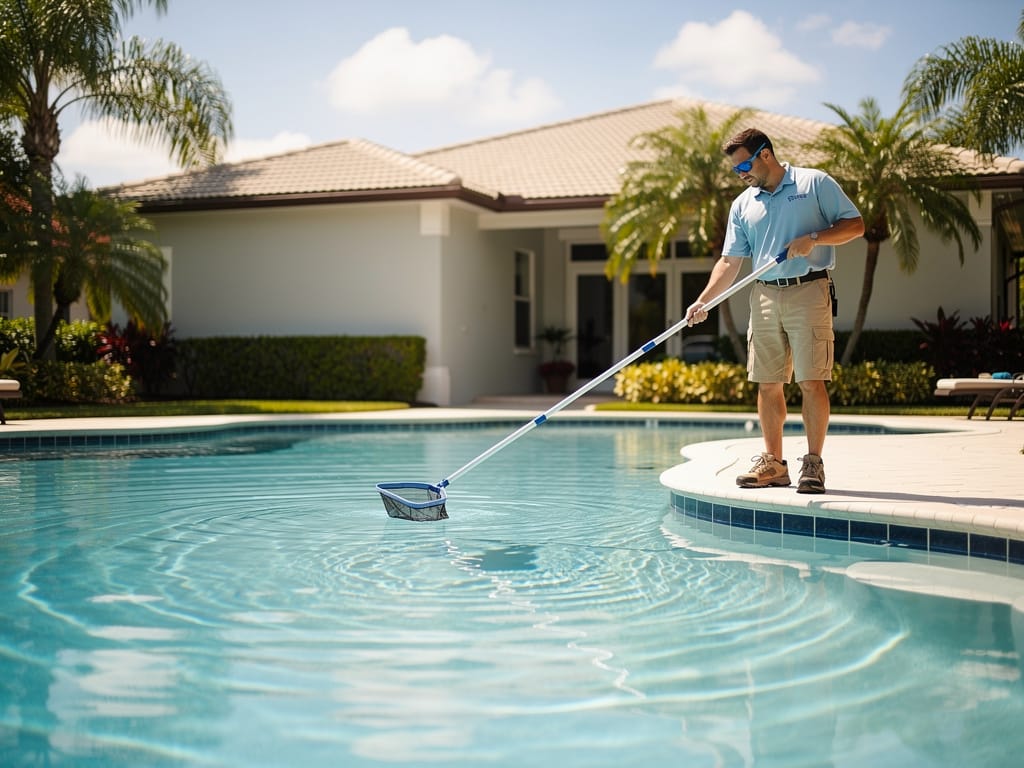
New pool owners in Coral Springs ask this question constantly, and the answer surprises people who moved here from northern states. In Chicago or Philadelphia, a pool is open four months a year. In Coral Springs, it’s open twelve — and actively used for at least ten of those months. That sustained exposure to heat, UV, rain, and bather load changes everything about service frequency.
At Pool Service Fort Lauderdale, we maintain pools throughout Broward County, including dozens of routes through Coral Springs neighborhoods near Sample Road, Wiles Road, and the Ramblewood area. Here’s what consistent experience tells us about how often your pool needs attention.
Summer in Coral Springs: Weekly Service Is Non-Negotiable
From May through September, the combination of water temperatures above 82°F, high UV exposure, and daily thunderstorms creates conditions where chlorine depletes rapidly and algae reproduce at peak speed. A professionally serviced pool should be checked and balanced every seven days during this window.
Each summer visit should include water chemistry testing and adjustment (chlorine, pH, total alkalinity, stabilizer, calcium hardness), vacuuming the floor and brushing all walls and steps, emptying skimmer and pump baskets, surface skimming, and a quick equipment inspection. That checklist takes a trained technician 30–45 minutes. Skipping a week in July means arriving to a pool where chlorine has dropped to near zero and the walls are starting to show the early green film of algae colonization.
For pools with heavy use — kids swimming daily, frequent guests, pool parties — consider requesting a mid-week chemical check between full visits during June, July, and August. The additional cost is minor compared to a green pool treatment.
Fall and Winter: Bi-Weekly Works for Moderate-Use Pools
From October through April, Coral Springs highs drop into the 70s and low 80s, and overnight lows can reach the mid-50s in January and February. Algae growth slows, and chlorine demand decreases. For moderate-use pools during this period, service every 10–14 days is appropriate and what most of our residential clients are on.
The key word is “moderate use.” If your family swims regularly through the winter — and many Coral Springs families do, especially when the pool is heated — keep the weekly schedule. A heated pool at 84°F in January behaves exactly like a summer pool chemically. The algae don’t check the calendar.
What Coral Springs Tap Water Does to Your Service Schedule
Broward County’s municipal water supply arrives with phosphate levels between 300 and 600 ppb — high by national standards. Every gallon you add to compensate for evaporation (and Coral Springs pools lose 1/4 to 1/2 inch per day to evaporation in summer) adds more phosphates. Phosphates are algae’s primary food source. Even when chlorine levels look correct, high-phosphate pools can develop cloudiness and green walls.
We test phosphates every 30–60 days for Coral Springs pools on our routes and treat with lanthanum-based phosphate remover when levels exceed 500 ppb. This is a routine part of maintenance in this market — not an extra service. If you’re on a bi-weekly schedule during summer and your pool is phosphate-loaded, you’re running a higher risk than you probably realize.
Tree Coverage: A Coral Springs-Specific Factor
Coral Springs is one of the most tree-lined cities in South Florida. Beautiful neighborhoods — but those oaks, ficus trees, and palms drop organic material into pools constantly. Leaves, seed pods, pollen, and berries all introduce organic load that consumes chlorine and feeds algae. Pools surrounded by mature trees on three sides may need more frequent vacuuming than a pool in an open yard, and some homeowners request weekly service year-round specifically because of debris.
If your service provider isn’t factoring your specific landscape into their service recommendation, they’re giving you a generic answer that may not fit your pool.
The Cost of Under-Servicing Your Pool
The temptation to reduce service frequency is real. Monthly service, or DIY between quarterly visits, sounds like a reasonable way to cut costs. But the math rarely works out. A green pool treatment in Coral Springs typically runs $150–$350 above regular service, and severe cases requiring multi-day clearing, acid washing, or algaecide treatment can reach $500–$800. Compare that to the cost difference between weekly and bi-weekly service schedules: usually $40–$80 per month. Under-servicing almost always costs more over time.
Our recommendation for Coral Springs: weekly service May through September for all pools, bi-weekly October through April for moderate-use pools, weekly year-round for high-use or heavily landscaped pools.
To discuss what schedule your specific pool needs, call us at (954) 501-2754 or visit our Coral Springs service area page.
Frequently Asked Questions
What happens if I go three weeks without service in Coral Springs summer?
In July or August conditions, three weeks without service almost guarantees visible algae. Chlorine drops to near zero within 7–10 days in peak summer heat, and algae colonization begins on shaded walls and steps within days of that. Clearing a pool at that stage takes 3–7 days and costs significantly more than prevention.
Does rain in Coral Springs mean I need extra service?
Heavy rain dilutes chemistry, introduces phosphates and nitrogen from runoff, and drops pH. During Coral Springs’s June–October rainy season, it’s worth having chemistry checked within 24–48 hours of major rainfall — especially if a storm dropped more than an inch of rain into the pool.
Can I do my own pool service between professional visits?
You can skim, empty baskets, and add some chemicals — but accurate water testing and proper vacuuming technique require professional equipment and experience. DIY-only pools in Coral Springs’s climate reliably see more algae and chemistry problems than professionally serviced pools. Think of it as supplemental, not a replacement.
How do I know my current service is frequent enough?
Ask your provider for a written service log with dates, pre- and post-treatment water readings, and chemicals added. If your water is frequently cloudy between visits, you see recurring algae, or you notice a strong chloramine smell (a sign of chemistry imbalance), your schedule or service quality needs to change.
Is bi-weekly service ever enough during Coral Springs summer?
Only for very lightly used pools with minimal tree coverage, a consistently functioning saltwater chlorinator, and careful owner monitoring between visits. For the vast majority of Coral Springs residential pools, bi-weekly service during summer is not enough to prevent chemistry drift and algae. We don’t recommend it during May–September for pools without automated chemistry systems.