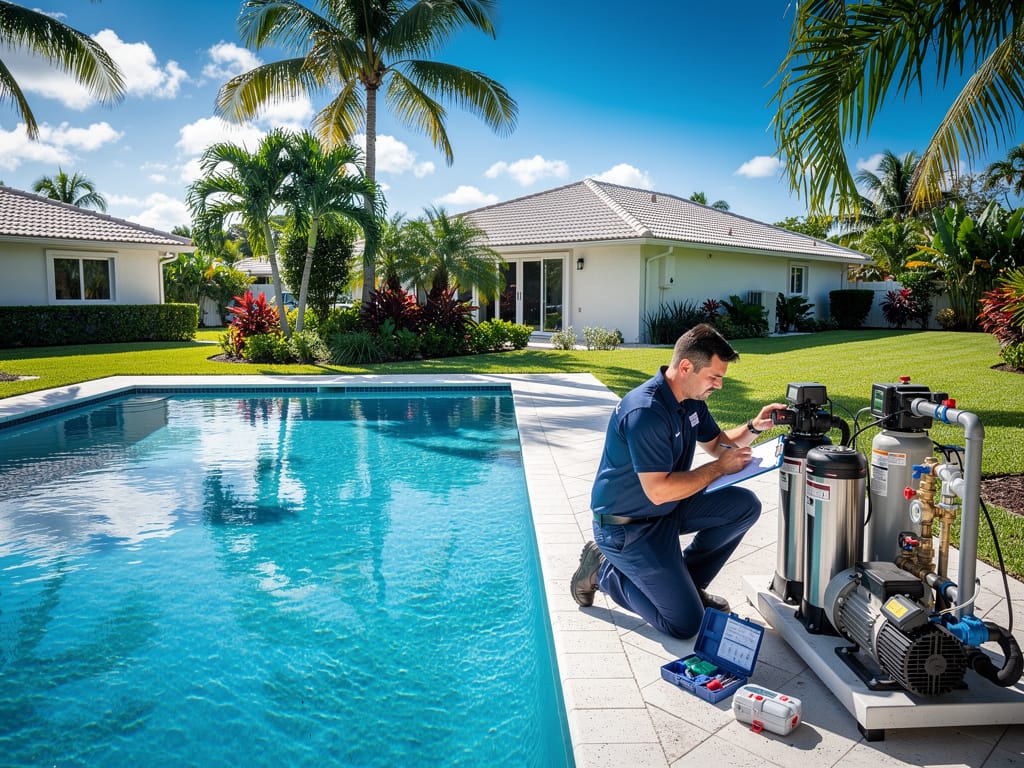
Pompano Beach is one of Broward County’s most established pool markets. Neighborhoods like Crystal Lake, Palm Aire, Pompano Isles, and Ramblewood Estates have housing stock dating to the 1960s through 1980s, and many of those original pools are still in operation — with original or partially upgraded equipment. When a pool changes hands through a real estate transaction in Pompano Beach, a professional pool inspection is one of the most important due-diligence steps that’s also one of the most frequently skipped.
This guide explains what a pool inspection covers, what it costs, and how buyers and sellers in Pompano Beach should approach the process.
Why a Standard Home Inspection Doesn’t Cover Your Pool
Many Pompano Beach buyers discover this too late: the home inspection they paid for checked the roof, the HVAC, the electrical panel, and the plumbing — but the pool got a visual glance at most. Standard home inspectors are licensed to inspect the home structure. Pool equipment, plumbing, and shell integrity are a separate discipline requiring different expertise and different tools.
A home inspector might note “pool present, recommend specialist inspection” in their report. That recommendation is easy to overlook during a fast-moving Pompano Beach real estate transaction. Buyers who skip the specialist inspection and close on a home with a pool in Palm Aire or Crystal Lake sometimes discover within the first year that they’ve inherited a pump approaching failure, a heat exchanger with calcium-blocked tubes, or surface delamination on a 20-year-old plaster finish.
What a Professional Pool Inspection Covers in Pompano Beach
Pool shell and surface: The inspector evaluates the plaster or aggregate finish for structural cracks (as opposed to surface crazing), delamination, spalling, and significant staining that indicates underlying issues. In older Pompano Beach homes, original 1970s plaster is frequently well past its expected service life and may be showing physical deterioration that warrants disclosure or a price credit.
Plumbing and leak assessment: Pressure testing of the return and suction lines identifies active plumbing leaks. Older PVC plumbing in Pompano Beach homes can develop leaks at unions, fittings, and underground sections. A leak in an underground main can result in significant water loss — and, if it’s under a pool deck, costly repair. A full inspection includes pressure testing, not just a visual check of visible plumbing.
Equipment condition and age: The pump motor, filter, heater, automation system, and any auxiliary equipment (water features, spa blowers, salt cells) are inspected for age, condition, and functionality. In Pompano Beach’s older neighborhoods, it’s not unusual to find a pump or heater that’s 15–20+ years old and operating on borrowed time. Knowing this before closing — rather than after — allows for accurate negotiation.
Electrical: Pool electrical systems must meet specific safety standards — bonding, GFCI protection, and conduit routing all matter. Older Pompano Beach electrical installations sometimes predate current NEC requirements for pool equipment and may need updating. This is a safety issue, not just a maintenance issue.
Water chemistry: The inspection includes basic water testing. Severely imbalanced chemistry, persistently high calcium (common in Pompano Beach’s hard water environment), or elevated phosphates that have driven recurring algae problems can indicate deferred maintenance that goes beyond what a simple service visit will resolve.
Common Findings in Pompano Beach Pool Inspections
Based on the pool types and ages prevalent in Pompano Beach’s established neighborhoods:
Equipment age: Palm Aire, Crystal Lake, and Ramblewood Estates homes from the 1970s–1990s frequently have pumps and heaters that are 15–25 years old. Original installation equipment is at or well past end-of-life. Buyers should expect a $1,500–$3,000 equipment refresh within the first 2–3 years of ownership if the existing equipment hasn’t been updated.
Calcium scale on surfaces and tile: Pompano Beach’s hard water supply means most pools develop calcium carbonate deposits on tile waterlines over time. Significant scale may indicate years of deferred chemistry management and can signal that the plaster beneath has also been subject to sustained calcium stress.
Minor plumbing leaks: Older union fittings and PVC connections degrade over decades in South Florida’s temperature cycling environment. Small leaks at equipment pad connections are common findings in older Pompano Beach pools and are typically inexpensive to fix — but good to know before closing rather than after.
How Sellers Should Approach Pool Inspection Before Listing
Proactive sellers in Pompano Beach are increasingly ordering their own pool inspection before listing. The benefit: you find out what buyers’ inspectors will find before they find it, and you can either repair it (improving your listing’s appeal) or factor it into pricing rather than responding to a surprise credit request mid-transaction.
Common pre-listing pool repairs that sellers undertake in Pompano Beach: pump motor replacement ($400–$800), calcium scale cleaning on tile ($150–$400), minor plumbing union replacements ($100–$300), and filter media replacement ($200–$400). These costs are typically recovered in reduced closing credits.
Choosing a Pool Inspector in Pompano Beach
Look for an inspector who is either a licensed pool contractor or certified through the American Society of Home Inspectors (ASHI) with specific pool inspection training. Ask for a written report with photos — not just a verbal assessment. The report should cover all components listed above and provide a clear description of findings, estimated remaining useful life for major equipment, and repair recommendations.
Pool Service Fort Lauderdale provides pre-purchase and pre-listing pool assessments throughout the Pompano Beach area. Call (954) 501-2754 to schedule an inspection or to discuss what a pool assessment involves for your specific situation.
Frequently Asked Questions
How much does a pool inspection cost in Pompano Beach?
A professional pool inspection in Pompano Beach typically runs $150–$350 depending on pool size, age, and the scope of the inspection (basic visual vs. full pressure testing of plumbing). Add $75–$150 if you want a separate leak detection test included. This cost is minor relative to the potential findings on a 30- or 40-year-old pool.
Should I get a pool inspection if the pool looks clean and is working fine?
“Looks fine” is not the same as “is fine” for a pool. A pump can sound normal while its bearings are 60 days from seizing. A plaster surface can look clean while being structurally compromised beneath a good chemistry baseline. A pool that’s been professionally serviced regularly will show better inspection results, but even well-maintained pools have age-related equipment and surface issues that an inspection identifies.
Can I negotiate a price reduction based on pool inspection findings?
Yes, and pool inspection findings are one of the more common sources of real estate negotiation in Pompano Beach. Clear documentation of equipment age, plumbing leaks, or surface deterioration with professional repair estimates gives buyers a factual basis for requesting closing credits or price reductions. The more specific and documented the finding, the stronger the negotiating position.
Does Florida require pool disclosure by sellers?
Florida requires sellers to disclose known material defects, which includes known pool issues. However, sellers are not legally required to proactively inspect or disclose defects they don’t know about. This is exactly why buyer-requested inspections matter — the seller’s disclosure covers what they know; the inspection finds what they may not have known or disclosed.
What happens if the pool inspection finds a major problem after I’m already under contract?
Standard Florida real estate contracts include an inspection period (typically 10–15 days) during which buyers can request repairs, credits, or cancellation based on inspection findings. Pool inspection results discovered during this window are legitimate grounds for renegotiation. Some buyers choose to proceed with a credit; others request specific repairs as a contract condition; others walk away if the findings are severe enough.