Pompano Beach sits directly in the path of Atlantic hurricane season, and with the city’s estimated 10,000–13,000 residential pools, storm pool preparation and recovery is a reality that every pool owner in the area needs to understand. Whether you’re new to the area or have lived through a few South Florida storm seasons, knowing what to do before and after a storm is the difference between a pool that recovers in 48 hours and one that sits green and unusable for two weeks.
This guide covers the complete pre-storm and post-storm pool protocol for Pompano Beach homeowners, including the specific risks and recovery timeline for this coastal market.
Why Pompano Beach Pools Face Specific Storm Risks
Pompano Beach’s coastal location — approximately 10 miles north of Fort Lauderdale with direct Atlantic Ocean exposure — means the city sits in the path of Broward County’s most significant storm threats. Atlantic Blvd and Sample Road corridors, Palm Aire, Pompano Isles (a waterfront community), and Crystal Lake neighborhoods all experience significant wind, rain, and storm surge risk during major Atlantic storms.
The specific pool risks during a Pompano Beach storm event:
- Debris contamination: Palm fronds, leaves, branches, and airborne debris enter the water, rapidly consuming chlorine and introducing massive organic load
- Rain dilution: A storm dropping 5–10 inches of rain — not unusual in a Pompano Beach hurricane or tropical storm event — significantly dilutes pool chemistry across the board
- Equipment damage: Windblown debris can damage pool equipment on the pad; falling trees or pool cage frames can damage pool surfaces and plumbing
- Flooding backwash: Pompano Beach neighborhoods with drainage challenges can experience water table flooding that pushes contaminated groundwater into pools through return lines
- Power outage aftermath: Extended outages mean no circulation — stagnant water in South Florida heat turns green in 48–72 hours
Pre-Storm Pool Preparation: The Pompano Beach Checklist
Lower the water level: Drop the water level 6–12 inches below normal. This allows the pool to absorb significant rainfall without overflowing onto the deck and surrounding area. Don’t drain more than 12 inches — the pool shell needs water weight to resist ground uplift (hydrostatic pressure) if surrounding soils become saturated.
Do NOT drain the pool: This is the most common serious mistake Pompano Beach homeowners make before a storm. An empty pool in saturated soil can literally float — the hydrostatic pressure of a high water table can lift a gunite or fiberglass shell out of the ground. Never fully drain a pool before a storm.
Remove all loose accessories: Ladders, pool toys, skimmer lids, cleaning equipment, automatic cleaner, and any furniture near the pool edge must be secured or removed. During a Pompano Beach storm, anything not secured becomes a projectile and a pool contaminant.
Turn off and protect equipment: Shut off the pool automation system or timer. If you have a pool equipment disconnect switch, use it. Cover the equipment pad with a tarp secured firmly — not loosely draped. Do not run the pool during the storm.
Shock the pool before the storm: A pre-storm shock treatment brings chlorine to 10+ ppm. This helps the pool survive the incoming organic load from debris contamination. High chlorine going in means there’s a reserve to fight the incoming contamination rather than starting from zero.
Add algaecide: A dose of algaecide before the storm provides an additional barrier against the algae bloom that often follows storm debris contamination and chemistry disruption.
Post-Storm Pool Recovery in Pompano Beach: The Right Sequence
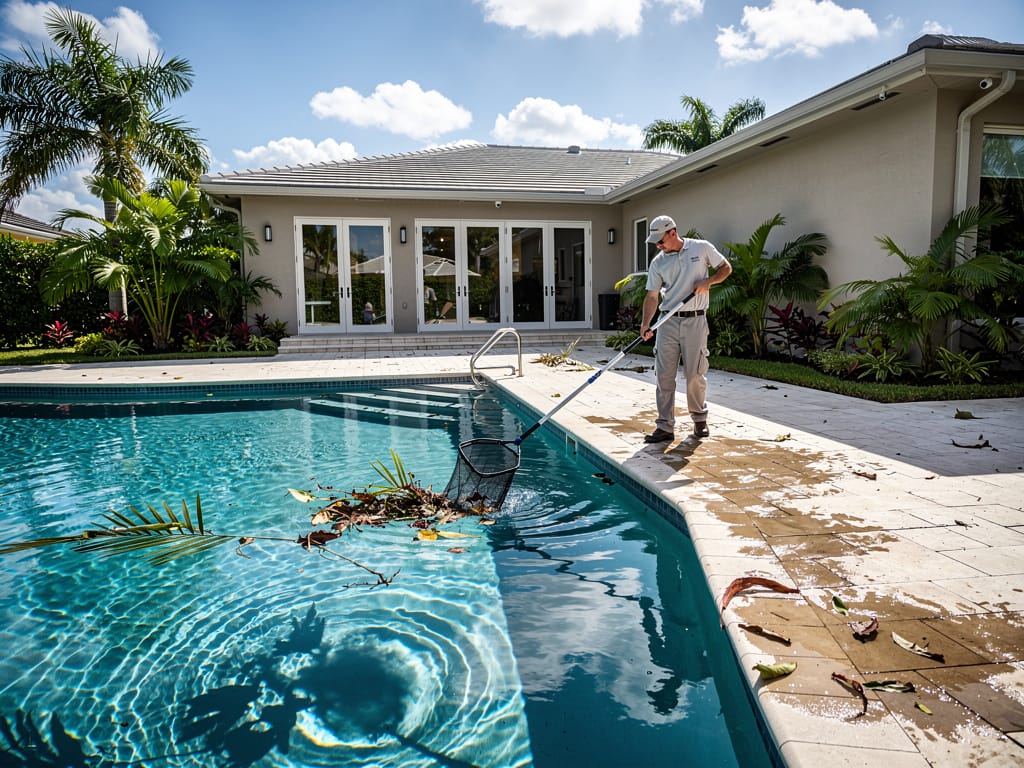
Step 1 — Remove debris first, before running equipment: Use a leaf net or rake to remove all debris from the pool before turning on the pump. Running a pump through a pool full of debris clogs the filter rapidly and can damage the impeller. Gross debris removal first, equipment restart second.
Step 2 — Inspect equipment before restarting: Check the pump strainer basket, filter, and all equipment visually before restoring power. Look for debris in the strainer housing, physical damage to equipment, and any displaced plumbing connections.
Step 3 — Test water chemistry before adding chemicals: Don’t assume and add — test first. Post-storm chemistry is often dramatically different from pre-storm: pH shifted, alkalinity diluted, chlorine depleted, phosphates elevated from runoff. Test kit results tell you exactly what to add.
Step 4 — Treat phosphates before shocking: In Pompano Beach’s high-phosphate environment, post-storm phosphate levels from fertilizer and organic runoff can be extreme. Add phosphate remover before shocking to eliminate the food source that enables algae to survive the shock treatment. Skipping this step is the most common reason post-storm recoveries fail and the pool turns green again within 3–5 days.
Step 5 — Shock to 10–15 ppm free chlorine: After phosphate treatment, shock the pool to 10–15 ppm free chlorine. Run the filter 24/7 and backwash or clean every 24 hours until the water clears.
Book service early after major storms: After significant Pompano Beach storm events, demand for pool service spikes 300–400%. Service companies book out quickly. Schedule your post-storm service call the moment the storm passes — or ideally pre-book a post-storm appointment if the track looks likely before the storm hits.
Power Outage Protocol: Keeping the Pool from Going Green
Extended power outages following Pompano Beach storms are a separate challenge. Without circulation, a pool in South Florida’s heat develops algae within 48–72 hours.
If power is out for more than 24 hours: manually add chlorine shock directly to the pool (broadcast across the surface, don’t add through the skimmer without the pump running), and stir or manually mix the water with a pole to distribute it. If you have a battery-powered or generator-connected backup pump, run it. If you have a neighbor’s generator, prioritize food/freezer needs first, but pool circulation matters for pools that will sit for multiple days.
Our team at Pool Service Fort Lauderdale serves Pompano Beach with priority post-storm service response. For pre-booking storm prep and recovery service or for storm season maintenance agreements, call (954) 501-2754.
Frequently Asked Questions
Should I cover my pool before a hurricane in Pompano Beach?
Pool safety covers (solid covers) are generally not recommended for hurricane prep in Florida — they can trap debris and create significant water accumulation on top of the cover, which creates structural stress. Mesh safety covers allow water through but are designed for winter closing, not hurricane conditions. The best storm prep for a Pompano Beach pool is chemistry pre-treatment, water level reduction, and debris removal — not covering.
My pool turned green after the storm. How long will recovery take?
For most Pompano Beach post-storm green pools, professional treatment with the correct protocol (phosphate remover + shock + algaecide + 24/7 filter) produces visible clearing in 3–5 days. Severe cases with significant organic contamination or black algae may take 7–10 days. The faster you treat after the storm, the faster the recovery — delay allows algae to establish deeper on surfaces.
Can storm debris damage my pool’s surface or equipment?
Yes. Large debris — branches, pool cage sections, patio furniture — can physically crack plaster or chip aggregate surfaces. Debris impacting the pump, filter, or heater can cause mechanical damage. Always inspect surfaces and equipment carefully after any storm before assuming everything is fine. Report damage to your pool service company for professional assessment.
Is it safe to swim in my pool right after a storm if the water looks clear?
Not until chemistry is tested and confirmed safe. Post-storm runoff introduces bacteria, fertilizers, and other contaminants even when water clarity appears normal. Test first — free chlorine should be 1–3 ppm, pH 7.2–7.8, and the water should test clear of bacterial contamination before swimming. If in doubt, wait for professional service.
How do I protect my pool equipment from storm wind damage?
Secure tarps over the equipment pad, protect heater vents from direct debris exposure, and ensure the equipment pad area is clear of anything that could become windblown. For pools with gas heaters, verify the gas shutoff valve is easily accessible. After the storm, have equipment professionally inspected before restarting — a damaged control board or heat exchanger is a repair, not a reason to delay restart, but it needs to be caught first.