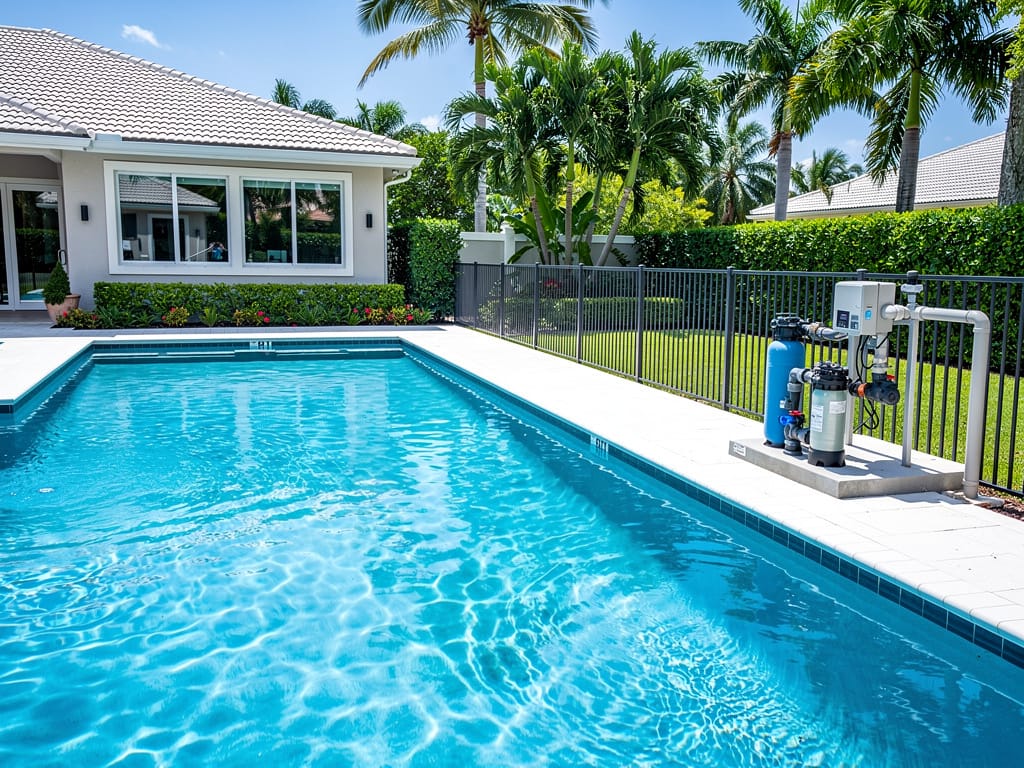
Coconut Creek earned the nickname “Butterfly Capital of the World” through a community commitment to green space, native landscaping, and environmental stewardship — the city’s butterfly garden program and extensive greenway system reflect values that many Coconut Creek homeowners bring to their entire property, including the backyard pool.
At Pool Service Fort Lauderdale, we help Coconut Creek homeowners who want to align their pool operation with their environmental values without compromising water quality or enjoyment. This guide covers the changes that make the most meaningful impact.
Solar Pool Heating — Highest Environmental Impact Single Change
A heat pump pool heater, while efficient compared to gas, still consumes electricity — and at South Florida’s grid mix (approximately 60-70% natural gas generation), electric pool heating has a real carbon footprint. Solar pool heating (roof-mounted polypropylene or EPDM collectors that heat pool water using sun energy circulated by the existing pool pump) has essentially zero operating emissions after installation.
In Coconut Creek’s climate:
- Heating season is approximately November-March — 5 months where the pool water drops below comfortable swimming temperature without heating
- Solar heating can maintain 80-84°F water temperature on all but the coldest or cloudiest stretches, using no additional electricity beyond the existing pump
- For the coldest weeks (December-February cold fronts), a solar-plus-heat-pump hybrid approach — solar for typical days, heat pump as backup for cold snaps — minimizes heat pump runtime to perhaps 15-20% of the heating season
Installation cost: $3,000-$5,500 for a properly sized solar heating system for a Coconut Creek residential pool. Operating cost: $0 beyond existing pump electricity. Payback vs. heat pump heating: 3-6 years. Useful life: 15-25 years.
Variable-Speed Pump — Largest Single Electricity Reduction
The pool pump is typically the home’s second or third largest electricity consumer after the HVAC system. A single-speed pump running 8-10 hours/day uses 8-12 kWh/day. A VSP running optimized speed schedules uses 2-4 kWh/day for the same circulation. The annual electricity reduction: 2,000-3,000 kWh/year — equivalent to eliminating the electricity consumption of 2-3 refrigerators. At South Florida’s current grid emissions factor, this reduces CO₂ emissions by roughly 1-1.5 metric tons per year per pool.
Salt Water Chlorination — Reduced Chemical Manufacturing Footprint
Liquid chlorine (sodium hypochlorite) and trichlor tablets require significant manufacturing, packaging, and transportation to reach Coconut Creek homeowners. A saltwater chlorine generator produces chlorine on-site from sodium chloride — table salt — using electricity from the existing pool electrical system. The salt itself (pool-grade sodium chloride) is the most environmentally benign pool chemical available.
For Coconut Creek homeowners concerned about chemical manufacturing impacts, salt chlorination eliminates the need for commercial chlorine production and delivery while maintaining the same water sanitization standard.
Enzyme-Based Chemistry Supplementation
Enzyme pool products (Natural Chemistry Pool Perfect, Orenda CV-600, similar) contain non-pathogenic enzyme cultures that break down non-living organic contaminants in pool water — sunscreen, body oils, sweat, leaf tannins, and other organic material. These organics would otherwise consume chlorine through oxidation demand. Enzymes pre-process the organic load, reducing chlorine demand by 20-30% in pools with active bather use.
Monthly enzyme treatment: $15-$25. Chlorine savings from reduced oxidation demand at that reduction rate: $20-$50/month. Net benefit: cost-neutral to positive, with reduced chemical load in the water.
Phosphate-Free Lawn and Landscape Fertilizers Near the Pool
Lawn and landscape fertilizers applied near the Coconut Creek pool contribute phosphate to pool water through rain runoff and irrigation overspray. Phosphate fuels algae growth; elevated phosphate leads to algaecide use. Switching to phosphate-free or low-phosphate fertilizer formulations near the pool reduces this input pathway — consistent with Coconut Creek’s butterfly-friendly landscaping emphasis on native plants that require less fertilization than turf grass.
Pool Service Fort Lauderdale serves Coconut Creek’s environmentally conscious homeowners and designs service programs that minimize chemical use while maintaining excellent water quality. Call (954) 501-2754 or visit our Coconut Creek pool service page. Full coverage at poolservicefortlauderdale.us.
Frequently Asked Questions
{“@context”:”https://schema.org”,”@type”:”FAQPage”,”mainEntity”:[{“@type”:”Question”,”name”:”What is the most eco-friendly pool heating option for Coconut Creek?”,”acceptedAnswer”:{“@type”:”Answer”,”text”:”Solar pool heating is the most environmentally sustainable option — zero operating emissions beyond the existing pool pump electricity for circulation. In Coconut Creek’s climate, solar can maintain 80-84°F water temperature throughout most of the November-March heating season. A solar-plus-heat-pump hybrid minimizes heat pump runtime to cold snap periods only, reducing heat pump electricity use by 80-85% vs. heat-pump-only heating.”}},{“@type”:”Question”,”name”:”Does a saltwater pool reduce the environmental impact of pool ownership in Coconut Creek?”,”acceptedAnswer”:{“@type”:”Answer”,”text”:”Yes. Saltwater chlorination generates chlorine on-site from sodium chloride, eliminating the need for commercial liquid chlorine or tablet manufacturing, packaging, and transportation. Pool-grade sodium chloride (salt) is the most environmentally benign pool chemical available. The SCG unit does require electricity, but produces chlorine more efficiently per unit output than the commercial manufacturing process for liquid chlorine.”}},{“@type”:”Question”,”name”:”How much electricity does a variable-speed pump save in Coconut Creek?”,”acceptedAnswer”:{“@type”:”Answer”,”text”:”A properly programmed VSP uses 70-80% less electricity than a single-speed pump for the same daily circulation. Annual reduction: 2,000-3,000 kWh/year for a typical Coconut Creek residential pool. At South Florida’s current grid emission factor, this reduces CO₂ equivalent emissions by roughly 1-1.5 metric tons per year — a meaningful reduction for a single household appliance.”}},{“@type”:”Question”,”name”:”Are enzyme pool products safe for the environment and swimmers in Coconut Creek?”,”acceptedAnswer”:{“@type”:”Answer”,”text”:”Yes. Pool enzyme products contain non-pathogenic bacterial cultures or purified enzyme compounds that break down organic contaminants (oils, sunscreens, tannins). They are biodegradable, non-toxic to swimmers, and do not affect chlorine or other chemistry parameters. When backwash or discharge water containing enzyme-treated pool water enters drainage systems or irrigation absorption areas, the enzyme compounds break down without environmental accumulation.”}},{“@type”:”Question”,”name”:”What landscaping changes near my Coconut Creek pool reduce its environmental impact?”,”acceptedAnswer”:{“@type”:”Answer”,”text”:”Switching to phosphate-free or low-phosphate fertilizers near the pool reduces algae-fueling phosphate runoff into pool water. Choosing Coconut Creek’s encouraged native plantings (which require less fertilization than turf grass and provide butterfly habitat) near the pool achieves both landscape sustainability and reduced pool phosphate loading simultaneously. Reducing irrigation overspray onto pool deck surfaces also reduces fertilizer and soil phosphate entry into the pool.”}}]}
Most eco-friendly pool heating? Solar — zero operating emissions. Coconut Creek’s sun makes it highly effective November-March. Hybrid solar + heat pump limits heat pump to cold snaps only.
Does saltwater reduce environmental impact? Yes — generates chlorine on-site from salt, eliminating commercial chlorine manufacturing, packaging, and transportation footprint.
VSP electricity reduction? 70-80% less electricity than single-speed. Annual reduction 2,000-3,000 kWh — roughly 1-1.5 metric tons CO₂/year.
Are enzyme products safe? Yes — non-pathogenic, biodegradable, non-toxic to swimmers. Reduce chlorine demand 20-30% by pre-processing organic load.
Landscaping changes? Phosphate-free fertilizer near the pool, native plantings that need less fertilizer, reduced irrigation overspray onto pool deck surfaces.