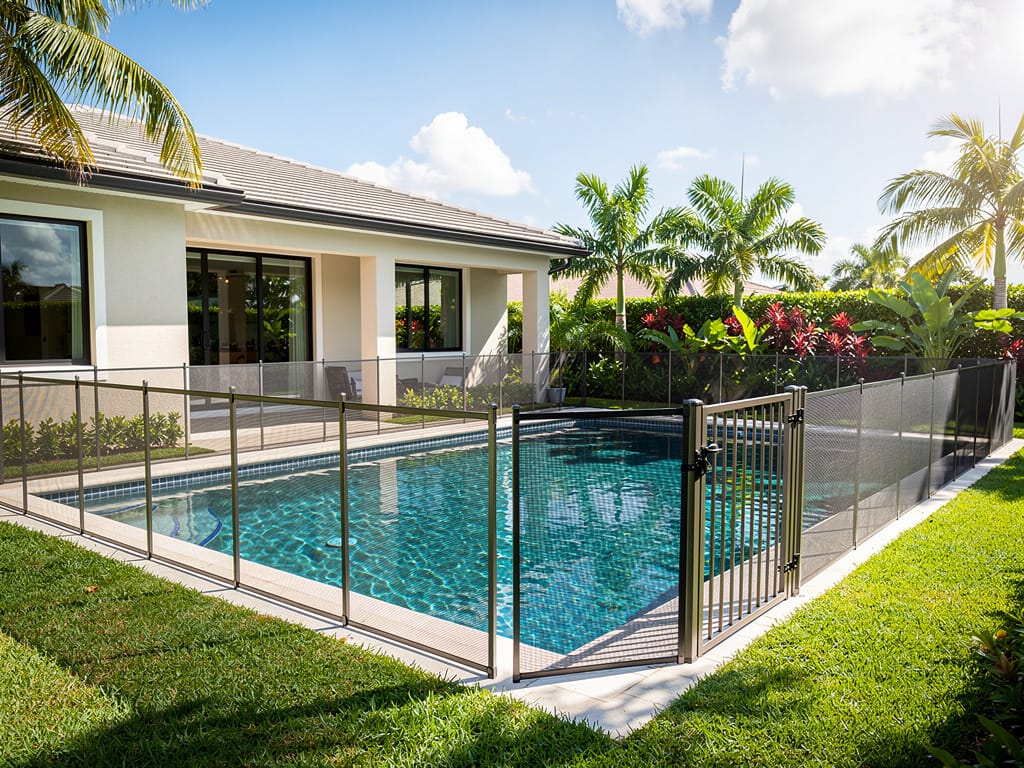
Cooper City’s family-oriented communities — Rock Creek, Embassy Lakes, and the surrounding neighborhoods — have driven strong demand for pools specifically designed for families with young children. The tanning ledge, once a premium feature, has become nearly standard in newer Cooper City pool builds and a top retrofit request for existing pools. But along with the enjoyment they bring comes a maintenance profile that most homeowners aren’t fully prepared for when the ledge is first added.
At Pool Service Fort Lauderdale, we maintain pools throughout Cooper City and see tanning ledge chemistry issues more often than any other surface-specific problem. This guide covers what makes the ledge different from the main pool body and what proper care looks like.
Why Tanning Ledges Develop Chemistry Problems Faster
The physics and chemistry of a tanning ledge create a concentrated-risk environment:
- Shallow depth = faster heating: A 6-inch water column heats to ambient air temperature much faster than the main pool. In Cooper City summer afternoons, ledge water can reach 90-95°F. Heat accelerates chemical reactions — chlorine burns off faster, pH drifts faster, and biological activity (algae and bacteria) increases faster than in the cooler main pool.
- High bather load per gallon: When young children use the tanning ledge, the bather-to-water-volume ratio is extremely high. A child sitting in 6 inches of water contributes far more contamination per gallon (sweat, sunscreen, body oils) than a swimmer in the main pool.
- UV exposure: The ledge surface faces direct overhead sun with minimal water depth to diffuse UV. Unstabilized or under-stabilized chlorine (low CYA) burns off rapidly in direct sunlight on the ledge surface.
- Reduced circulation: Most pool return jets are positioned for the main pool body. The tanning ledge sits at the shallow entry — often the zone with the least return water movement. Low-circulation areas accumulate contamination and are the first to go out of chemical balance.
Installing Ledge Bubblers for Circulation
The most effective single upgrade for tanning ledge chemistry management is floor-mounted bubblers — pressurized fittings in the ledge floor that create continuous water movement. Beyond their obvious entertainment value for children, bubblers maintain water movement that prevents the stagnant-zone chemistry drift described above. A tanning ledge with 2-4 bubblers running during pool hours maintains significantly better chemistry than an identically configured ledge without them.
Installation cost for bubblers in an existing Cooper City tanning ledge: $600-$1,500 depending on plumbing access. The bubblers also add a desirable feature for future buyers — a practical and marketable upgrade simultaneously.
Ledge-Specific Chemistry Testing
Standard weekly pool service testing from the main pool body may not capture ledge-specific chemistry events. If your Cooper City pool is in heavy family use with young children spending extended time on the ledge:
- Test chlorine and pH at the ledge surface specifically during heavy-use periods
- Spot-shock the ledge area if testing shows free chlorine below 1.0 ppm — add a small measured dose of liquid chlorine directly to the ledge and allow it to distribute before resuming use
- Brush the ledge surface weekly — algae colonization on warm, less-circulated surfaces begins earlier than in the main pool body
Calcium Scale on Tanning Ledges
The ledge waterline — where the 6-inch water meets the pool coping or ledge wall — accumulates calcium carbonate scale more aggressively than the main pool waterline because of heat-driven evaporation and splash-out concentration effects. In Cooper City’s water with moderate calcium hardness, white calcium deposits at the ledge waterline are a monthly maintenance task rather than an occasional one. A pumice stone or a non-abrasive calcium remover applied weekly during summer months prevents significant buildup from developing into a harder removal task.
Sunscreen Contamination on Ledge Surfaces
Children using sunscreen before entering the tanning ledge introduce significant oils and UV filters into the ledge water. Sunscreen oils consume free chlorine through oxidation, cloud the water with an oily film, and can stain lighter-colored plaster or pebble surfaces over time. Enzyme pool treatments (Natural Chemistry Pool Perfect, Orenda CV-600) break down the oil-based contamination before it demands chlorine oxidation — particularly useful for Cooper City pools with frequent ledge users wearing sunscreen.
Pool Service Fort Lauderdale provides weekly service for Cooper City family pools with tanning ledges, with attention to the ledge-specific chemistry factors that standard service schedules often miss. Call (954) 501-2754 or visit our Cooper City pool service page. Full coverage at poolservicefortlauderdale.us.
Frequently Asked Questions
{“@context”:”https://schema.org”,”@type”:”FAQPage”,”mainEntity”:[{“@type”:”Question”,”name”:”Why does my Cooper City pool’s tanning ledge keep developing algae or chemistry problems?”,”acceptedAnswer”:{“@type”:”Answer”,”text”:”Tanning ledges develop chemistry problems faster than the main pool body because of three factors: (1) shallow water heats faster, accelerating chemical consumption; (2) high bather load per gallon when children use the ledge heavily introduces more contamination; and (3) reduced water circulation compared to the main pool body allows chemistry drift to develop unchecked. Adding ledge bubblers and specifically testing ledge chemistry during heavy use periods are the most effective corrective measures.”}},{“@type”:”Question”,”name”:”Should I test pool chemistry specifically at the tanning ledge in my Cooper City pool?”,”acceptedAnswer”:{“@type”:”Answer”,”text”:”During periods of heavy family use, yes. Main pool body chemistry readings may not reflect ledge conditions accurately because the ledge is a relatively isolated, shallower, less-circulated zone. Testing chlorine and pH directly at the ledge surface during heavy use periods catches chemistry events that main pool testing misses. If free chlorine at the ledge tests below 1.0 ppm during use, spot-add a measured dose of liquid chlorine directly to the ledge.”}},{“@type”:”Question”,”name”:”Do tanning ledge bubblers help with pool chemistry in Cooper City?”,”acceptedAnswer”:{“@type”:”Answer”,”text”:”Yes. Ledge bubblers maintain water movement on the tanning ledge, preventing the stagnant-zone chemistry drift that occurs in low-circulation areas. A tanning ledge with bubblers running during pool hours maintains significantly better chemistry balance than one without. Bubblers also prevent heat stratification on the ledge surface and create water movement that distributes any added chemicals more evenly.”}},{“@type”:”Question”,”name”:”How do I prevent calcium scale buildup on my Cooper City tanning ledge?”,”acceptedAnswer”:{“@type”:”Answer”,”text”:”Brush the ledge waterline weekly and apply a non-abrasive calcium remover or pumice stone treatment monthly during summer. The tanning ledge waterline accumulates calcium carbonate scale more aggressively than the main pool waterline because heat-driven evaporation and splash-out concentrate calcium at the 6-inch water level mark. Maintaining calcium hardness at 200-250 ppm (not exceeding 300 ppm) and keeping pH at 7.4-7.6 reduces the scale deposition rate.”}},{“@type”:”Question”,”name”:”How does sunscreen from my children affect the tanning ledge chemistry in Cooper City?”,”acceptedAnswer”:{“@type”:”Answer”,”text”:”Sunscreen oils consume free chlorine through oxidation and can cloud ledge water with an oily film. Mineral sunscreens (zinc oxide, titanium dioxide) can also cause temporary turbidity in pool water. Enzyme pool treatments break down oil-based contamination before it demands chlorine oxidation — the most effective preventive measure for Cooper City pools with frequent ledge users wearing sunscreen. A weekly enzyme dose maintains the breakdown of sunscreen and body-oil contamination between service visits.”}}]}
Why does my ledge develop chemistry problems faster? Shallow depth heats faster (accelerating chemical burn-off), high bather load per gallon concentrates contamination, and reduced circulation allows chemistry drift. Test specifically at ledge surface during heavy use.
Should I test specifically at the ledge? Yes during heavy family use — main pool readings may miss ledge events. If free chlorine reads below 1.0 ppm on ledge, spot-add liquid chlorine directly.
Do bubblers help with chemistry? Yes — water movement prevents stagnant-zone chemistry drift. Bubblers are the most effective single ledge-chemistry improvement.
Preventing calcium scale? Brush ledge waterline weekly. Monthly pumice or non-abrasive calcium remover during summer. Keep calcium hardness 200-250 ppm and pH 7.4-7.6.
Sunscreen impact? Oils consume chlorine and cloud water. Enzyme treatments break down contamination before it demands chemical oxidation — add weekly during heavy summer use.