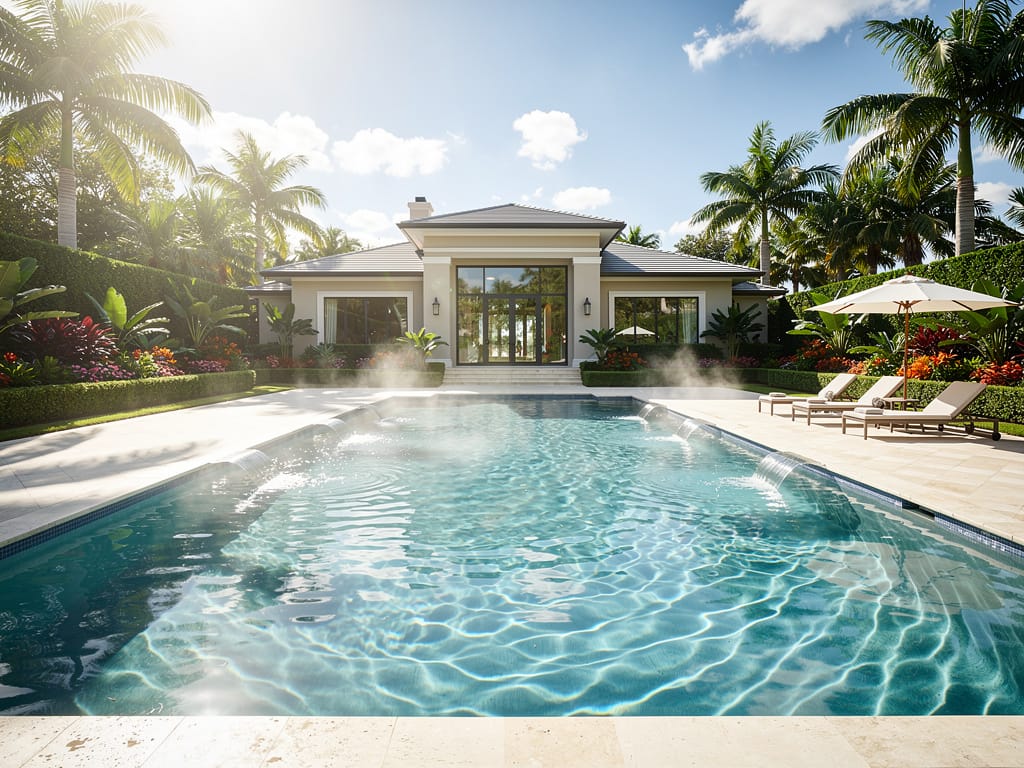
Parkland’s custom estate pools feature water elements that in many cases represent the most complex and visually striking backyard environments in South Florida. A natural rock grotto with a hidden cave, multiple waterfall drops, and integrated lighting is an extraordinary feature — and one that requires extraordinary maintenance attention to preserve its appearance and structural integrity over time. The same premium that went into constructing these features must go into maintaining them.
At Pool Service Fort Lauderdale, we maintain water features for Parkland estate pools and bring the specific knowledge that grotto and custom feature maintenance requires. This guide covers what the most common premium water features need and how to maintain them at the standard Parkland’s estate market demands.
Natural Rock Grotto and Waterfall Maintenance
Natural stone grottos — whether constructed from Oklahoma flagstone, limestone boulders, artificial rock (Grotto Rock, Permacast), or site-quarried stone — present specific maintenance challenges:
Algae Growth on Rock Surfaces
Rock surfaces in the moist, warm environment of a South Florida pool enclosure are ideal algae habitat. Green and black algae colonize rock surfaces both above and below the waterline, producing the characteristic greenish-black staining that develops on untreated rock installations. Algae on rock surfaces directly above the pool sheds into the water during rain and spray events, contributing to pool algae load.
Treatment: Diluted sodium hypochlorite (chlorine) applied to rock surfaces above the waterline kills algae and can be rinsed away without pool chemistry impact if used carefully and kept out of the pool water. Submerged rock surfaces are treated through pool chemistry. Annual professional rock surface treatment maintains a clean appearance and prevents algae from becoming established as a chronic source.
Calcium Scale on Rock Surfaces
Rock in the splash zone and spray path of a waterfall accumulates calcium carbonate scale from the pool water spray. This white to gray calcium deposit coats rock surfaces and changes their appearance over time — masking the natural stone color and texture with a mineral buildup. Acid treatment (diluted muriatic acid) dissolves calcium scale from rock surfaces but must be carefully applied to avoid runoff into pool water. Professional rock surface descaling: annual or biannual depending on pool calcium levels.
Mortar and Structural Inspection
Rock grottos and waterfall constructions are masonry structures — stone mortared over a steel-and-shotcrete armature. Over time in Florida’s heat-cool cycles and wet-dry cycles, mortar joints crack and stones can loosen. Annual inspection of all mortar joints, particularly at stones above the pool that could fall in if mortar fails, identifies structural issues before they become safety hazards. Mortar repointing as needed maintains structural integrity.
Fire Bowl and Fire-and-Water Feature Maintenance
Gas-fired fire bowls, fire troughs, and fire-and-water combination features on Parkland estate pools require:
- Annual burner inspection: Natural gas or propane burners should be inspected annually by a licensed gas contractor. Burner heads accumulate insect nests (particularly in off-season), rust deposits, and debris that reduce flame quality or create uneven burn patterns. Clean burners produce the full, symmetrical flame that makes fire features visually dramatic; fouled burners produce irregular, diminished, or extinguished flames.
- Gas line inspection: Gas lines and connections to fire features should be pressure-tested annually. Florida’s corrosive coastal environment affects gas line connections and fittings — any sign of corrosion at fittings or connectors should be addressed by a licensed gas contractor before seasonal use.
- Fire bowl interior cleaning: Gas fire bowls with lava rock, fire glass, or glass beads as the burn medium collect debris (leaves, insects, dirt) during off periods. Before seasonal startup, remove and rinse the burn medium, inspect the burner beneath, and reinstall. Clean fire media burns more cleanly and maintains the visual effect.
- Water element alignment: Fire-and-water combination features with sheer descents, scuppers, or waterfall elements integrated with fire bowls require checking that water flow paths are clear and that water direction hasn’t shifted — water spray that contacts a gas flame is both a safety issue and a fire feature performance problem.
Water Feature Nozzle, Fitting, and Pump Maintenance
Custom water features — rain curtains, custom scuppers, ornamental spitter fittings, custom deck jets — use nozzle fittings and dedicated pumps that require the same maintenance as pool equipment:
- Nozzle fitting inspection for calcium scale obstruction (reduces flow and changes water pattern)
- Feature pump filter or strainer cleaning (each dedicated feature pump typically has a pre-pump strainer)
- Feature pump motor inspection — annual vibration and sound assessment for developing bearing wear
Pool Service Fort Lauderdale maintains water features and specialty pool elements for Parkland estate properties. Call (954) 501-2754 or visit our Parkland pool service page. Full coverage at poolservicefortlauderdale.us.
Frequently Asked Questions
{“@context”:”https://schema.org”,”@type”:”FAQPage”,”mainEntity”:[{“@type”:”Question”,”name”:”How often should natural rock grotto surfaces be professionally cleaned in Parkland?”,”acceptedAnswer”:{“@type”:”Answer”,”text”:”Annual professional cleaning is the baseline for Parkland estate pool grottos and natural rock waterfall features in South Florida’s climate. Algae grows year-round in Florida’s heat and humidity; calcium scale accumulates from pool water spray. Annual cleaning maintains the natural stone appearance and prevents algae from becoming established as a chronic pool contamination source. Pools with high calcium hardness or heavy algae history may benefit from twice-annual treatment.”}},{“@type”:”Question”,”name”:”Why is algae growing on my Parkland pool’s rock waterfall?”,”acceptedAnswer”:{“@type”:”Answer”,”text”:”Rock surfaces in the warm, moist environment of a South Florida pool enclosure are ideal algae habitat — consistent temperature, moisture from pool spray, and some sunlight create conditions where algae establishes rapidly on porous natural stone. Above-waterline rock algae is typically green (Chlorophyta) or black (Cyanobacteria). Both types contribute to pool algae load by shedding into the pool during rain or spray events. Annual professional rock surface treatment prevents algae establishment and eliminates existing growth.”}},{“@type”:”Question”,”name”:”How do I maintain the fire bowls on my Parkland estate pool?”,”acceptedAnswer”:{“@type”:”Answer”,”text”:”Fire bowl annual maintenance: (1) burner inspection and cleaning by a licensed gas contractor before seasonal startup; (2) gas line pressure test for fitting and connection integrity; (3) burn medium cleaning (remove, rinse, and inspect lava rock or fire glass); (4) alignment check for any water elements integrated with the fire feature. Fire features not used for 3+ months should receive a startup inspection before ignition — insect nests in burner heads are a common off-season issue.”}},{“@type”:”Question”,”name”:”Can calcium scale on natural rock features be removed without damaging the stone?”,”acceptedAnswer”:{“@type”:”Answer”,”text”:”Yes, with proper technique and products. Diluted muriatic acid (10-15% concentration) dissolves calcium carbonate scale from most natural stone surfaces. The acid must be applied carefully with containment to prevent runoff into pool water. Acid contact time must be managed — some natural stone types (particularly limestone and travertine, which are themselves calcium carbonate) can be etched by extended acid exposure. Professional application ensures correct concentration, contact time, and rinse containment for the specific stone types present.”}},{“@type”:”Question”,”name”:”How do I check if the mortar in my Parkland pool’s rock grotto is deteriorating?”,”acceptedAnswer”:{“@type”:”Answer”,”text”:”Annual inspection of all mortar joints in the grotto and waterfall construction: look for cracking, crumbling, or white efflorescence (calcium carbonate leaching from deteriorating mortar). Press on individual stones in elevated positions — a stone that moves or wobbles has failed mortar bonds and must be secured before it falls into the pool or onto a swimmer. Mortar inspection by a pool contractor or masonry professional familiar with water feature construction should be part of the annual service program for Parkland pools with rock grottos.”}}]}
How often to professionally clean rock grotto surfaces? Annually as baseline in South Florida’s climate. High-calcium-hardness pools or heavy algae history: twice annual. Annual cleaning maintains natural stone appearance and eliminates algae contribution to pool water contamination.
Why is algae growing on the rock waterfall? Rock surfaces in a warm, moist pool enclosure environment are ideal algae habitat. Above-waterline algae sheds into the pool water during rain and spray events, contributing to pool algae load. Annual rock surface treatment prevents establishment and eliminates existing growth.
How to maintain fire bowls? Annual: burner inspection by licensed gas contractor, gas line pressure test, burn medium cleaning, water element alignment check. Pre-startup inspection after 3+ months of non-use is essential — insect nests in burner heads are a common off-season issue.
Can calcium scale be removed from natural rock without damaging it? Yes — diluted muriatic acid (10-15%) dissolves calcium carbonate scale. Must be applied with containment to prevent pool water runoff. Limestone and travertine require careful management — they are calcium carbonate themselves and can be etched by extended acid exposure. Professional application required.
How to check for mortar deterioration in a rock grotto? Annual inspection of all mortar joints for cracking, crumbling, or efflorescence. Press on individual elevated stones — movement indicates failed mortar bonds requiring immediate repointing. Safety hazard if left unaddressed.