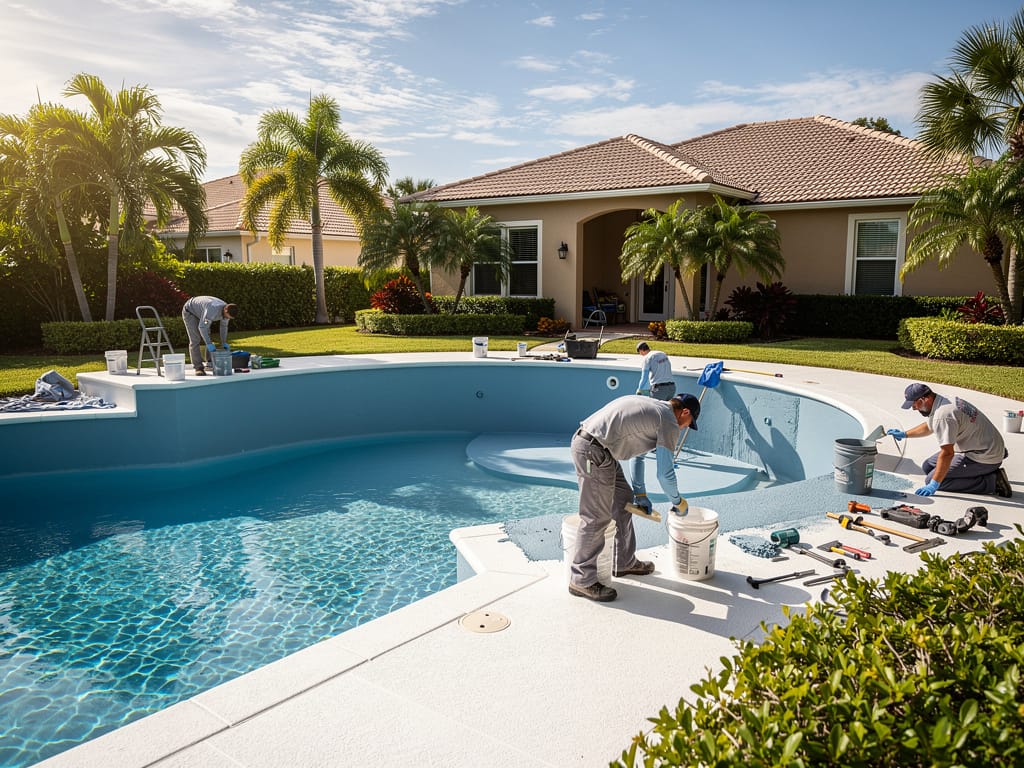
Sunrise’s established residential neighborhoods — the communities built from the 1970s through the 1990s — include thousands of pools that are reaching or have passed the end of their original surface life. A pool built in 1990 with the original plaster surface has lived through 35 South Florida summers, and that surface is showing it. Recognizing when resurfacing is genuinely needed (vs. when it’s being oversold by a contractor looking for work) and understanding what modern resurfacing involves helps Sunrise homeowners make informed decisions about a significant investment.
At Pool Service Fort Lauderdale, we see the full range of pool surface conditions in Sunrise and help homeowners understand what their specific situation requires. This guide covers the honest assessment framework for resurfacing decisions.
Signs That Resurfacing Is Genuinely Needed
Rough, Sharp Texture Across the Surface
New plaster feels smooth; new pebble feels like fine gravel but not sharp. As plaster ages, the white portland cement matrix erodes away, leaving the aggregate (marble dust in standard white plaster) exposed. Exposed aggregate in plaster is coarser and sharper than the original surface. When the pool floor feels rough or scratchy on bare feet or is visibly abrading swimwear, the plaster has eroded past the smooth surface layer. This is a legitimate resurfacing indicator — not cosmetic.
Persistent Staining Across the Surface
Pool surfaces accumulate stains from iron (reddish-brown), copper (blue-green or black), manganese (brown-black), and organic tannin (yellowish-brown from leaf decomposition). When staining is in a young, intact surface, chemical stain treatment (vitamin C test for metal, ascorbic acid treatment, chelating agents) can remove it without resurfacing. When staining has penetrated deeply into an eroded, porous surface, chemical treatment achieves only temporary improvement — the stain returns within weeks because it’s embedded in the surface material rather than sitting on top. Repeat stain treatment failure in a Sunrise pool with an older surface is a resurfacing indicator.
Structural vs. Surface Cracks
Cosmetic surface cracks (hairline cracks in the plaster only) can be addressed through spot repair — grinding and re-troweling the crack area with matching plaster. Structural cracks that pass through the plaster into the gunite shell, or cracks that grow and shift over time, indicate shell movement and require structural assessment before any surface treatment. A Sunrise homeowner who notices a crack that has visibly grown since they bought the property should have a structural pool contractor evaluate it before committing to any surface work.
Modern Resurfacing Options for Sunrise Pools
White Plaster (Marcite)
The traditional resurfacing material — portland cement and white marble dust. Lifespan in South Florida: 7-10 years. Cost for a 15,000 gallon pool: $5,000-$7,500 installed. Lowest upfront cost; least durable. Appropriate for: older Sunrise pools where the homeowner has a medium-term horizon and doesn’t want to invest in a premium surface.
Quartz Aggregate (Diamond Brite, Sunstone)
Quartz crystals embedded in white cement matrix. More durable than standard plaster — lifespan 12-15 years in South Florida. More resistant to etching and staining than plaster. Available in a wide range of colors (blue quartz, tan, gray, brown). Cost: $7,000-$11,000 for a standard Sunrise pool. The most common upgrade choice for Sunrise homeowners resurfacing from white plaster.
Pebble Aggregate (Pebble Tec, SGM Pebble)
Natural river pebbles in a cement matrix. Lifespan 15-20 years with proper chemistry management. Durable, attractive, and available in many color and texture options. More expensive than quartz: $9,000-$14,000 for a standard Sunrise pool. The most popular choice for Sunrise homeowners who plan to stay long-term and want to avoid another resurfacing for as long as possible.
The Resurfacing Process
Pool resurfacing takes 3-7 days from start to fill: acid wash and preparation (1 day), surface removal and gunite repair if needed (1-2 days), new surface application (1-2 days), and cure period before fill (1 day minimum). After filling, the startup chemistry process (increasing pH and alkalinity gradually, brushing twice daily for 2 weeks to remove plaster dust) adds another 2 weeks of active management before the pool is swim-ready.
Pool Service Fort Lauderdale provides pool surface assessments for Sunrise homeowners and manages post-resurfacing startup chemistry. Call (954) 501-2754 or visit our Sunrise pool service page. Full coverage at poolservicefortlauderdale.us.
Frequently Asked Questions
{“@context”:”https://schema.org”,”@type”:”FAQPage”,”mainEntity”:[{“@type”:”Question”,”name”:”How do I know if my Sunrise pool needs resurfacing or just chemical treatment?”,”acceptedAnswer”:{“@type”:”Answer”,”text”:”Resurfacing is needed when: surface texture is rough and scratchy across a large area (eroded plaster); staining doesn’t respond to or relapse within weeks of chemical treatment (stain embedded in eroded surface); structural cracks pass through the surface into the shell; or chronic algae grows in surface pits that can’t be cleared by brushing. Chemical treatment alone addresses staining on intact surfaces, spot etching, and calcium scale. A professional assessment distinguishes between conditions that require resurfacing and those that can be managed with chemistry or spot repair.”}},{“@type”:”Question”,”name”:”How much does pool resurfacing cost in Sunrise?”,”acceptedAnswer”:{“@type”:”Answer”,”text”:”Pool resurfacing cost for a standard 15,000 gallon Sunrise pool: white plaster (marcite) $5,000-$7,500; quartz aggregate (Diamond Brite, Sunstone) $7,000-$11,000; pebble aggregate (Pebble Tec, SGM Pebble) $9,000-$14,000. Costs vary based on pool size, surface removal complexity (some older pools have multiple existing surface layers that add labor), and whether gunite repairs are needed. Get at least 3 quotes from licensed pool contractors — significant price variation exists in the Sunrise market.”}},{“@type”:”Question”,”name”:”How long does pool resurfacing take in Sunrise?”,”acceptedAnswer”:{“@type”:”Answer”,”text”:”The resurfacing process itself takes 3-7 days from drain to refill. After refilling, the post-fill startup process (gradual chemistry adjustment, twice-daily brushing to remove plaster dust) takes 10-14 days before the pool is swim-ready. Total out-of-service time: 2-3 weeks. Plan resurfacing during a period when the pool won’t be needed — Sunrise homeowners often schedule resurfacing in November-December, after summer entertaining season ends.”}},{“@type”:”Question”,”name”:”Which pool resurfacing material lasts longest in Sunrise?”,”acceptedAnswer”:{“@type”:”Answer”,”text”:”Pebble aggregate surfaces (Pebble Tec, SGM Pebble, equivalent) last the longest in South Florida’s chemistry environment — 15-20 years with proper chemistry management. Quartz aggregate (Diamond Brite, Sunstone) follows at 12-15 years. Standard white plaster (marcite) has the shortest lifespan at 7-10 years. The additional upfront cost of pebble vs plaster ($3,000-$6,000 more) is recovered in the deferred resurfacing cost over the longer surface life.”}},{“@type”:”Question”,”name”:”What happens after a Sunrise pool is resurfaced?”,”acceptedAnswer”:{“@type”:”Answer”,”text”:”After the pool is refilled, a post-fill startup protocol is required: gradually raise pH and total alkalinity over several days (new plaster is highly alkaline initially); brush the entire pool surface twice daily for 10-14 days to remove plaster dust (this dust clouds the water and must be brushed into suspension for the filter to capture); run the pump continuously for the first 72 hours; and delay salt system startup for 28 days on new plaster surfaces (salt accelerates early curing damage). Professional management of the post-fill startup protects the new surface and achieves proper water clarity faster.”}}]}
Resurfacing vs chemical treatment — how to tell? Resurfacing needed when: rough surface texture across large area, staining that relapse within weeks of treatment, structural cracks into the shell, or chronic algae in surface pits. Chemical treatment works on intact surfaces with surface-level issues. Professional assessment distinguishes between the two.
Resurfacing cost in Sunrise? White plaster $5,000-$7,500 | Quartz aggregate $7,000-$11,000 | Pebble aggregate $9,000-$14,000. Get 3 quotes from licensed contractors — significant price variation exists in the Sunrise market.
How long does it take? 3-7 days drain to refill, plus 10-14 days post-fill startup (chemistry adjustment, twice-daily brushing). Total out-of-service: 2-3 weeks. Most Sunrise homeowners schedule November-December.
Which material lasts longest? Pebble aggregate 15-20 years. Quartz aggregate 12-15 years. White plaster 7-10 years. Extra upfront cost of pebble vs plaster recovered in deferred resurfacing cost over longer life.
What happens after resurfacing? Gradual pH/alkalinity adjustment, twice-daily brushing for 10-14 days to remove plaster dust, continuous pump run for first 72 hours, no salt system for 28 days. Professional post-fill startup management protects the new surface.