Sunrise sits in Broward County — solidly within the Atlantic hurricane belt. Every pool owner in Sunrise should have a hurricane preparation protocol for the pool that becomes automatic when a watch or warning is issued. Scrambling to figure out what to do the day before a storm hits is too late to do it well.
At Pool Service Fort Lauderdale, we serve Sunrise pool owners through storm seasons and coordinate pre-storm and post-storm service when clients need assistance. This guide covers the complete storm preparation protocol — developed for South Florida conditions.
Before the Storm — The 2-3 Hour Preparation Protocol
DO NOT Drain the Pool
The most common mistake Sunrise homeowners make in hurricane preparation: draining the pool to prevent overflow. Do not drain the pool. An empty or partially drained pool shell can experience hydrostatic uplift — the rising water table from heavy rainfall creates upward pressure on the empty shell that can pop the pool out of the ground. Pool “floating” is rare but catastrophic and not covered by most homeowner policies. The pool is safer with water in it.
Super-Shock the Water
A hurricane or major tropical storm will introduce hundreds or thousands of gallons of rain water into the pool, diluting chlorine significantly. Before the storm, add a super-shock dose of chlorine — bring free chlorine to 5-10 ppm rather than the normal 1.5-3 ppm. After storm rainfall dilutes the pool water, some chlorine reserve remains rather than the pool going to zero chlorine. Cost: $10-$20 in liquid chlorine or granular shock.
Lower the Water Level
Lower the pool water level 6-12 inches below normal to create capacity for rain accumulation. Sunrise typically receives 8-18 inches of rainfall during a major storm event. If the pool is already at normal level and receives 10 inches of rain, the overflow spills onto the pool deck and into surrounding areas — taking pool chemicals with it. A 6-12 inch reduction provides buffer. Lower with the submersible pump or the waste/backwash line if your filter has this option.
Remove All Loose Pool Deck Items
Pool deck furniture, umbrellas, floats, toys, potted plants, and any loose decorative items adjacent to the pool become high-velocity projectiles in hurricane-force winds. Remove everything from the pool deck and surrounding area — store inside the home or in a secured garage. Do not place furniture in the pool. Pool deck furniture thrown into the pool in hurricane conditions has caused pool surface damage and equipment damage in South Florida storms.
Disconnect Pool Equipment
Turn off all pool equipment at the circuit breaker — not just the timer or automation controller. This protects equipment from power surge damage during the storm and prevents the pump from attempting to operate if debris enters the plumbing. If the pool has an automation system, set it to “service mode” and then disconnect at the breaker.
Remove the Automatic Pool Cleaner
Remove the robotic or pressure-side cleaner from the pool and store it inside. Storm surge, wind-blown debris, and pressure fluctuations in an uncontrolled pool during a storm can damage or destroy a pool cleaner left in the water.
After the Storm — Restoration Protocol
Step 1 — Do not swim until tested and treated. Post-storm pool water has been diluted, contaminated with debris and potentially with storm surge water (in severe flooding events), and is unbalanced chemistry. Even a pool that looks clear after a storm may have unsafe chlorine, pH, or bacterial levels.
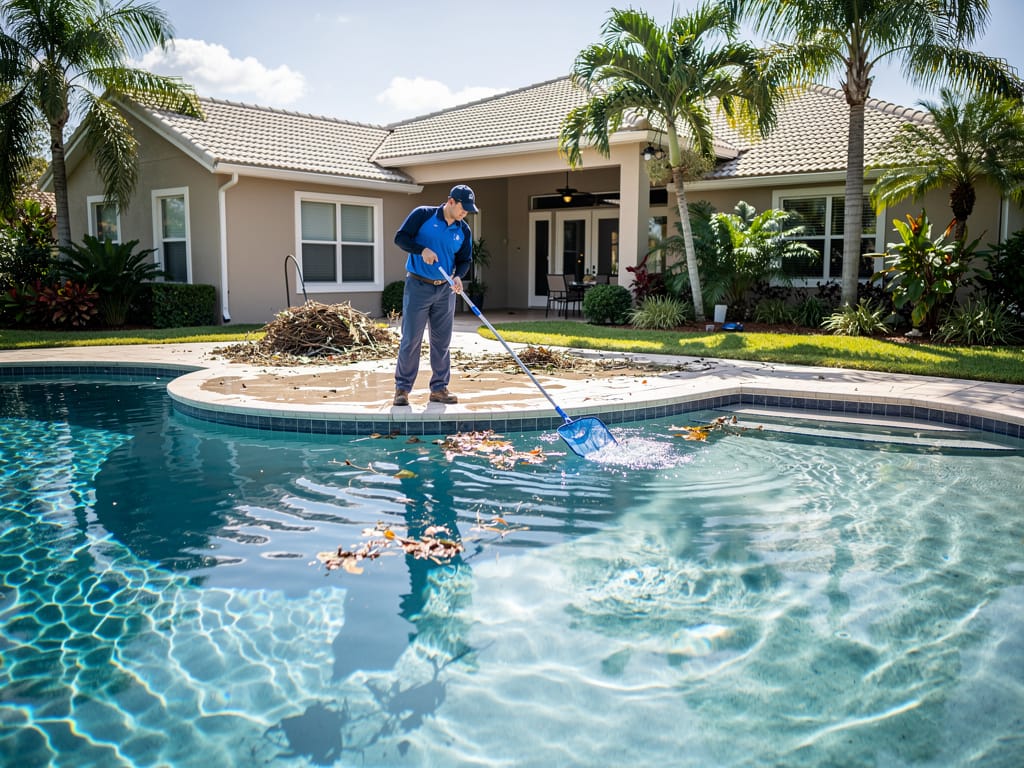
Step 2 — Remove debris before running the pump. Large debris (branches, leaves, storm materials) in the pool before running the pump can be sucked into the plumbing, clogging the system or damaging the pump impeller. Manually net or vacuum out major debris before restarting any equipment.
Step 3 — Inspect equipment before restarting. Check pump and filter for debris entry, damage, and proper priming. Check all electrical connections for moisture damage. If any equipment shows signs of flooding or damage, have an electrician or pool technician inspect before restarting.
Step 4 — Full chemistry test and treatment. Test all 7 parameters. Address pH first (bring to 7.2-7.4), then add chlorine shock, then adjust alkalinity and other parameters. With significantly diluted water, multiple chemistry adjustments over 2-3 days may be required to restore proper balance.
Pool Service Fort Lauderdale provides pre-storm and post-storm pool service throughout Sunrise. Call (954) 501-2754 or visit our Sunrise pool service page. Full coverage at poolservicefortlauderdale.us.
Frequently Asked Questions
{“@context”:”https://schema.org”,”@type”:”FAQPage”,”mainEntity”:[{“@type”:”Question”,”name”:”Should I drain my Sunrise pool before a hurricane?”,”acceptedAnswer”:{“@type”:”Answer”,”text”:”No. Do not drain your pool before a hurricane. An empty pool shell can experience hydrostatic uplift — rising groundwater during heavy rainfall creates upward pressure that can pop the empty pool shell out of the ground. This is rare but catastrophic and typically not covered by homeowner insurance. Keep water in the pool. Lower the level 6-12 inches to make room for rain accumulation, but do not drain.”}},{“@type”:”Question”,”name”:”What should I do with pool furniture before a hurricane in Sunrise?”,”acceptedAnswer”:{“@type”:”Answer”,”text”:”Remove all pool deck furniture, umbrellas, floats, toys, and loose decorative items from the pool area and store them inside the home or in a secured garage before the storm. Do NOT throw pool furniture into the pool — in hurricane-force winds, objects in the pool bounce around and cause pool surface and equipment damage. Everything that can move must be stored securely inside.”}},{“@type”:”Question”,”name”:”How long after a hurricane should I wait before swimming in my Sunrise pool?”,”acceptedAnswer”:{“@type”:”Answer”,”text”:”Until the pool has been professionally tested and treated to safe chemistry levels. Post-storm pool water is diluted, contaminated, and chemically unbalanced — regardless of how it looks. Professional testing and treatment, followed by 24-48 hours of filtration and chemistry stabilization, is the correct protocol before swimming. A pool that looks clear may still have inadequate chlorine or unsafe bacterial levels from storm water contamination.”}},{“@type”:”Question”,”name”:”What chemistry problems does a hurricane typically cause in a Sunrise pool?”,”acceptedAnswer”:{“@type”:”Answer”,”text”:”A major storm event in Sunrise typically causes: significant chlorine dilution (rain water has no chlorine — heavy rainfall can drop free chlorine from 2 ppm to below 0.5 ppm); pH fluctuation (rainwater is slightly acidic — heavy rainfall drops pool pH); total alkalinity reduction (from rain water dilution); and introduction of organic contaminants from storm debris, soil, and potential flood water contact. Post-storm chemistry restoration requires testing all parameters and systematically adjusting from the storm baseline, typically over 2-3 days.”}},{“@type”:”Question”,”name”:”Should I turn off my pool pump during a hurricane in Sunrise?”,”acceptedAnswer”:{“@type”:”Answer”,”text”:”Yes. Turn off all pool equipment at the circuit breaker before a hurricane — not just the timer or automation controller. This protects equipment from power surge damage during the storm and prevents the pump from attempting to operate if debris or flooding enters the system. After the storm, inspect equipment before restarting and confirm no flooding, debris, or electrical damage occurred before powering equipment back on.”}}]}
Should I drain the pool before a hurricane? No — hydrostatic uplift risk. Lower the level 6-12 inches for rain capacity, but keep water in the pool.
What to do with pool furniture? Remove everything, store securely inside. Do NOT throw furniture into the pool — it causes surface and equipment damage during hurricane-force wind conditions.
How long to wait before swimming post-storm? Until professionally tested and treated to safe chemistry levels. Clear water doesn’t mean safe water — post-storm chemistry must be verified.
What chemistry problems does a hurricane cause? Chlorine dilution (rain has no chlorine), pH drop (rainwater is acidic), alkalinity reduction, and organic contamination from debris and flood water. Full 7-parameter test and systematic adjustment over 2-3 days required.
Turn off pool pump during hurricane? Yes — at the circuit breaker, not just the timer. Protects from surge damage. Inspect before restarting after the storm.