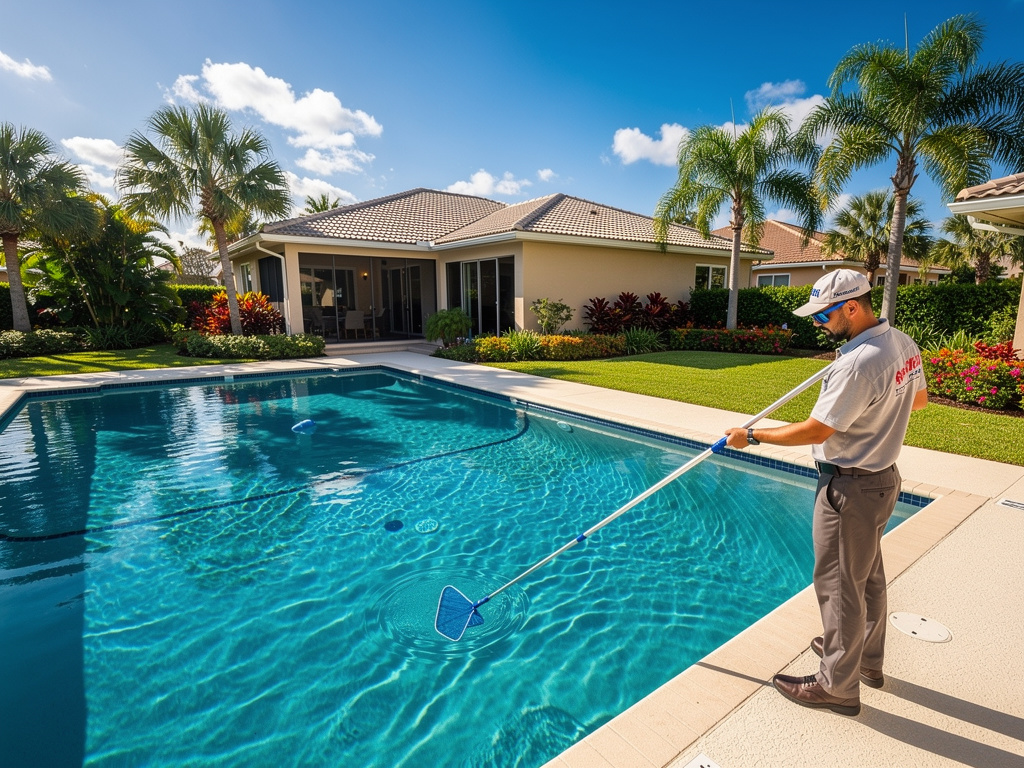
When a Sunrise home listing includes a pool, it’s typically presented as an asset — bright photos, clear water, inviting deck. What those photos don’t show: the equipment that may be 12 years old and approaching end of service life, the pool surface with 2-year-old pebble that was improperly maintained and is already showing calcium scale etching, or the pool fence gate that doesn’t self-latch and is therefore a building code violation. A pre-purchase pool inspection by someone who knows what to look for protects buyers from these unknowns.
At Pool Service Fort Lauderdale, we perform pre-purchase pool inspections for Sunrise home buyers and have seen the full range of pool conditions that listing photos conceal. This guide covers what the inspection should include and how to interpret findings.
What a Thorough Pre-Purchase Pool Inspection Covers
Water Chemistry Assessment
Test all 7 parameters: free chlorine, pH, total alkalinity, calcium hardness, cyanuric acid (CYA), phosphate, and salt/TDS. High CYA (above 80 ppm) indicates years of trichlor tablet use — correction requires a significant partial drain. High calcium (above 400 ppm) means the water is already scale-prone and approaching the need for dilution. High phosphate indicates ongoing algae pressure from environmental loading. These conditions are correctable but add to first-year ownership costs.
Equipment Inspection and Age Assessment
Every piece of equipment should be inspected and its approximate age documented:
- Pump: Run and listen for unusual noise (bearing wear, cavitation). Check motor housing for rust staining. Check shaft seal area for leaking. A pump motor that’s 8-10+ years old is near the end of service life.
- Filter: Inspect filter housing condition. For DE filters, check for leaking or cracked grids. For cartridges, check cartridge age and condition. For sand filters, ask when media was last changed (every 5-7 years).
- Heater: Inspect heat exchanger for corrosion. Run the heater and confirm it cycles on and reaches setpoint. Ask the seller when it was last serviced. Pool heaters in South Florida: 8-12 year lifespan.
- Salt Cell (if present): Check cell plates for calcium scale. Test current output (automation systems typically display cell %). A cell with 3-5 years of use is within service life; 6-8+ years means replacement is coming.
- Automation system (if present): Confirm all programmed functions work — pump speed schedules, heater setpoint, light control, and any valve automation.
Pool Surface Assessment
Walk the pool perimeter and assess surface condition on all accessible areas. What to note:
- Rough or sharp texture across large areas (erosion — approaching resurfacing need)
- Visible pitting or etching (chemistry damage — may be cosmetic or indicative of deeper erosion)
- Staining type and extent (metal stains, organic stains, calcium deposits)
- Cracks: surface-only (cosmetic) vs. through-surface (structural assessment needed)
- Delamination: areas where surface has separated from the shell (immediate resurfacing need)
Safety Features
- Pool fence: Self-closing gate? Self-latching mechanism (does it latch automatically, not manually)? Latch above 54 inches? Gaps in fencing below 4 inches?
- Main drain covers: Manufacturer date stamped on cover. Covers expire after 10 years — expired covers are a federal safety code violation under the VGB Act.
- Pool depth markers: Required at all depth transitions by Florida statute.
Using Inspection Findings in the Sunrise Real Estate Negotiation
Pool inspection findings in Sunrise real estate negotiations generally fall into three categories:
- Safety violations (non-negotiable): Non-compliant drain covers, non-self-latching fence gate — request correction by seller before closing or credit for immediate remediation
- Near-term capital items: Equipment approaching end of service life, surface approaching resurfacing need — request seller credit or price adjustment
- Ongoing maintenance issues: Chemistry problems, minor repairs — factor into first-year ownership cost estimate
Pool Service Fort Lauderdale provides pre-purchase pool inspections for Sunrise home buyers. Call (954) 501-2754 or visit our Sunrise pool service page. Full coverage at poolservicefortlauderdale.us.
Frequently Asked Questions
{“@context”:”https://schema.org”,”@type”:”FAQPage”,”mainEntity”:[{“@type”:”Question”,”name”:”Is a home inspection pool check sufficient when buying a house with a pool in Sunrise?”,”acceptedAnswer”:{“@type”:”Answer”,”text”:”No. A standard home inspection pool check is a limited visual assessment — the inspector observes the pool from the deck, runs equipment for a few minutes, and notes obvious visible defects. It does not include water chemistry testing, equipment age/condition assessment beyond basic function, surface condition analysis, structural assessment, or detailed safety feature inspection. A dedicated pool inspection by a CPO-certified pool inspector or experienced pool service company provides the comprehensive assessment that a significant asset purchase requires.”}},{“@type”:”Question”,”name”:”What are the most common defects found in Sunrise pool inspections?”,”acceptedAnswer”:{“@type”:”Answer”,”text”:”Common findings in Sunrise pre-purchase pool inspections: equipment approaching or past service life (pump motors 8-10+ years old, salt cells 6-8+ years); pool surfaces with erosion or calcium scale etching (particularly in pools built in the 1980s-1990s); non-compliant pool drain covers (expired VGB date on cover); pool fence gates that don’t properly self-latch; elevated CYA from years of trichlor tablet use (requiring partial drain to correct); and deferred filter maintenance (sand media not replaced in 7+ years, DE filter grids in poor condition).”}},{“@type”:”Question”,”name”:”How much does a pre-purchase pool inspection cost in Sunrise?”,”acceptedAnswer”:{“@type”:”Answer”,”text”:”Dedicated pool inspections in Sunrise: $150-$350 depending on pool size and whether the inspection includes a written report. This cost is negligible relative to the asset being purchased — a $15,000 resurfacing need or $5,000 equipment replacement need discovered post-closing represents a material undisclosed defect that the inspection fee would have revealed. Most Sunrise buyers who skip the pool inspection regret it within the first year of ownership.”}},{“@type”:”Question”,”name”:”What should I do if the pool inspection reveals problems in a Sunrise home I’m buying?”,”acceptedAnswer”:{“@type”:”Answer”,”text”:”Categorize findings by severity: safety violations (non-compliant drain covers, fence issues) warrant repair requests before closing; near-term capital items (equipment end-of-life, surface needing resurfacing) support a price adjustment or seller credit request; chemistry problems and minor maintenance represent ongoing ownership costs to factor into your budget. In Sunrise’s active market, sellers may resist significant credits — but safety violations and material undisclosed defects have strong legal standing under Florida’s seller disclosure requirements.”}},{“@type”:”Question”,”name”:”Can I negotiate the pool equipment into the sale price if the inspection shows it’s aging?”,”acceptedAnswer”:{“@type”:”Answer”,”text”:”Yes — and this is common in Sunrise real estate transactions where pool equipment is near end of service life. Get written cost estimates for identified items (pump replacement, salt cell replacement, surface resurfacing) and present them as part of the negotiation. A seller who says the pool is in ‘good condition’ when the pump is 11 years old and the salt cell is on its last season has made a material representation that inspection findings can fairly challenge.”}}]}
Is a home inspector’s pool check enough? No — it’s a limited visual assessment only. Doesn’t include chemistry testing, equipment age/condition assessment, structural analysis, or safety detail inspection. A dedicated pool inspection by a CPO or experienced service company is required for meaningful due diligence.
Most common defects found in Sunrise pool inspections? Equipment near end of service life, pool surface erosion or calcium etching (older homes), expired drain covers, fence gates that don’t properly self-latch, elevated CYA from tablet use, deferred filter maintenance.
Cost of a pre-purchase pool inspection? $150-$350. Negligible relative to the $5,000-$20,000+ defects it may reveal. Most Sunrise buyers who skip it regret it within the first year.
Pool inspection revealed problems — what to do? Safety violations: repair request before closing. Near-term capital items: price adjustment or seller credit. Chemistry/minor maintenance: factor into first-year ownership budget.
Can I negotiate aging equipment into the price? Yes — get written estimates and present as part of negotiation. A seller who represented the pool as “good condition” when the pump is 11 years old has made a contestable material representation.