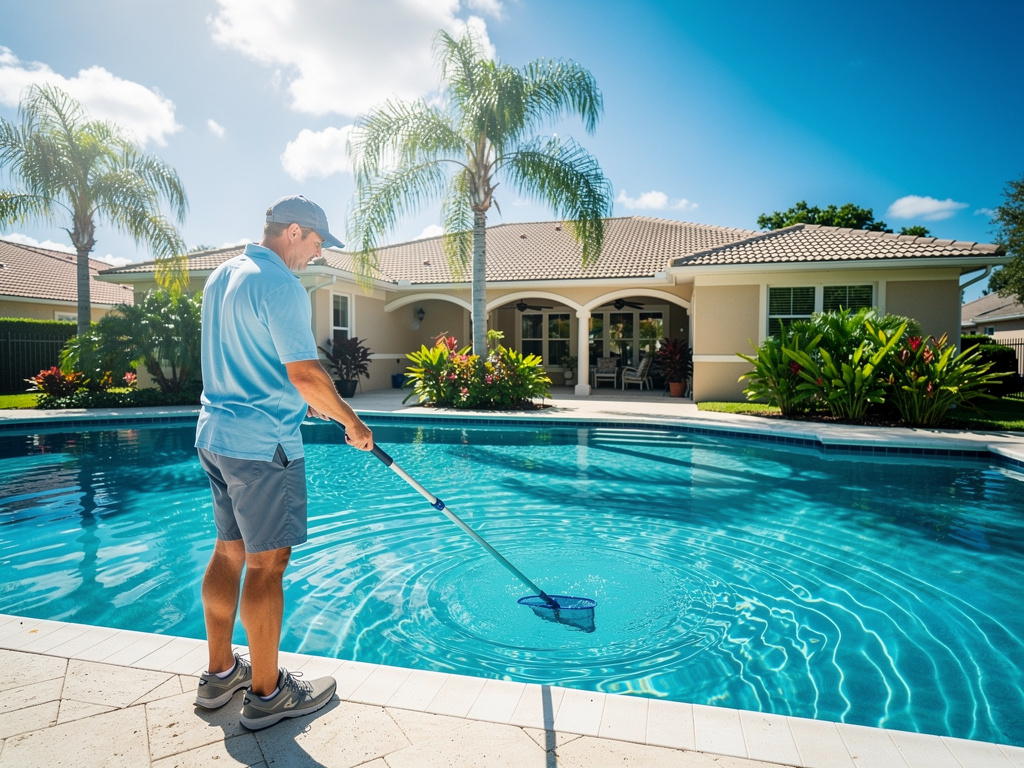
Sunrise’s climate provides pool owners with something most of the country can’t have: genuine year-round swimming conditions. December and January water temperatures in an unheated Sunrise pool reach 65-72°F — cool but swimmable; with a heater, 80-84°F year-round is achievable. This is a genuine advantage. But year-round pool operation also means year-round maintenance responsibility — there is no “closing the pool for winter” that removes the chemistry and equipment management obligation for six months. Sunrise pools require consistent, adjusted-for-season service every week of the year.
At Pool Service Fort Lauderdale, we manage Sunrise pools through all four seasonal phases and adjust service protocols accordingly. This guide covers what each season requires and how service changes to meet it.
Summer (June–September): Maximum Demand Season
Summer is the most chemically demanding season for Sunrise pools:
- Chlorine demand peaks: UV index is highest (South Florida June-August UV index regularly reaches 11-12, the maximum category); heat accelerates chemical reactions; bather load from family summer use adds organic load. A pool that needed 1 gallon of liquid chlorine/week in February may need 2-3 gallons/week in July.
- pH drift is fastest: Warm water, CO2 off-gassing from heavy aeration, and chemical reactions all push pH upward in summer. Pools without automatic pH dosing may need pH correction twice between weekly service visits.
- Algae risk is highest: Peak UV + high phosphate environment + warm water = optimal algae conditions. Chemistry stability is more critical in summer than in any other season.
Service adjustment: Some Sunrise pools benefit from twice-weekly service visits during peak summer months — particularly pools with high bather load, in-ground spas, or phosphate loading from canal-adjacent locations.
Fall (October–November): Organic Load Season
South Florida’s version of fall doesn’t bring cold temperatures but does bring:
- Leaf drop: Late October through November, Sunrise’s deciduous and semi-deciduous trees drop leaves. For pools under or near trees, this means significantly increased organic load — fallen leaves in the pool contribute tannins (yellowish staining), phosphate, and BOD (biological oxygen demand) that consumes chlorine.
- Late-season storm risk: The Atlantic hurricane season runs through November 30 — late October storms remain a possibility. Fall is when storm preparation protocols remain relevant.
- Reduced UV and lower chemical demand: As days shorten and UV index decreases in November, chlorine stability improves and weekly chemical doses can be reduced from summer highs.
Service adjustment: Increased basket cleaning frequency during peak leaf drop; phosphate check after any significant organic matter accumulation event.
Winter (December–February): Heating Season
- Pool heater use peaks: Sunrise homeowners who heat their pools run heaters most heavily December-February. Annual heater inspection before heating season (October-November) ensures reliable operation when needed most.
- Slower chemical reactions: Cooler water (65-75°F in an unheated Sunrise pool) slows chlorine degradation, algae growth, and pH drift. Chemical demand decreases in winter months.
- Reduced bather load: Most Sunrise pools see lower residential use in cooler months, particularly in households without a heater. Lower bather load reduces organic chlorine demand.
Service adjustment: Chlorine doses adjusted downward for cooler temperature and lower bather load; heater operation confirmed and monitored; calcium and LSI management becomes more important as temperature affects scaling tendency.
Spring (March–May): Return-to-Use Season
- Pollen season: March-April brings heavy pollen deposit onto pool surfaces in Sunrise. Pollen contributes to chlorine demand and can discolor pool water if allowed to accumulate. Brushing frequency increases during peak pollen weeks.
- Bather load ramps up: Spring break, warming temperatures, and spring entertaining drive increasing pool use. Chemistry management must anticipate the increased load.
- Transition to summer protocols: April-May is when summer chemical doses begin to be phased back in as UV index rises.
Pool Service Fort Lauderdale manages Sunrise pools year-round with seasonally adjusted service protocols. Call (954) 501-2754 or visit our Sunrise pool service page. Full coverage at poolservicefortlauderdale.us.
Frequently Asked Questions
{“@context”:”https://schema.org”,”@type”:”FAQPage”,”mainEntity”:[{“@type”:”Question”,”name”:”Do Sunrise pools need weekly service in winter?”,”acceptedAnswer”:{“@type”:”Answer”,”text”:”Yes. Sunrise pools operate and accumulate chemistry drift year-round — there is no season where pool chemistry is self-maintaining without professional attention. Winter (December-February) brings lower chemical demand (cooler water, less UV, lower bather load), but pH drift, phosphate accumulation, and calcium scaling continue. Weekly service visits with winter-adjusted chemical doses maintain water quality year-round. Bi-weekly or monthly service in winter consistently results in chemistry problems that require correction before spring use increases.”}},{“@type”:”Question”,”name”:”Why does my Sunrise pool need more chemicals in summer?”,”acceptedAnswer”:{“@type”:”Answer”,”text”:”South Florida summer conditions combine to maximize pool chemical demand: UV index 11-12 (highest category) degrades chlorine rapidly; water temperatures 85-92°F accelerate chemical reactions; summer family use adds bather load and organic contamination; and warm water supports faster algae reproduction. A Sunrise pool in July can consume 2-3 times the chlorine it needs in January. Service providers who dose the same chemical amounts year-round are under-dosing in summer and over-dosing in winter.”}},{“@type”:”Question”,”name”:”Should I run my Sunrise pool pump differently in summer vs winter?”,”acceptedAnswer”:{“@type”:”Answer”,”text”:”Yes — VSP programming should be adjusted seasonally in Sunrise. Summer: longer daily run time (8-10+ hours) to support higher filtration demand from summer use, higher circulation speed during peak heat hours to support heat pump or chiller operation if applicable. Winter: shorter daily run time acceptable (6-8 hours for an unheated pool with low use), lower overnight speed since heat retention isn’t a concern. Automation-equipped pools can use scheduled seasonal programming changes; manually-timed pools should have timer schedules adjusted at least twice per year.”}},{“@type”:”Question”,”name”:”What is the biggest pool maintenance risk in Sunrise during fall?”,”acceptedAnswer”:{“@type”:”Answer”,”text”:”Organic load from leaf drop. South Florida’s late October-November leaf drop deposits significant organic material — leaves, seed pods, palm fronds — into Sunrise pools. Organic material consumes chlorine (creating chlorine demand that outpaces weekly dosing), contributes tannin staining (yellowish discoloration), and adds phosphate load that raises algae pressure. Increased basket cleaning frequency (every 2-3 days during peak leaf drop), phosphate monitoring, and organic removal (enzyme treatments or increased chlorine dosing) manage fall’s organic load challenge.”}},{“@type”:”Question”,”name”:”Do I need a pool heater in Sunrise to swim year-round?”,”acceptedAnswer”:{“@type”:”Answer”,”text”:”Not necessarily — it depends on your comfort threshold. Unheated Sunrise pools reach approximately 65-72°F in December-February (average coldest months). Many adults swim comfortably at 68°F; young children and older adults typically prefer 78-82°F. If January-February pool use is a priority, a heat pump maintaining 80-82°F during the heating season makes the pool actively usable in the coolest months. If occasional cool-weather swimming at 68-72°F is acceptable, an unheater pool still functions year-round for adults comfortable with those temperatures.”}}]}
Do Sunrise pools need weekly service in winter? Yes — chemistry drift, pH movement, phosphate accumulation, and scaling continue year-round. Winter sees lower chemical demand (cooler water, lower UV, lower bather load) but not zero demand. Bi-weekly or monthly winter service consistently produces chemistry problems requiring correction before spring use ramps up.
Why more chemicals in summer? UV index 11-12, water 85-92°F, high bather load, fast algae reproduction = 2-3× the chlorine demand of January. Same dose year-round = under-dosing in summer, over-dosing in winter.
Adjust pump run time seasonally? Yes — summer 8-10+ hours, winter 6-8 hours acceptable for unheated low-use pools. VSP programming should be updated at least twice per year; automation systems can use scheduled seasonal profiles.
Biggest fall pool risk in Sunrise? Organic load from leaf drop (late October-November) — consumes chlorine, causes tannin staining, raises phosphate. Increase basket cleaning to every 2-3 days during peak leaf drop, monitor phosphate, consider enzyme treatment for organic breakdown.
Need a heater for year-round swimming in Sunrise? Depends on comfort threshold. Unheated: 65-72°F December-February. Many adults swim at 68°F; children and older adults prefer 78-82°F. Heat pump maintaining 80-82°F in heating season makes the pool actively usable for all ages year-round.