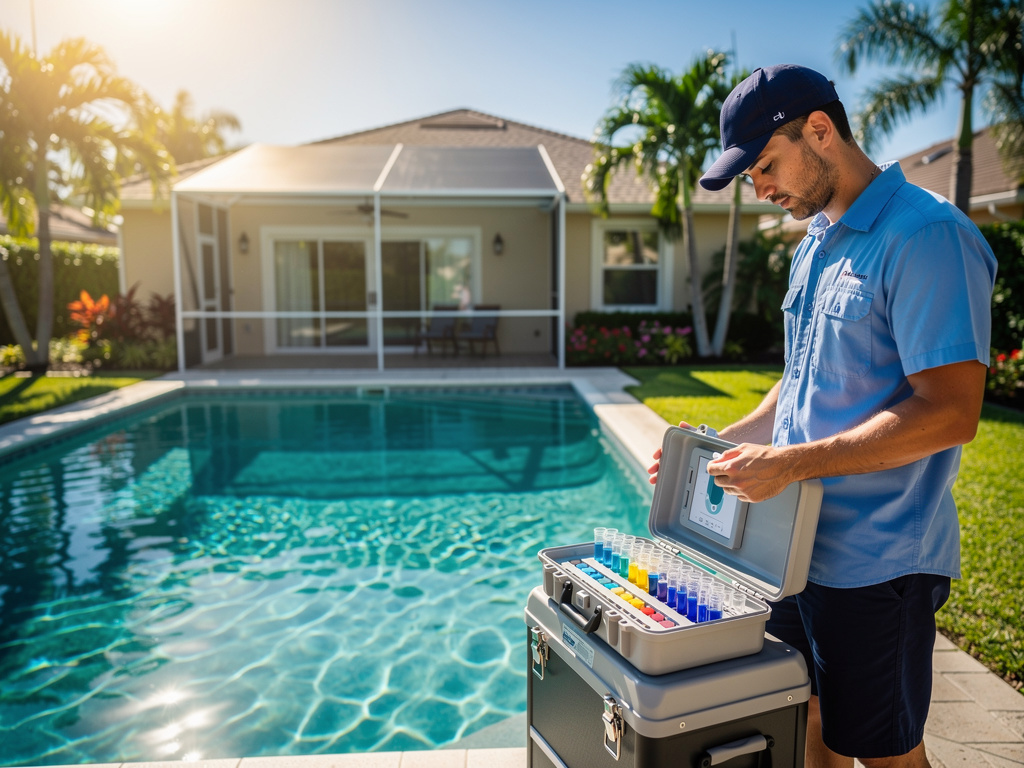
Davie’s unique character as a town with genuine rural roots within Broward County means many properties sit on well water — both for irrigation and, in some cases, as the water source for pool filling and top-off. Well water is not the same as municipal water for pool purposes: the dissolved mineral content, biological load, and chemical composition of Broward’s water table water requires different management than the treated, consistent municipal supply that suburban pool service is calibrated for. Getting the chemistry right from the first fill is critical — mistakes at the initial fill stage can cause surface staining and chemistry problems that take months to fully correct.
At Pool Service Fort Lauderdale, we manage well-water-filled pools throughout Davie and understand the specific challenges the local aquifer water creates. This guide covers the key issues and the correct management approach.
Iron Staining: The Most Common Well Water Pool Problem in Davie
Dissolved ferrous iron (Fe²⁺) is invisible in water — it passes through the water column without color. When dissolved iron contacts chlorine (an oxidizer), it is converted to ferric iron (Fe³⁺) — the oxidized form that is insoluble in water and precipitates out as reddish-brown particles that stain pool surfaces, grout lines, coping, and filter media. This is the same reaction that produces rust when exposed iron contacts air.
The sequence that causes iron staining in a Davie well-water pool:
- Pool filled with iron-containing well water (iron in dissolved, invisible ferrous form)
- Chlorine added to the pool for sanitization
- Chlorine oxidizes dissolved iron → ferric particles precipitate
- Ferric particles settle on pool surfaces → reddish-brown staining
Prevention: Add a metal sequesterant (CuLator, Seaklear Metal Magic, Jack’s Magic Magenta Stuff) to the pool before adding any chlorine. The sequesterant captures dissolved iron in a chelated complex that keeps it in solution (and passes through the filter) rather than allowing it to precipitate when chlorine is introduced. After the sequesterant is circulated for 24 hours, chlorine can be added more safely. Ongoing monthly sequesterant maintenance doses prevent iron that enters through evaporation top-off from accumulating to staining levels.
Hydrogen Sulfide — The Rotten Egg Problem
Some Davie wells produce water containing dissolved hydrogen sulfide (H₂S) — the compound responsible for the “rotten egg” or sulfur smell associated with some South Florida well water. In pool water, hydrogen sulfide creates several problems:
- Creates a significant chlorine demand (the chlorine must oxidize the hydrogen sulfide before it can sanitize the water, temporarily dropping free chlorine to zero in pools with high H₂S content)
- Reacts with copper components in pool equipment (copper heat exchangers, copper algaecides) to form black copper sulfide deposits that create black staining on pool surfaces
- Produces objectionable odor at the pool that makes swimming unpleasant
Management: Super-shock treatment oxidizes hydrogen sulfide, converting it to harmless sulfate that remains in solution without staining. A pool filled with H₂S-containing well water should be super-shocked (10-15 ppm chlorine) before use to oxidize all the hydrogen sulfide before the pool is put into service. Ongoing: if the well produces H₂S and is used for pool top-off, budget for elevated chlorine demand after each top-off event.
High Calcium Hardness from Well Water
Broward County’s limestone aquifer produces well water that is naturally high in dissolved calcium — 150-400 ppm in many Davie wells, compared to the municipal water supply target of 150-250 ppm. A pool filled with 300 ppm calcium well water starts near the upper end of the acceptable range — and normal summer evaporation (which concentrates all dissolved minerals) will push calcium to scaling levels within months without dilution.
For Davie pools on well water top-off: track calcium hardness monthly. When calcium approaches 400 ppm, dilute with lower-calcium municipal water (if available) or plan for a partial drain to dilute the concentrated minerals. Salt water pools on well water require particular attention — salt cells accelerate calcium scale deposition on cell plates in high-calcium water, reducing cell efficiency and lifespan.
Pool Service Fort Lauderdale manages well-water-filled pools on Davie rural properties. Call (954) 501-2754 or visit our Davie pool service page. Full coverage at poolservicefortlauderdale.us.
Frequently Asked Questions
{“@context”:”https://schema.org”,”@type”:”FAQPage”,”mainEntity”:[{“@type”:”Question”,”name”:”Can I fill my Davie pool from a well?”,”acceptedAnswer”:{“@type”:”Answer”,”text”:”Yes, but with specific precautions. Before any chlorine is added, a metal sequesterant must be added to the filled well water and circulated for 24 hours to capture dissolved iron. Then chlorine can be introduced without triggering iron oxidation and staining. If the well produces hydrogen sulfide water, a super-shock treatment (10-15 ppm chlorine) before use oxidizes the H₂S. Test the well water’s iron content, hydrogen sulfide level, and calcium hardness before filling to understand what chemistry adjustments will be needed.”}},{“@type”:”Question”,”name”:”Why is my Davie well water pool staining brown/orange?”,”acceptedAnswer”:{“@type”:”Answer”,”text”:”Reddish-brown or orange staining in a Davie pool filled or topped off with well water is iron staining — dissolved ferrous iron in the well water has been oxidized by chlorine into insoluble ferric iron particles that settle on pool surfaces. Treatment: drain the pool to below the stain line if staining is extensive; acid wash the stained surfaces (ascorbic acid treatment for iron stains); refill with sequesterant added before chlorine. Prevention going forward: add monthly sequesterant maintenance doses to prevent iron accumulation before staining threshold is reached.”}},{“@type”:”Question”,”name”:”My Davie well water smells like sulfur — is it safe for my pool?”,”acceptedAnswer”:{“@type”:”Answer”,”text”:”Sulfur (hydrogen sulfide) well water can be used in a Davie pool but requires a super-shock treatment before the pool is put into service. The shock (10-15 ppm chlorine) oxidizes the hydrogen sulfide to harmless sulfate. After super-shocking and the chlorine returns to normal range, the pool is safe to swim in. The smell should dissipate after the super-shock treatment. If top-off water continues to be sulfur-containing well water, budget for elevated chlorine demand after each top-off and use a copper algaecide with caution — H₂S reacts with copper to form black deposits.”}},{“@type”:”Question”,”name”:”How often should I test water chemistry in a Davie pool filled from a well?”,”acceptedAnswer”:{“@type”:”Answer”,”text”:”More frequently than a municipal-water pool. Full 7-parameter chemistry plus iron and metal testing monthly. Calcium hardness should be tested monthly given the well water’s naturally high calcium content. After any significant top-off event using well water, test within 2-3 days to check if iron or H₂S from the top-off water has affected chemistry. Proactive monthly testing catches mineral accumulation trends before they reach staining or scaling thresholds.”}},{“@type”:”Question”,”name”:”What is a metal sequesterant and how does it work in a Davie well water pool?”,”acceptedAnswer”:{“@type”:”Answer”,”text”:”A metal sequesterant (also called a chelating agent) is a chemical compound that bonds with dissolved metal ions (iron, copper, manganese) and holds them in a stable, soluble complex. In a Davie well-water pool, adding sequesterant before chlorine prevents dissolved iron from being oxidized into insoluble particles that stain surfaces — the sequesterant captures the iron in a form that stays in solution and exits through the filter rather than precipitating as rust-colored staining. Recommended products: CuLator Power Pak, Seaklear Metal Magic, Jack’s Magic Magenta Stuff. Monthly maintenance doses maintain continuous metal control.”}}]}
Can I fill my Davie pool from a well? Yes — with specific precautions. Add metal sequesterant before any chlorine; circulate 24 hours. Then introduce chlorine. If sulfur well water, super-shock (10-15 ppm) before use. Test iron, H₂S, and calcium before filling to understand what adjustments are needed.
Why is my well-water Davie pool staining brown/orange? Iron staining — dissolved ferrous iron oxidized by chlorine into insoluble ferric particles that settle on surfaces. Treatment: ascorbic acid stain removal, drain and refill with sequesterant protocol. Prevention: monthly sequesterant maintenance doses going forward.
Sulfur-smell well water — safe for pool? Yes after super-shock treatment (10-15 ppm) that oxidizes H₂S to harmless sulfate. Smell dissipates post-shock. Ongoing well-water top-off: budget for elevated chlorine demand after each addition. Avoid copper algaecides — H₂S + copper forms black deposits.
How often to test chemistry in a well-water Davie pool? More frequently than municipal water. Full 7-parameter + iron/metals monthly. Calcium hardness monthly (high-calcium well water). Test within 2-3 days after significant top-off events. Proactive monthly testing catches mineral accumulation before staining or scaling threshold.
What is a metal sequesterant and how does it work? Chelating agent that bonds dissolved metal ions (iron, copper, manganese) and holds them in soluble complex — preventing oxidation to insoluble staining particles. Add before chlorine in any well-water fill. Monthly maintenance doses maintain continuous metal control. Recommended: CuLator Power Pak, Seaklear Metal Magic, Jack’s Magic Magenta Stuff.