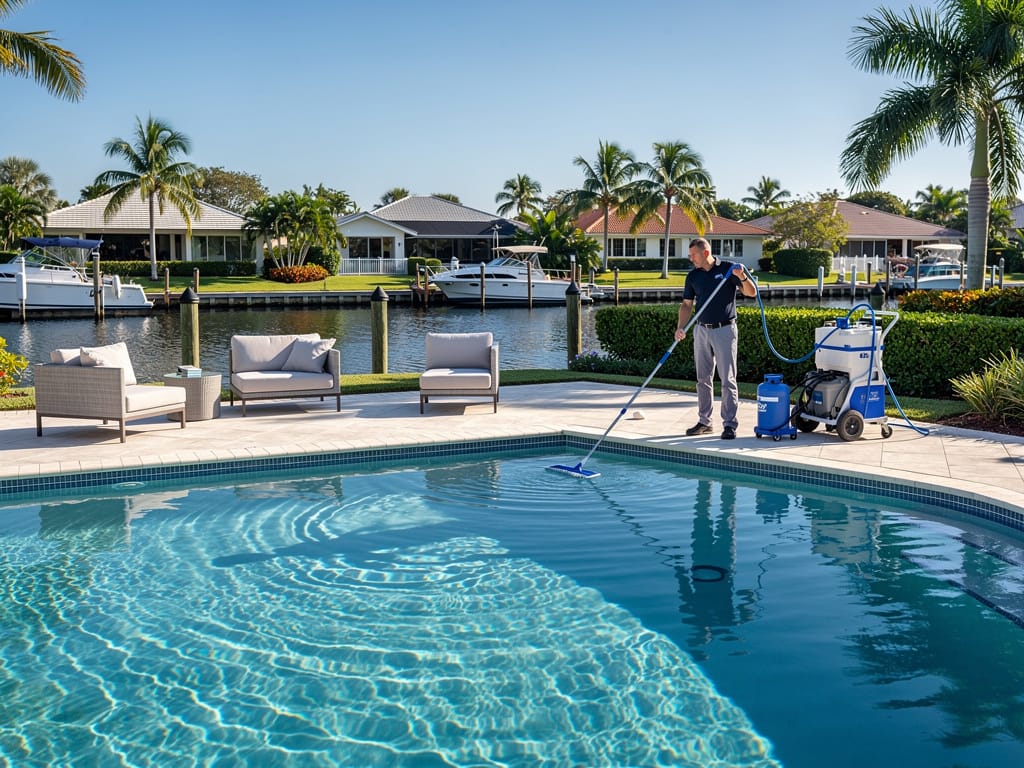
Deerfield Isle is Deerfield Beach’s waterfront community — a network of canal-front homes along the Hillsboro Inlet area where pools share property lines with the Intracoastal system. Quiet Waters Park area canal-adjacent neighborhoods, Cypress Bend homes near drainage canals, and other western Deerfield Beach properties near water features all share a pool maintenance challenge that inland homeowners don’t face: the interaction between pool water levels and surrounding water table and canal levels during flooding events.
This guide covers the specific risks, how to recognize them, and what protective maintenance practices apply to Deerfield Beach canal-front pool owners.
How Canal and Groundwater Flooding Enters Pools
When rainfall is heavy enough to raise canal levels or saturate the surrounding soil to the point where the water table exceeds the pool water level, water can enter the pool through multiple pathways:
Main drain and underground plumbing: A pool’s underground plumbing creates pathways between the pool shell and the surrounding soil. If groundwater pressure exceeds the pool’s internal water pressure — which occurs when the water table rises above the pool water level — water can backflow through underground plumbing connections. This is more common with older plumbing where joints and connections have degraded.
Skimmer body and throat gaps: The skimmer body penetrates the pool wall and connects to the suction plumbing. If the seal between the skimmer body and pool shell has degraded (common in Deerfield Beach’s older pool stock), elevated groundwater can push in through the skimmer area. This often manifests as the pool appearing to gain water after a storm even with no rain falling directly into the pool.
Hydrostatic relief valve: Pools are designed with hydrostatic relief valves at the main drain or in the floor — spring-loaded plugs that open under groundwater pressure to prevent the pool shell from being “floated” out of the ground. When these valves open during high groundwater events, they allow groundwater into the pool. This is the valve working as designed — preventing structural damage — but it means your pool will contain groundwater contamination after a significant event.
Shell cracks: Pools with existing cracks in the shell have a direct pathway for groundwater intrusion. Any crack that was “minor” before a flooding event becomes a significant water intrusion point when surrounding soil is saturated.
How to Recognize Canal Flooding Impact on Your Deerfield Beach Pool
Signs that your pool has experienced groundwater or canal intrusion after a Deerfield Beach storm event:
- Water level above normal after a storm, beyond what rainfall into the pool would account for
- Sudden chemistry dilution — all parameters (chlorine, pH, alkalinity, calcium) lower than expected after a storm
- Water with unusual color, turbidity, or odor that doesn’t match normal post-storm pool conditions
- Unexplained water level fluctuations over several days after the storm
- Visible debris or sediment in the pool that entered from below rather than from above (settled on the floor rather than distributed throughout the water column)
Pre-Storm Protective Protocol for Canal-Front Pools
Don’t lower the water level too much before a storm: The standard advice of dropping the pool 6–12 inches before a storm is correct for average residential pools. But for canal-front Deerfield Beach pools, dramatically lowering the water level before a major storm can increase groundwater pressure differential and accelerate intrusion. Drop no more than 6 inches in canal-front situations unless specifically advised otherwise by your pool service professional who knows your specific property.
Do not drain the pool: For any canal-adjacent or low-lying Deerfield Beach property, this rule is critical — an empty pool in saturated soil will float. The weight of water inside the pool is what keeps it in the ground during flooding events.
Pre-storm shock treatment: Raising chlorine to 10+ ppm before a storm helps the pool resist the contamination load from groundwater intrusion. A well-chlorinated pool entering a storm event has a reserve to fight what comes in.
Check hydrostatic relief valve condition: If you have a canal-front Deerfield Beach pool, have a professional verify your hydrostatic relief valve is functioning correctly and that its surrounding fitting is in good condition. A seized or corroded relief valve that won’t open under pressure can result in pool shell structural damage during flooding events.
Post-Storm Testing Protocol for Canal-Front Pools
After any storm that involved canal flooding or significant rainfall in Deerfield Beach, do not swim without testing:
- Test all chemistry parameters including phosphates
- Have water tested for bacterial contamination if any groundwater intrusion is suspected (standard pool tests don’t cover bacteria — ask for a bacterial test if you’re concerned)
- Run the filter 24/7 for 48 hours before testing and swimming
- Treat phosphates from any fertilizer-laden storm runoff before shocking
- Shock to 10–15 ppm and allow to return to safe swimming range (1–3 ppm) before use
For pool service, inspection, and storm recovery in Deerfield Isle and throughout Deerfield Beach, contact Pool Service Fort Lauderdale at (954) 501-2754.
Frequently Asked Questions
Why is my Deerfield Beach pool full after a storm even though I lowered it beforehand?
If the pool is above the level that rainfall alone would account for, you likely experienced groundwater or canal water intrusion through underground plumbing, the hydrostatic relief valve, or compromised skimmer seals. This is a known issue for canal-adjacent and low-lying properties in Deerfield Isle and nearby neighborhoods. Have your plumbing integrity checked, especially if this happens after every significant storm event.
Is canal water in my pool dangerous?
Canal water in South Florida contains bacteria, nutrients, and potential contaminants from agricultural, residential, and urban runoff. It should be treated as contaminated until chemistry is corrected and the pool has been shocked and circulated back to safe parameters. Don’t swim until chemistry is confirmed in range and the water has circulated through the filter for 24–48 hours post-treatment.
Can I prevent groundwater intrusion into my canal-front pool?
Preventing all intrusion in a severe flooding event is not always possible — the hydrostatic relief valve is designed to allow some intrusion rather than risk structural damage. What you can do: ensure underground plumbing seals are intact, confirm skimmer seals are in good condition, maintain pool water level above the minimum threshold during storm events, and have shell cracks repaired promptly. Reducing intrusion pathways minimizes the problem even if it can’t eliminate it entirely.
How long after a storm event can I safely swim in my Deerfield Beach canal-front pool?
Wait until chemistry is fully restored and confirmed via testing. With professional post-storm treatment, most canal-front Deerfield Beach pools can be returned to safe swimming parameters within 24–72 hours of the storm’s end, assuming no major shell damage or sustained flooding contamination. Extended storm flooding or significant contamination events may extend the recovery timeline to 5–7 days.
My pool loses water after storms rather than gaining it. What does that mean?
If your pool consistently loses water during and after storm events rather than gaining it, you have a leak — water is leaving the pool into the surrounding soil. This is the opposite problem from intrusion, but it’s also more common in Deerfield Beach’s older pool stock. The post-storm period — when soils are saturated — often makes existing leaks more obvious because the water loss rate increases as saturated soil offers less resistance to flow from a leaking plumbing line. Schedule leak detection service if you consistently observe this pattern.
{
“@context”: “https://schema.org”,
“@type”: “FAQPage”,
“mainEntity”: [
{
“@type”: “Question”,
“name”: “Why is my Deerfield Beach pool full after a storm even though I lowered it beforehand?”,
“acceptedAnswer”: {
“@type”: “Answer”,
“text”: “If the pool is above the level that rainfall alone would account for, you likely experienced groundwater or canal water intrusion through underground plumbing, the hydrostatic relief valve, or compromised skimmer seals. Have your plumbing integrity checked, especially if this happens after every significant storm event.”
}
},
{
“@type”: “Question”,
“name”: “Is canal water in my pool dangerous?”,
“acceptedAnswer”: {
“@type”: “Answer”,
“text”: “Canal water in South Florida contains bacteria, nutrients, and potential contaminants from urban runoff. Treat it as contaminated until chemistry is corrected. Don’t swim until chemistry is in range and the water has circulated through the filter for 24-48 hours post-treatment.”
}
},
{
“@type”: “Question”,
“name”: “Can I prevent groundwater intrusion into my canal-front pool?”,
“acceptedAnswer”: {
“@type”: “Answer”,
“text”: “Preventing all intrusion in a severe flooding event is not always possible — the hydrostatic relief valve is designed to allow some intrusion to prevent structural damage. Keep underground plumbing seals and skimmer seals intact, maintain pool water level during storms, and repair shell cracks promptly.”
}
},
{
“@type”: “Question”,
“name”: “How long after a storm can I safely swim in my Deerfield Beach canal-front pool?”,
“acceptedAnswer”: {
“@type”: “Answer”,
“text”: “Wait until chemistry is fully restored and confirmed via testing. With professional post-storm treatment, most canal-front pools can be returned to safe swimming parameters within 24-72 hours after the storm’s end, assuming no major shell damage.”
}
},
{
“@type”: “Question”,
“name”: “My pool loses water after storms rather than gaining it. What does that mean?”,
“acceptedAnswer”: {
“@type”: “Answer”,
“text”: “Consistent post-storm water loss indicates a leak — water leaving the pool into surrounding soil. Saturated post-storm soil often makes existing leaks more obvious as the loss rate increases. Schedule leak detection service if you consistently observe this pattern after storms.”
}
}
]
}