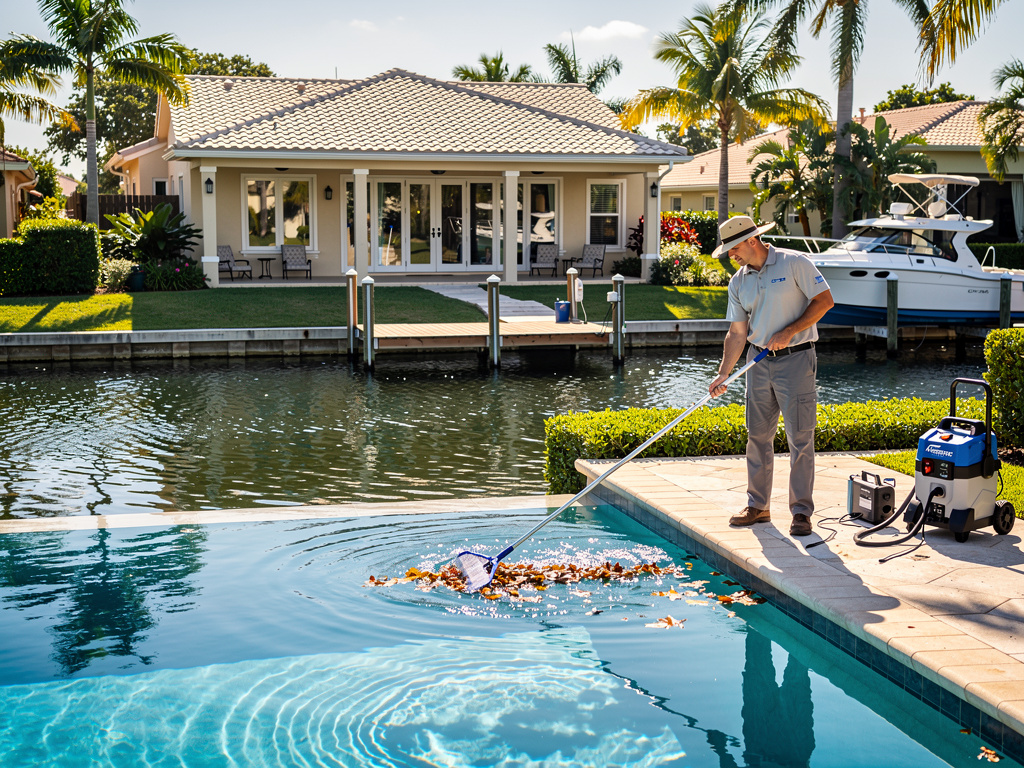
Boca Raton’s position as one of Palm Beach County’s premier coastal residential communities means many of the city’s finest properties — particularly in the Royal Palm Yacht and Country Club area, along the Intracoastal, and in the coastal condo towers — are within a mile or two of the Atlantic. For homeowners in these locations, the same salt air that makes the coastal environment desirable creates a real maintenance challenge for the metal components of pool equipment systems.
At Pool Service Fort Lauderdale, we understand the accelerated corrosion environment of Boca Raton’s coastal zone and factor it into equipment management recommendations. This guide covers what salt air corrosion does to pool equipment and how to manage it.
How Salt Air Affects Pool Equipment
Pump Motor Housings
Pump motors have cast aluminum and steel housings that provide structural support, heat dissipation, and weatherproofing for the internal windings. In Boca Raton’s coastal salt air environment, the painted exterior of pump motor housings develops surface rust faster than the same equipment in an inland location. More critically, the cast end bells and cooling fins develop corrosion pitting that compromises weatherproofing over time. A pump motor that might last 10-12 years in an inland South Florida installation may last 7-9 years in Boca Raton’s coastal zone before housing integrity becomes a concern. Titanium and stainless housing upgrades are available for some pump models — appropriate for coastal estate applications.
Electrical Components
The equipment pad’s electrical components — junction boxes, conduit, wire connections, automation controller housings — face salt air corrosion in all coastal Boca Raton installations. Corrosion inside junction boxes and conduit creates high-resistance connections that generate heat, potentially leading to insulation failure. Signs of coastal electrical corrosion: green-blue discoloration on copper wire connections; corrosion deposits inside junction box covers; conduit that shows rust streaking or surface deterioration. Annual inspection of all electrical connections at the equipment pad is appropriate in coastal Boca Raton environments.
Heat Pump Components
Heat pumps in coastal Boca Raton applications face specific corrosion challenges: the copper evaporator coils are protected from direct salt air to some degree by the unit housing, but the aluminum condenser fins (the external fins on the back of the unit) are directly exposed. Salt air deposits on aluminum fins reduce heat transfer efficiency and cause gradual deterioration. Annual fin cleaning and application of a coil coating product extends heat pump efficiency and service life in Boca Raton’s coastal environment. Titanium heat exchanger heat pumps (available from Pentair, Hayward, Aquacal) are specifically designed for coastal and saltwater pool applications — the appropriate upgrade for high-exposure coastal Boca Raton installations.
Hardware and Fittings
Equipment pad plumbing hardware (unions, fitting hardware, mounting brackets, pipe straps, conduit clamps) in standard zinc-plated steel or galvanized finishes corrodes significantly faster in coastal environments. Replacement with 316-grade stainless steel hardware at the next service opportunity eliminates the fastest-deteriorating component category. Stainless hardware adds a small material cost but extends equipment pad longevity by years in coastal Boca Raton applications.
Proactive Coastal Equipment Management Protocol
- Monthly equipment wash: Fresh water rinse of the entire equipment pad — pump, filter, heater/heat pump exterior, electrical boxes — removes salt air deposit accumulation before it penetrates protective coatings. 5 minutes with a garden hose; significant extension of equipment coating life.
- Annual electrical inspection: Open all junction boxes and inspect wire connections for corrosion. Clean corroded connections with appropriate contact cleaner; replace any connections showing green-blue copper oxide accumulation before high-resistance heating develops.
- Material upgrades on replacement: When any coastal equipment pad component is replaced (pump, heater, conduit, fittings), specify stainless steel hardware and coastal-rated enclosures at the time of replacement — not as an add-on to existing corroded components.
- Revised replacement timeline: Schedule equipment replacement on coastal timelines (80% of inland service life as planning horizon) rather than manufacturer inland averages.
Pool Service Fort Lauderdale manages coastal equipment corrosion for Boca Raton estate properties. Call (954) 501-2754 or visit our Boca Raton pool service page. Full coverage at poolservicefortlauderdale.us.
Frequently Asked Questions
{“@context”:”https://schema.org”,”@type”:”FAQPage”,”mainEntity”:[{“@type”:”Question”,”name”:”How far from the ocean does Boca Raton pool equipment still face salt air corrosion?”,”acceptedAnswer”:{“@type”:”Answer”,”text”:”Measurable salt air corrosion effects extend 1-2 miles from the coast under normal wind conditions; during onshore wind events, salt spray can carry further. Properties east of I-95 in Boca Raton experience meaningful salt air exposure year-round. Properties west of Military Trail experience less salt air effect, though still more than true inland Florida locations. For equipment selection and service planning purposes, any Boca Raton property east of the Florida Turnpike/I-95 corridor should be managed with coastal corrosion considerations.”}},{“@type”:”Question”,”name”:”Should I use a titanium heat pump for my Boca Raton pool?”,”acceptedAnswer”:{“@type”:”Answer”,”text”:”Titanium heat exchanger heat pumps (Pentair UltraTemp Titanium, Hayward HeatPro Titanium, Aquacal Ecosmart Ti) are the preferred choice for coastal Boca Raton installations within 1 mile of the ocean. Titanium is completely corrosion-resistant to both salt air and salt water — unlike standard copper or cupronickel heat exchangers, which develop corrosion pitting in coastal environments. The cost premium for titanium (typically $300-$700 more per unit) is recovered in extended service life in coastal applications.”}},{“@type”:”Question”,”name”:”How often should pool equipment be washed in coastal Boca Raton?”,”acceptedAnswer”:{“@type”:”Answer”,”text”:”Monthly fresh water rinse of the entire equipment pad is the practical standard for coastal Boca Raton properties. A 5-minute rinse with a garden hose removes salt air deposit accumulation before it penetrates protective coatings and begins corrosive action. Properties directly on the Intracoastal or within a half-mile of the beach may benefit from twice-monthly equipment washing during high-wind onshore conditions in fall and winter when salt spray is most concentrated.”}},{“@type”:”Question”,”name”:”Are salt water pools more corrosive than chlorine pools in Boca Raton?”,”acceptedAnswer”:{“@type”:”Answer”,”text”:”Salt water pools (using a salt chlorine generator) introduce a modest additional corrosion factor through pool water contact with equipment — the 3,000-3,500 ppm salt concentration in a salt pool is a mild saline solution that affects equipment in contact with pool water slightly more than fresh chlorine pools. However, for coastal Boca Raton properties, the salt air environment is the dominant corrosion factor — both salt water and chlorine pools in the coastal zone face the same salt air equipment environment. The pool’s water chemistry type is a smaller factor than the property’s proximity to the coast.”}},{“@type”:”Question”,”name”:”What are the signs that salt air has damaged my Boca Raton pool equipment?”,”acceptedAnswer”:{“@type”:”Answer”,”text”:”Visible salt air damage signs in Boca Raton pool equipment: rust streaking on pump motor housing or conduit; green-blue corrosion on exposed copper fittings or wire connections; white powdery deposits (aluminum oxide) on pump motor or heat pump housing; rust staining on equipment pad plumbing fittings and brackets; corrosion deposits visible inside junction box covers when opened. Any of these signs indicate salt air corrosion is active — begin the management protocol and factor accelerated replacement timing into the equipment budget.”}}]}
How far from the ocean does salt air corrosion still affect equipment? 1-2 miles from the coast under normal conditions; properties east of I-95 in Boca Raton should use coastal management protocols for all equipment planning.
Should I use a titanium heat pump? Yes for coastal Boca Raton within 1 mile of the ocean. Titanium heat exchangers are fully corrosion-resistant to salt air and salt water — the $300-$700 cost premium is recovered in extended service life vs copper/cupronickel in coastal applications.
How often to wash equipment in coastal Boca Raton? Monthly fresh water rinse of the entire equipment pad removes salt deposit accumulation before it penetrates protective coatings. Within half-mile of the beach: twice-monthly in high-wind fall/winter onshore conditions.
Are salt water pools more corrosive than chlorine pools here? Marginally, in terms of water contact. But the dominant corrosion factor in coastal Boca Raton is the salt air environment — both pool types face the same coastal exposure. Pool water type is a smaller factor than coastal proximity.
Signs of salt air damage? Rust streaking on pump housing or conduit; green-blue corrosion on copper connections; white powder (aluminum oxide) on motor or heat pump housing; rust staining on fittings and brackets; corrosion inside junction box covers. Begin management protocol immediately and accelerate replacement planning.