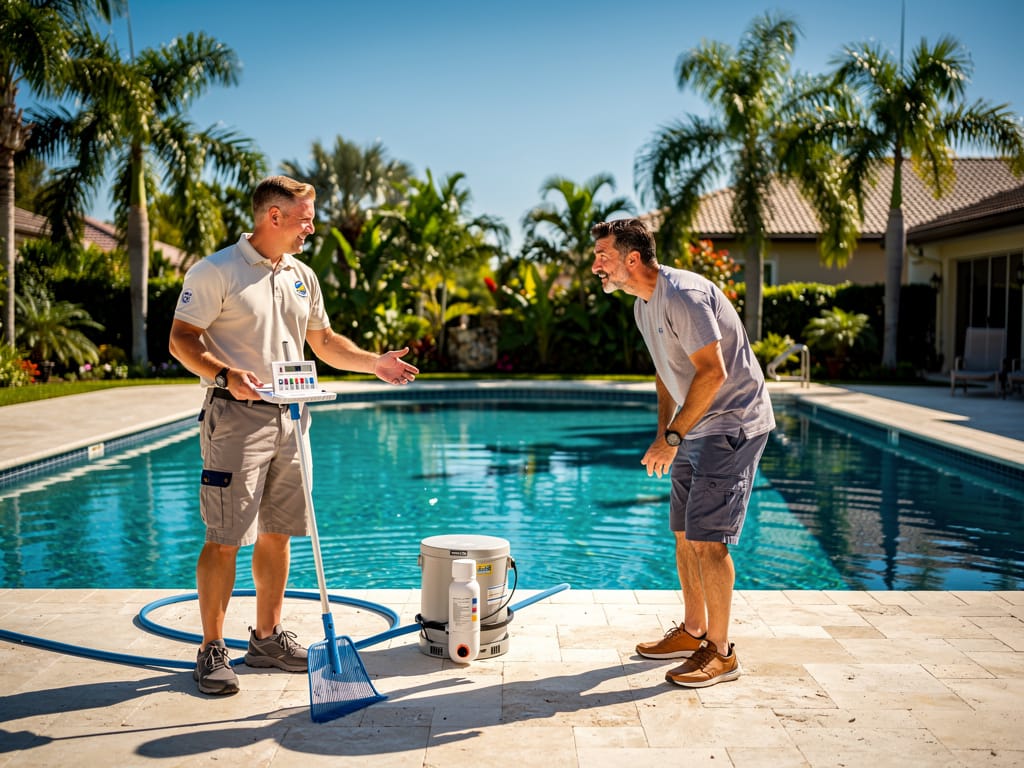
Sunrise’s active real estate market means many homeowners buy properties with existing pools — and many of them have never owned a pool before. The pool that looked clear and inviting in the listing photos may have been professionally serviced the week before photos were taken, or it may have months of deferred maintenance that becomes apparent only after the closing. Either way, the first 30 days of ownership are your opportunity to understand what you have and set a maintenance foundation that protects your investment.
At Pool Service Fort Lauderdale, we provide first-visit pool assessments for new Sunrise homeowners and help establish the service program that keeps the pool healthy from the start. This guide covers everything the first 30 days should accomplish.
Day 1-7: The Professional Assessment Visit
Before you do anything else, schedule a professional pool assessment with a qualified service provider. This is not a standard service visit — it is a documented evaluation of everything the previous owner left you:
- Complete 7-parameter water chemistry test: Test free chlorine, pH, total alkalinity, calcium hardness, cyanuric acid (CYA), phosphate, and salt/TDS. Many Sunrise pools that look clean have elevated calcium (from years of evaporation without dilution), excessive CYA (from years of trichlor tablet use), or high phosphate (from landscape fertilizer runoff) — invisible problems that cause ongoing maintenance challenges if not identified immediately.
- Equipment inspection and age documentation: Have the technician inspect and document: pump model, approximate age, and current condition; filter type (sand, cartridge, or DE) and last service date if determinable; heater type and operation test; salt cell if present (what percentage is it set to, how old is the cell, is it producing correctly); automation system if present and its programming. This documents your starting point and identifies deferred maintenance that may fall to you.
- Safety check: Inspect and test the pool fence gate (self-closing, self-latching, latch above 54 inches from grade); pool surface drain covers (SVRS-compliant VGB covers required by federal law since 2008 — older pools may have non-compliant covers that are an immediate safety hazard); any existing pool alarm systems.
Week 2: Learn Your Equipment
You don’t need to become a pool expert, but you should understand enough to identify when something is wrong between service visits:
- Pump timer: Know where the timer is, how to read the current schedule, and how to turn the pump on and off manually. Know what the pump sounds like when running normally — an unusual noise (grinding, whining, cavitation rattle) is a service call signal.
- Filter pressure gauge: Know your filter’s clean baseline pressure (the technician can tell you at the assessment visit). When filter pressure rises 7-10 psi above baseline, the filter needs service — backwash (sand/DE) or cleaning (cartridge). A blocked filter reduces pool water circulation and degrades chemistry management.
- Skimmer basket: Locate all skimmer openings (typically 1-2) and the skimmer baskets inside them. These should be checked and emptied weekly — more often in fall debris season or after storms. A full skimmer basket blocks surface cleaning and reduces pump suction.
- Pump basket: The pump itself has a clear-lid basket that also catches debris before it reaches the impeller. Check this every 1-2 weeks and clear it when debris accumulates.
Week 3-4: Establish Your Service Schedule
For Sunrise’s climate — warm year-round, significant summer rain and pollen, high UV — weekly professional pool service is the appropriate maintenance frequency. South Florida pools managed bi-weekly or monthly consistently develop chemistry problems that cost more to correct than the service visits would have cost to prevent.
What weekly service should include:
- Chemistry test (minimum 5 parameters; ideally 7) and adjustment
- Skimmer and pump basket cleaning
- Pool brushing (walls, floor, waterline tile)
- Filter pressure check and backwash as needed
- Equipment visual inspection
Ask your service provider what their chemistry test panel includes and how you’ll be notified of any findings between visits. A service provider who provides a written or digital service report after each visit creates accountability and gives you visibility into what’s happening in your pool.
Pool Service Fort Lauderdale provides first-owner pool assessments and ongoing weekly service throughout Sunrise. Call (954) 501-2754 or visit our Sunrise pool service page. Full coverage at poolservicefortlauderdale.us.
Frequently Asked Questions
{“@context”:”https://schema.org”,”@type”:”FAQPage”,”mainEntity”:[{“@type”:”Question”,”name”:”What should I check first when I buy a house with a pool in Sunrise?”,”acceptedAnswer”:{“@type”:”Answer”,”text”:”Schedule a professional pool assessment within the first week. Have a qualified technician test all 7 water chemistry parameters (not just chlorine and pH), inspect all equipment with age and condition documentation, and verify pool safety features — fence gate self-latching, drain cover SVRS compliance, and any pool alarms. This documents your starting point and identifies any chemistry problems or deferred maintenance the previous owner left behind.”}},{“@type”:”Question”,”name”:”How much does it cost to maintain a pool in Sunrise?”,”acceptedAnswer”:{“@type”:”Answer”,”text”:”Weekly professional pool service in Sunrise: $120-$175/month with chemicals included. Additional costs: occasional filter cleaning ($75-$150), annual equipment inspection, and any equipment repairs needed as components age. The first year may include correction of chemistry issues inherited from the previous owner (calcium reduction, CYA reduction via partial drain, phosphate removal) — budget $200-$500 for initial chemistry remediation if the previous owner wasn’t maintaining the pool properly.”}},{“@type”:”Question”,”name”:”Are pool drain covers a safety requirement in Sunrise?”,”acceptedAnswer”:{“@type”:”Answer”,”text”:”Yes. The Virginia Graeme Baker Pool and Spa Safety Act (federal law, effective December 2008) requires all pool and spa main drains to have SVRS-compliant (Safety Vacuum Release System) drain covers rated to prevent suction entrapment. Drain covers have a service life of approximately 10 years and must be replaced when they reach the expiration date marked on the cover. Older Sunrise pools built before 2008 or pools that haven’t replaced drain covers since 2015 may have non-compliant covers — an immediate safety priority.”}},{“@type”:”Question”,”name”:”What chemistry problems do newly purchased Sunrise pools typically have?”,”acceptedAnswer”:{“@type”:”Answer”,”text”:”The most common chemistry issues in Sunrise pools inherited from previous owners: elevated cyanuric acid (CYA) from years of trichlor tablet use (CYA above 100 ppm reduces chlorine effectiveness significantly); high calcium hardness from years of evaporation without dilution; elevated phosphate from landscape fertilizer runoff that went untreated; and pH drift from infrequent adjustment. Most of these conditions are correctable — CYA and calcium require partial drain and refill; phosphate requires remover treatment.”}},{“@type”:”Question”,”name”:”Can I manage my Sunrise pool myself instead of hiring a service company?”,”acceptedAnswer”:{“@type”:”Answer”,”text”:”Yes, with the right knowledge and commitment. DIY pool maintenance requires: a quality 7-parameter test kit or digital tester (Taylor K-2006 or similar), weekly testing and adjustment, understanding of how to interpret results and calculate doses, and access to chemicals in appropriate quantities. For most Sunrise homeowners without prior pool experience, professional weekly service for the first 1-2 years builds the understanding needed to transition to DIY effectively. Many Sunrise pool owners use professional service year-round because the $130-$175/month cost is less than the time and chemistry investment of doing it correctly themselves.”}}]}
What to check first when buying a Sunrise pool? Professional 7-parameter assessment first week. Equipment age/condition documentation. Safety check: gate latching, drain cover compliance, pool alarms. This documents your starting point and reveals any inherited chemistry or maintenance problems.
Monthly cost to maintain a pool in Sunrise? $120-$175/month with chemicals included for weekly professional service. Plus occasional filter cleaning ($75-$150). Budget $200-$500 extra first year for correction of inherited chemistry issues.
Are drain covers a safety requirement? Yes — federal law (VGB Act 2008) requires SVRS-compliant drain covers with 10-year expiration dates. Older Sunrise pools may have non-compliant covers — immediate safety priority.
Common chemistry problems in inherited Sunrise pools? High CYA (years of trichlor tablet use), elevated calcium (years of evaporation without dilution), elevated phosphate (fertilizer runoff), and pH drift from infrequent adjustment. Most correctable through partial drain and chemistry treatment.
Can I DIY instead of hiring a service company? Yes with commitment and proper test kit. Most first-time Sunrise pool owners benefit from professional service for 1-2 years to build the knowledge base before considering DIY. Many keep professional service permanently — the $130-$175/month cost is less than the time and chemistry investment of doing it right themselves.