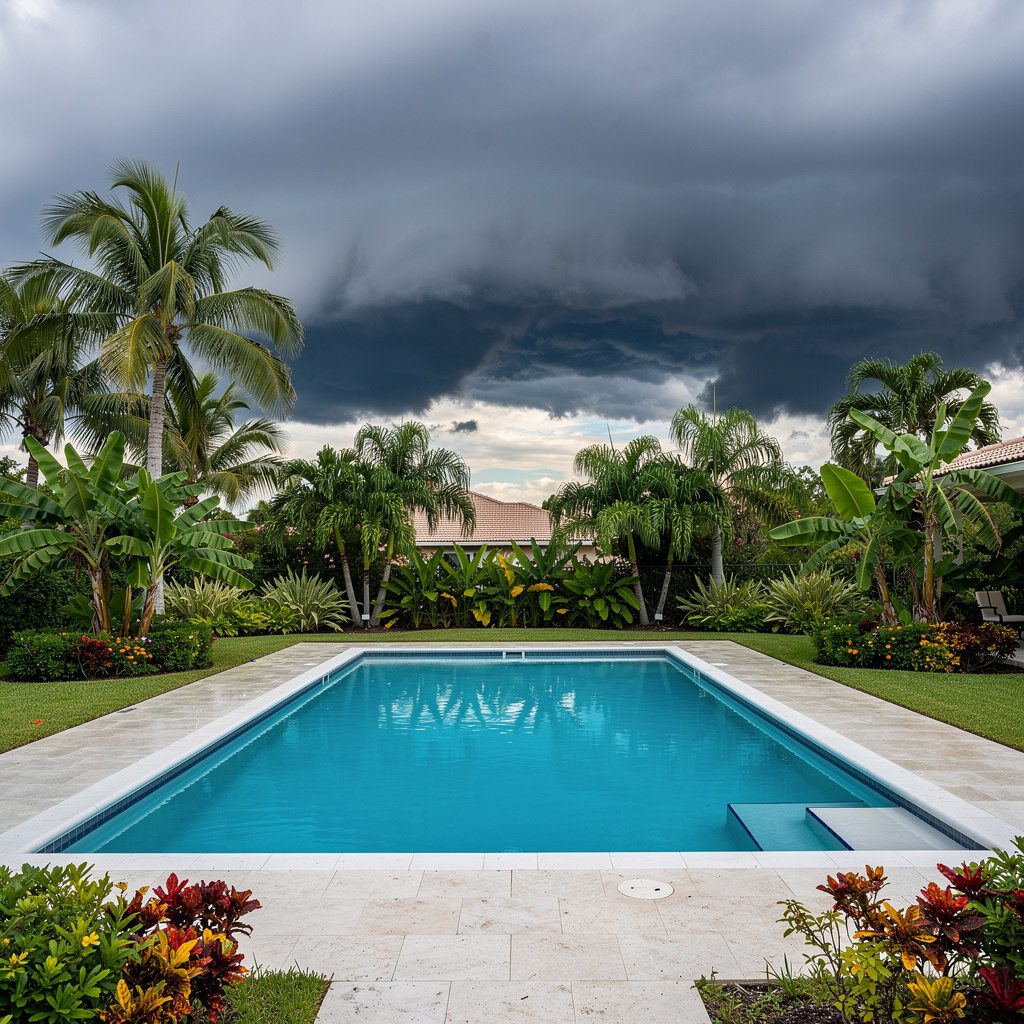
Living in Fort Lauderdale means enjoying your pool nearly every day of the year u2014 but it also means preparing for one of nature’s most powerful forces. Hurricane season runs from June 1 through November 30. A little preparation before a storm hits can save you significant time, money, and headaches when the skies clear.
Before the Storm: Essential Pool Preparation Steps
When a tropical storm or hurricane is forecast to affect the Fort Lauderdale area, your pool needs specific attention in the 24 to 48 hours before it arrives. Here is the checklist we walk our clients through:
- Lower the water level. Reduce your pool’s water level by 1 to 2 inches below the normal operating range. This creates room for the heavy rainfall that typically accompanies South Florida storms without allowing the pool to overflow and erode surrounding landscaping.
- Shock treat the pool. Add a heavy dose of chlorine shock to build up a chemical reserve. Storm debris, dirt, and rain will rapidly consume your chlorine supply. Starting with elevated levels gives your pool a better chance of staying clear through and immediately after the storm.
- Turn off power to the pump and equipment. Once you have run your pump to circulate the shock treatment, turn off all electrical equipment at the breaker. Water and electricity are a dangerous combination, and flooding or surge damage to electrical components is common during major storms.
- Remove or secure patio furniture, toys, and accessories. Anything that can become airborne in high winds should be stored in your garage or home. Pool toys, floats, ladders, cleaning equipment, and even heavy deck furniture have been known to become projectiles during hurricanes.
- Remove solar and safety covers. Solar blankets and safety covers can trap wind beneath them, creating a sail effect that damages the anchoring system and potentially the pool deck. Store them indoors.
One thing we want to be clear about: do not drain your pool before a hurricane. This is one of the most damaging mistakes homeowners make.
Why You Should Never Drain Your Pool Before a Storm
The instinct to empty a pool before a storm is understandable, but it can cause catastrophic structural damage. Across Broward County — from Pompano Beach down to Hallandale Beach — our water table is exceptionally high, sometimes just a few feet below the surface. When a pool is drained, groundwater pressure from below can literally lift the entire pool shell out of the ground, a phenomenon known as pool floating or popping. The repairs for this kind of structural damage can cost $10,000 to $20,000 or more.
The water in your pool actually acts as ballast, keeping the pool shell firmly seated against the surrounding soil. Leave the water in place. The pre-storm steps above u2014 lowering the level slightly and shocking the water u2014 are all you need to do on the water itself.
After the Storm: Post-Hurricane Pool Recovery
Once the storm has passed and it is safe to be outside, your pool will almost certainly need attention before anyone swims in it. Here is what post-storm pool recovery looks like in Fort Lauderdale:
- Remove debris first. Use a leaf rake or net to remove leaves, branches, and other debris from the pool. Do not run your pump or filter with large debris present u2014 it can clog the system and damage the impeller.
- Test and rebalance the water chemistry. Heavy rainfall significantly dilutes pool chemistry. Test pH, chlorine, alkalinity, and calcium hardness before assuming the water is safe. A post-storm shock treatment is almost always necessary.
- Inspect all equipment before restarting. Check the pump, filter, heater, and automation system for visible damage before restoring power. Look for water intrusion in the motor housing, bent or broken pipes, and debris around equipment pads.
- Watch for algae. The combination of diluted chemicals and organic debris creates ideal conditions for algae blooms. If your pool water has taken on a cloudy or greenish tint, contact us immediately u2014 early intervention is far faster and cheaper than treating a full algae outbreak.
How Our Team Supports Broward County Homeowners Through Hurricane Season
Every June, we reach out to our Fort Lauderdale pool service clients with a personalized hurricane preparedness reminder based on their specific pool setup. When storms are forecast, we prioritize completing preparatory treatments for all of our active clients throughout Broward County, including our Hollywood pool service customers who face added coastal storm exposure. After storms pass, we work through a structured recovery schedule to get pools back to safe, swimmable condition as quickly as possible.
Hurricane season does not have to be a source of stress for pool owners in Broward County — whether you are in Weston, Fort Lauderdale, or anywhere across our service area. With the right preparation and a professional team in your corner, your pool can weather South Florida’s toughest storms and be ready for your family to enjoy again within days. Contact us before this hurricane season begins to make sure your pool and your plan are both ready.