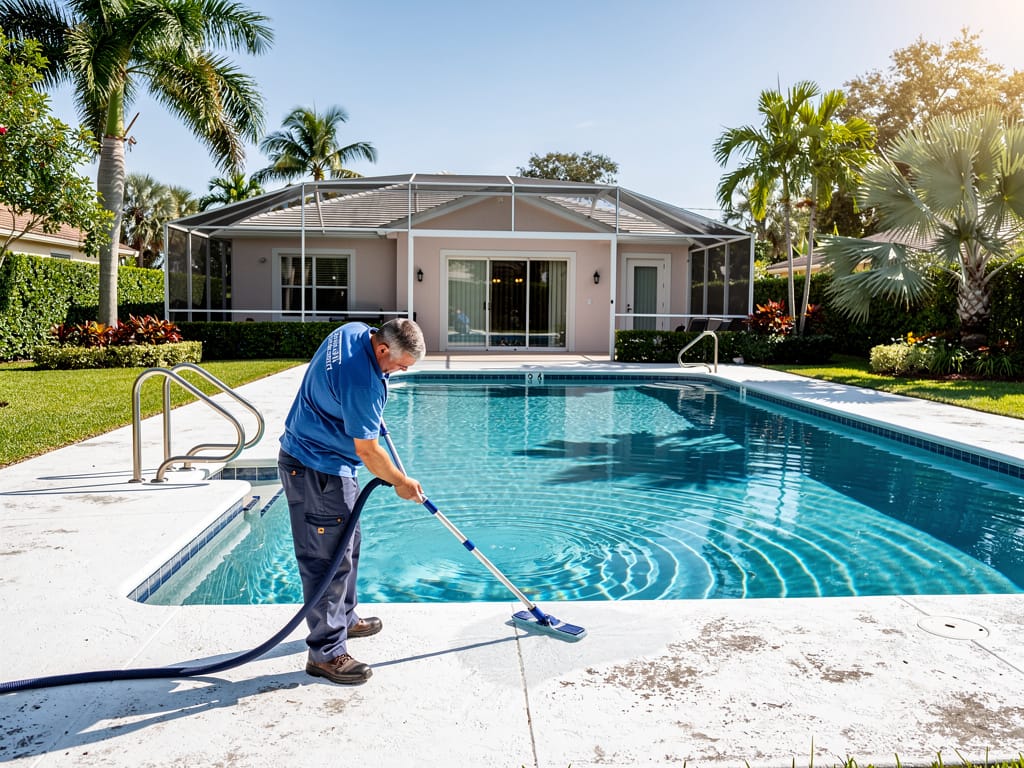
The integrated pool-and-spa configuration is standard on Parkland’s custom estate pools. A raised spa with a spillover waterfall into the main pool body, controlled by the automation system, creates visual elegance and functional luxury — but it creates a chemistry management environment that requires specific knowledge to maintain correctly.
At Pool Service Fort Lauderdale, we service pool-spa systems throughout Parkland’s estate communities and understand the distinct chemistry protocols required for the heated spa body. This guide covers what the chemistry challenge looks like and what proper management entails.
Temperature and Its Effect on Spa Chemistry
Chemistry reaction rates approximately double for every 10°C (18°F) increase in temperature. A spa at 104°F vs a pool at 84°F represents a 20°F temperature difference — chemistry reactions in the spa proceed at approximately 2x the rate of the pool. In practical terms:
- Chlorine consumption: A spa requires 2-3x the chlorine dose per volume of water compared to the pool to maintain the same free chlorine level. Chlorine added to the spa during a service visit may fully deplete within 24-48 hours in a heavily used spa, vs 3-5 days in the pool.
- pH drift: High bather load in the spa (multiple people in a small volume of hot water) combined with jets aeration drives pH upward rapidly. A spa that is pH 7.4 at service time may be 7.8-8.0 within 24 hours of use. High pH at spa temperature creates aggressive calcium scaling.
- Calcium scale: Calcium carbonate scale deposits significantly faster on heated surfaces. Parkland estate spa shells, jets, and heater equipment develop scale buildup that requires more frequent descaling treatment than the pool body.
- TDS accumulation: The small volume of spa water accumulates total dissolved solids (sweat, skin cells, personal care products) faster per gallon than the pool. TDS elevation makes water “tired” — chemistry becomes harder to balance, and water takes on a dull or cloudy appearance even with correct individual parameter readings.
Shared Water and Spillover Systems
When a spa connects to the pool via a spillover waterfall (gravity flow from spa to pool when spa is operating), the two bodies share water through the spillover. This creates a chemistry exchange: high-chlorine spa water feeds into the pool (a temporary positive effect for pool chlorine), but high-calcium or high-TDS spa water also transfers continuously to the pool during spa operation. Over time, a heavily used spa can drive pool calcium and TDS upward faster than pool-only evaporation would explain.
Service providers who manage pool chemistry without accounting for spa spillover contributions to pool chemistry will consistently be surprised by calcium and TDS elevations that seem unexplained by normal pool dynamics.
Spa-Specific Service Protocol
A Parkland estate pool-spa system requires a service protocol that specifically addresses the spa body:
- Separate chemistry testing for the spa: Test and record spa chemistry independently from pool chemistry at each visit. Do not assume pool readings reflect spa conditions.
- Spa chlorine dosing adjusted for temperature: Add 2-3x the volume-adjusted chlorine dose to the spa compared to the pool. For a 600-gallon spa, the per-gallon chlorine dose is higher than for the pool.
- pH management: Check and adjust spa pH at every visit. In a heavily used spa, pH may require adjustment every 2-3 days between visits — a homeowner-manageable task with a pH adjustment kit and test strips if instructed by the service provider.
- Spa drain and refill schedule: Because TDS accumulates rapidly in a small spa volume, Parkland estate spas should be completely drained and refilled approximately every 90 days (vs. pool partial drains which are annual at most). The service provider should track the spa drain schedule and recommend refill timing.
- Jet and surface descaling: Quarterly descaling treatment for spa jets, shell surfaces, and the heater circulation path. Jet descalers (citric acid-based products) remove the calcium and biofilm accumulation that progressive spa use deposits on jet internals.
Pool Service Fort Lauderdale provides specialized pool-spa service protocols for Parkland estate properties. Call (954) 501-2754 or visit our Parkland pool service page. Full coverage at poolservicefortlauderdale.us.
Frequently Asked Questions
{“@context”:”https://schema.org”,”@type”:”FAQPage”,”mainEntity”:[{“@type”:”Question”,”name”:”Why does my Parkland estate spa need more chlorine than the pool?”,”acceptedAnswer”:{“@type”:”Answer”,”text”:”Chlorine consumption rates approximately double for every 18°F temperature increase. A spa at 104°F vs a pool at 84°F requires 2-3x the volume-adjusted chlorine dose to maintain the same free chlorine level. High bather load in a small volume of hot water also consumes chlorine faster than pool bather loading does. A spa maintained on the same chlorine schedule as the pool will consistently run low on free chlorine — a chemistry and sanitation failure that’s common in under-serviced estate pool-spa systems.”}},{“@type”:”Question”,”name”:”How often should a Parkland estate spa be drained and refilled?”,”acceptedAnswer”:{“@type”:”Answer”,”text”:”Every 90 days (quarterly) for a regularly used estate spa. Total dissolved solids (TDS) from sweat, skin cells, and personal care products accumulate rapidly in a small spa volume — typically 400-800 gallons vs 20,000+ gallons for the pool. High TDS makes chemistry balancing difficult and produces the tired, dull water appearance even with correct individual parameter readings. Regular quarterly drains reset TDS and provide a chemistry fresh start.”}},{“@type”:”Question”,”name”:”Can spa water affect pool chemistry in my Parkland estate pool?”,”acceptedAnswer”:{“@type”:”Answer”,”text”:”Yes, when the spa and pool share water through a spillover connection. During spa operation, high-TDS and high-calcium spa water transfers continuously to the pool via the spillover. Over time, this can drive pool calcium and TDS upward faster than pool-only evaporation explains. Service providers who manage pool chemistry without accounting for spa spillover contributions will be consistently surprised by calcium and TDS elevations that appear unexplained.”}},{“@type”:”Question”,”name”:”Why does calcium scale develop faster in my Parkland spa than in the pool?”,”acceptedAnswer”:{“@type”:”Answer”,”text”:”Calcium carbonate scale deposition is temperature-driven — the solubility of calcium carbonate decreases as water temperature increases, meaning more calcium precipitates out of solution at 104°F than at 84°F. At Parkland’s typical spa temperature, calcium scale deposits on spa shell surfaces, jets, and heater equipment significantly faster than in the pool. Quarterly descaling treatment and maintaining calcium hardness at 150-200 ppm (slightly lower than pool target) reduces scale deposition rate in the spa.”}},{“@type”:”Question”,”name”:”Should my Parkland spa chemistry be tested separately from the pool?”,”acceptedAnswer”:{“@type”:”Answer”,”text”:”Yes, always. Spa chemistry operates on different dynamics than pool chemistry — higher temperature, higher bather load per gallon, faster chemical reactions, and different pH drift patterns. A service provider who tests pool water and assumes spa chemistry is similar will miss the consistently lower chlorine, higher pH, and higher calcium that characterize a used spa. Separate testing records for the spa and pool are standard practice in quality estate pool service.”}}]}
Why does the spa need more chlorine than the pool? 2-3x higher dose per volume — heat doubles chemical reaction rates, and high bather load in a small volume accelerates consumption. Spa maintained on the same schedule as the pool will consistently run under-chlorinated.
How often to drain and refill the spa? Every 90 days (quarterly). TDS accumulates rapidly in small spa volumes, making chemistry balancing difficult and producing dull, tired-looking water even with correct individual parameter readings.
Can spa water affect the pool? Yes via spillover connection — high-TDS and high-calcium spa water transfers to the pool during spa operation, driving pool calcium and TDS upward faster than pool evaporation alone would explain.
Why does calcium scale faster in the spa? Temperature-driven — calcium carbonate solubility decreases at 104°F. Scale deposits on shell, jets, and heater significantly faster than in the pool. Quarterly descaling and lower calcium target (150-200 ppm) for the spa body.
Should spa chemistry be tested separately? Always — different temperature, bather load, and drift patterns from the pool. Separate records for spa and pool are standard practice in quality estate service.