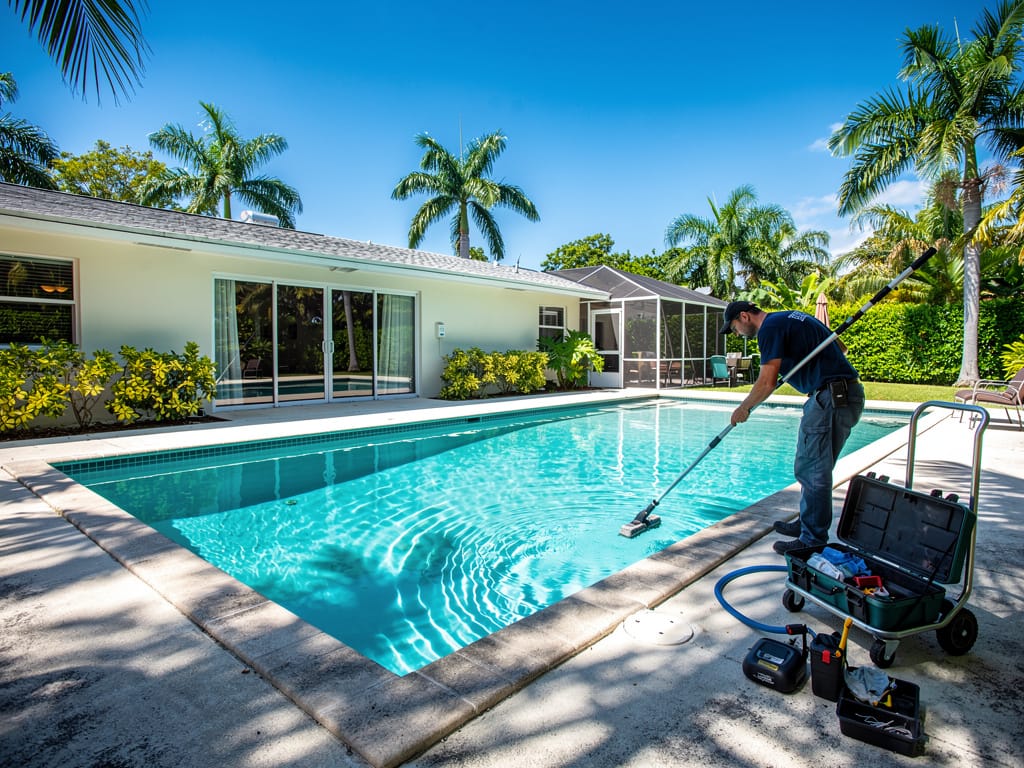
Pool electrical safety in older homes is a topic that doesn’t get enough attention in Lauderhill’s 1970s-80s housing stock. The National Electrical Code (NEC) has gone through many revisions since these pools were built — each revision adding requirements for GFCI protection, equipotential bonding, and wiring specifications that provide meaningfully better protection against electric shock drowning than the code in effect when many Lauderhill pools were originally wired.
At Pool Service Fort Lauderdale, we note visible electrical compliance concerns during service visits and refer homeowners to licensed electricians for assessment. This guide covers what current requirements look like and why older Lauderhill pools may need electrical updates.
What Is Electric Shock Drowning?
Electric shock drowning (ESD) occurs when stray AC voltage enters pool water from faulty wiring or improperly bonded equipment. At typical household voltage levels (120V), current passing through pool water creates a voltage gradient — higher voltage near the fault source, lower voltage away from it. A person swimming in this gradient experiences AC current flowing through their body along this voltage difference.
At sufficiently high current levels, AC causes muscle paralysis — the swimmer cannot move their limbs to stay afloat and drowns while conscious and breathing. ESD events are rare but documented, and they are preventable through proper GFCI protection and bonding grid installation. Pools with older, non-compliant electrical systems are at higher risk than properly wired modern pools.
GFCI Protection Requirements for Lauderhill Pools
Current NEC Article 680 requires GFCI protection for all receptacles, lighting outlets, and equipment within specific distances of pool water. Earlier code versions (pre-1990) had narrower GFCI requirements — some pools built in the 1970s and 1980s have minimal or no GFCI protection on circuits that current code requires to be protected.
Signs that GFCI protection may be inadequate on an older Lauderhill pool:
- Pool pump breaker is a standard breaker, not a GFCI or AFCI/GFCI combination breaker
- Pool light circuit lacks GFCI protection (current code requires GFCI on all pool lighting receptacles)
- Outdoor receptacles within 20 feet of the pool are not GFCI protected
Updating pool circuits to GFCI protection: $400-$1,200 depending on the number of circuits and panel accessibility. A licensed electrician with pool electrical experience can assess what’s needed and provide a code-compliant update.
Equipotential Bonding Grid
NEC Article 680 requires an equipotential bonding grid that connects all metallic components of the pool system (pump motor, light fixtures, metal fittings, rebar in the shell, handrail anchors, and ladder anchors) to a common ground potential. The purpose: eliminate voltage differences between metal components that a swimmer could bridge with their body.
In 1970s-80s pools, bonding grid installation quality varied significantly — some pools were bonded properly, others had inadequate or partial bonding that met the standard of the time but doesn’t meet current requirements. Bonding grid testing requires a licensed electrician with a properly calibrated meter — it’s not a homeowner-accessible assessment.
If a Lauderhill homeowner or pool service technician observes a tingling sensation in the pool water, this is a potential ESD indicator and warrants immediate electrical assessment. Do not use the pool until an electrician has identified and resolved the fault source.
When Electrical Updates Become Mandatory in Lauderhill
Florida Building Code and NEC compliance updates to existing pool electrical systems are typically triggered by: equipment replacement that involves permit-required electrical work, pool resurfacing or major renovation that triggers a permit inspection, or sale of the property with buyer-required inspection. At any of these trigger points, an electrical inspector may require non-compliant circuits to be brought to current code before the work is approved.
For older Lauderhill pools that have not been recently permitted, a proactive electrical assessment identifies what would be required before a trigger event forces it under a potentially tighter timeline.
Pool Service Fort Lauderdale refers Lauderhill homeowners to licensed pool electrical specialists for assessment of older pool electrical systems. Call (954) 501-2754 or visit our Lauderhill pool service page. Full coverage at poolservicefortlauderdale.us.
Frequently Asked Questions
{“@context”:”https://schema.org”,”@type”:”FAQPage”,”mainEntity”:[{“@type”:”Question”,”name”:”What is electric shock drowning and can it happen in a Lauderhill pool?”,”acceptedAnswer”:{“@type”:”Answer”,”text”:”Electric shock drowning (ESD) occurs when stray AC voltage in pool water causes current to flow through a swimmer’s body, paralyzing muscles and preventing them from staying afloat. It is rare but documented and preventable through proper GFCI protection and bonding grid installation. Older Lauderhill pools with 1970s-80s era wiring under earlier NEC versions are at higher risk than properly wired modern pools.”}},{“@type”:”Question”,”name”:”Should I be concerned about pool electrical safety in my 1970s-80s Lauderhill home?”,”acceptedAnswer”:{“@type”:”Answer”,”text”:”A proactive licensed electrician assessment is recommended for any Lauderhill pool built before 1990 that has not had an electrical system update. Signs of concern: GFCI-protected breakers not present on pool circuits, tingling sensation while in the water, frequently tripping breakers, or visible corrosion at conduit fittings near the equipment pad.”}},{“@type”:”Question”,”name”:”What is an equipotential bonding grid for a pool and why does it matter?”,”acceptedAnswer”:{“@type”:”Answer”,”text”:”An equipotential bonding grid connects all metallic pool components (pump, lights, fittings, handrails, rebar) to a common ground potential, eliminating voltage differences between metal surfaces that a swimmer could bridge with their body. NEC Article 680 requires this bonding. 1970s-80s pools may have partial or non-compliant bonding that requires updating.”}},{“@type”:”Question”,”name”:”What does GFCI protection for a Lauderhill pool cost to add?”,”acceptedAnswer”:{“@type”:”Answer”,”text”:”Updating pool circuits to GFCI protection under current NEC Article 680 requirements typically costs $400-$1,200 for an older Lauderhill pool, depending on the number of circuits that need updating and panel accessibility. A licensed electrician with pool electrical experience can assess the specific requirements and provide a quote.”}},{“@type”:”Question”,”name”:”What should I do if I feel a tingling sensation while in my Lauderhill pool?”,”acceptedAnswer”:{“@type”:”Answer”,”text”:”Exit the water immediately and do not re-enter until a licensed electrician has assessed the pool’s electrical system. A tingling sensation while swimming is a potential electric shock drowning (ESD) indicator. Have everyone exit the pool and water calmly — do not reach into the water to help someone who appears paralyzed, as you may become a victim as well. Call an electrician before the next pool use.”}}]}
What is electric shock drowning? Stray AC voltage in pool water causes current through a swimmer’s body, paralyzing muscles. Rare but preventable via proper GFCI and bonding. Older Lauderhill pools carry higher risk.
Should I worry about 1970s-80s wiring? A proactive electrician assessment is recommended for any Lauderhill pool built before 1990 without a recent electrical update.
What is the bonding grid? Connects all metallic pool components to common ground, eliminating voltage differences a swimmer can bridge. NEC Article 680 requires it — older pools may have partial or non-compliant bonding.
GFCI update cost? $400-$1,200 for an older Lauderhill pool depending on circuits and panel access.
Tingling sensation in the pool — what to do? Exit immediately. Do not re-enter until a licensed electrician clears the pool. This is a potential ESD indicator — take it seriously.