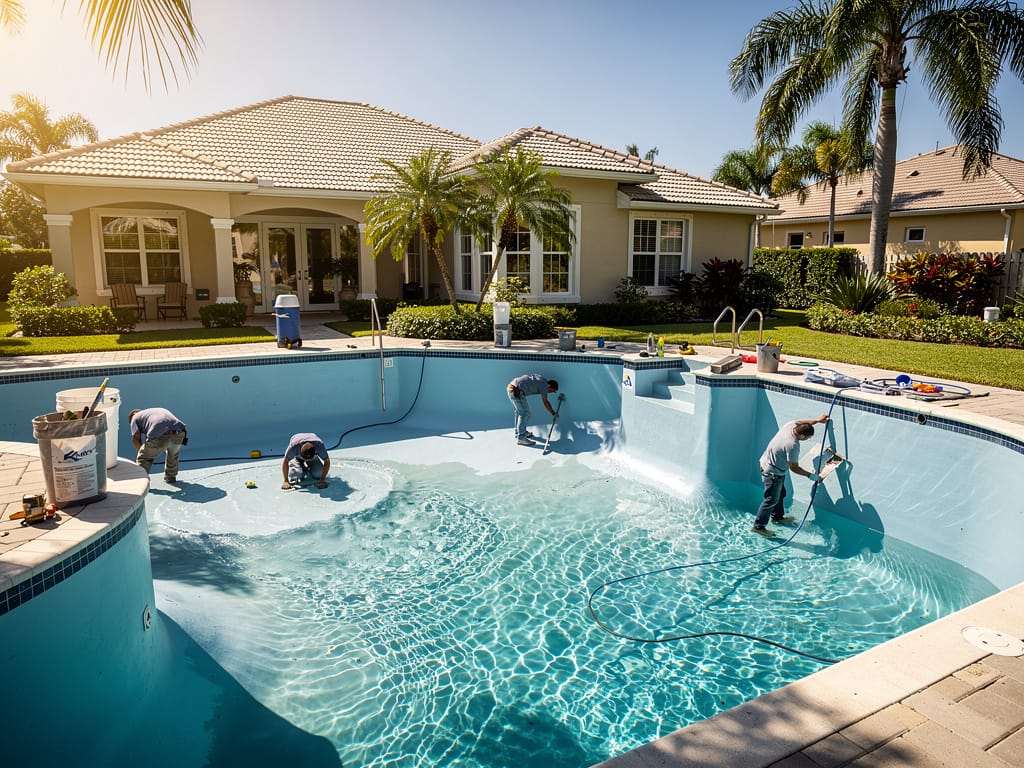
Pool resurfacing is one of the larger maintenance investments a Deerfield Beach homeowner will make, and it’s one that most pool owners in the city’s established western neighborhoods eventually face. Deer Creek, Deer Run, Cypress Bend, and Boca Del Mar border communities have significant housing stock from the 1970s and 1980s, and pools from that era on their original plaster — or on a single previous resurface from the 1990s — are now reaching the point where resurfacing is unavoidable.
Understanding the options, what drives the cost difference, and which surface type is appropriate for your pool and budget in Deerfield Beach’s specific environment is the foundation for making a good decision.
Why Deerfield Beach Pools Need Resurfacing
Pool plaster and aggregate surfaces deteriorate through a combination of:
- Chemical attack: Broward County’s hard water creates calcium scale on pool surfaces. Over years, cycles of scaling and acid washing to remove scale progressively erode the plaster surface.
- Age-related degradation: All plaster finishes gradually leach calcium from the surface matrix over time, producing a rougher surface and eventually pitting and delamination.
- Physical wear: Bather traffic, cleaning equipment, and pool toys mechanically wear surfaces over time.
- Chemistry failures: Periods of improper chemistry — particularly acidic water (low pH) — accelerate surface etching.
For Deerfield Beach pools in original 1970s–1980s plaster, or those that were resurfaced in the 1990s, the visible signs include: rough surfaces that cut feet, visible pitting or cratering, staining that doesn’t respond to chemistry treatment, surface delamination (sections separating from the shell), and chronic cloudiness from calcium release from the deteriorating surface.
Standard White Plaster: The Entry-Level Option
White marcite plaster (portland cement + white marble aggregate) is the original pool surface material and remains the least expensive option. Cost: $4,000–$6,500 for a standard Deerfield Beach residential pool (approximately 15,000–20,000 gallons).
Lifespan in Deerfield Beach: 7–12 years in Florida’s conditions — shorter than manufacturer claims because of hard water, year-round chemical exposure, and the absence of a winter closing period that gives northern pool surfaces an annual rest.
Appearance: Bright white when new. Develops a blue tint from the water refraction — the classic clean pool look. Over time, staining and calcium marking become visible. A plaster surface in good condition looks great; a deteriorating plaster surface makes the pool look chronically dirty even when chemistry is correct.
Best for: Homeowners on a limited budget who plan to sell within 7–10 years, or pools that need an immediate functional fix without the premium for a longer-lived surface.
Quartz Aggregate Finishes: Mid-Range Balance
Quartz aggregate finishes (brands include Diamond Brite, StoneFlair, and others) blend white cement with quartz crystals to produce a harder, more durable surface than standard plaster. Cost: $6,000–$9,000 for a standard pool.
Lifespan in Deerfield Beach: 12–18 years. The quartz aggregate is significantly more resistant to chemical etching and physical wear than standard plaster, extending the service life in Florida’s demanding conditions.
Appearance: Available in a range of colors (light blue, turquoise, grey, tan) by varying the quartz aggregate color. The surface has a slightly textured feel that many homeowners prefer to smooth plaster. Colors shift somewhat over time but remain consistent for longer than standard plaster.
Best for: Homeowners who want a meaningful upgrade from standard plaster at a moderate cost premium, particularly in Deer Creek and Cypress Bend properties where the pool’s visual presentation matters for HOA compliance and property value.
Pebble and Aggregate Finishes: The Premium Long-Term Choice
Pebble finishes (PebbleTec, PolishPebble, Wet Edge, and similar brands) use small natural pebbles or crushed glass embedded in a cement matrix to create the most durable and visually distinctive pool surface available. Cost: $8,000–$14,000+ for a standard pool depending on finish type and brand.
Lifespan in Deerfield Beach: 15–25 years — the longest service life of any residential pool surface. Pebble finishes are substantially more resistant to chemical etching, calcium scale damage, and physical wear. For Deerfield Beach’s hard water environment, the pebble surface handles calcium chemistry far better than plaster alternatives.
Appearance: Distinctive natural stone look. The pebble texture creates a richer water color appearance — navy blue water with a PebbleTec midnight blue finish is a significant visual upgrade from white plaster. Available in dozens of color combinations from natural earth tones to dramatic dark finishes.
Best for: Homeowners planning to stay in their Deerfield Beach home for 15+ years, those making a comprehensive renovation investment, and properties in higher-value Deerfield Beach neighborhoods (The Cove, Deerfield Isle, Highland Beach-adjacent homes) where premium presentation has clear property value implications.
The Resurfacing Process in Deerfield Beach
Pool resurfacing involves: draining the pool (permit may be required for discharge depending on volume and location), chipping or grinding off the existing surface to bare shell, patching any structural cracks or voids, applying the new finish, curing the surface (critical — typically 28 days for full cure), and aggressive start-up chemistry management during the cure period.
The cure period is where most Deerfield Beach pool resurfacing issues arise. New plaster requires specific chemistry management (the “acid startup” or “startup protocol”) during the first 30 days to achieve proper hydration of the cement. Improper startup chemistry during the cure period causes premature staining, calcium nodules (called calcium nodules or “pimples”), and accelerated surface degradation. Always ask your resurfacing contractor about their startup protocol and ensure your pool service company is briefed on the new surface for the first 30-day chemistry management period.
For pool resurfacing guidance, repair assessment, and pool service throughout Deerfield Beach, contact Pool Service Fort Lauderdale at (954) 501-2754.
Frequently Asked Questions
How do I know if my Deerfield Beach pool needs resurfacing vs. a chemical treatment?
Chemistry treatment can address staining and some surface blemishes; it cannot fix structural surface failure. Physical signs that indicate resurfacing is needed (not chemistry): visible surface pitting or cratering that you can feel with your hand, areas where plaster is separating from the shell (delamination), surfaces that are sharp or rough enough to cause abrasion, or structural cracks that pass through the surface layer. If your pool looks generally discolored but smooth, try a professional chemistry treatment first. If the surface is physically deteriorating, resurface.
Can I resurface my pool myself to save money?
Pool resurfacing is not a DIY project. The application of plaster or aggregate finishes requires specialized equipment (commercial mixer, pump-spray system), training in surface application technique, and familiarity with the chemistry of cement-based surfaces. Improper application causes the failure modes mentioned above — delamination, calcium nodules, premature staining. Use a licensed pool contractor for resurfacing work in Deerfield Beach. Verify the CPC license and check references from recent Broward County projects.
Do I need a permit to resurface my pool in Deerfield Beach?
Pool resurfacing without structural changes typically does not require a permit from the City of Deerfield Beach for like-for-like surface replacement. If the resurfacing is combined with structural repairs (patching cracks in the shell), equipment replacement that involves new electrical runs, or plumbing changes, permits may be required for those components. Your contractor should advise on permit requirements for the specific scope of work proposed.
How long will I be without my pool during resurfacing?
The pool is out of service during draining, surface work, and refill — typically 3–7 days for the construction phase. However, the new surface requires a minimum 28-day cure period with specific chemistry management before the pool is considered fully cured. You can typically swim during the cure period (after the first few days), but aggressive pool use (heavy bather load, waterslides, high-impact activities) should be minimized during the first 30 days. Plan timing around low-use periods — Deerfield Beach’s October–November shoulder season is popular for resurfacing before the snowbird season begins.
Will a pebble finish increase my home’s value in Deerfield Beach?
Premium pool finishes contribute to overall property presentation and can positively influence buyer perception and appraisal values, though quantifying a specific dollar return is difficult. In Deerfield Beach’s higher-value neighborhoods (The Cove, Deerfield Isle, Deer Creek prestige sections), a pebble finish on a well-maintained pool presents significantly better than pitted white plaster — and buyers in those price ranges are attuned to the difference. If you’re planning to sell within 3–5 years, the visual and marketability benefit of a quartz or pebble resurface is more defensible than a premium finish on a very modestly priced property.
{
“@context”: “https://schema.org”,
“@type”: “FAQPage”,
“mainEntity”: [
{
“@type”: “Question”,
“name”: “How do I know if my Deerfield Beach pool needs resurfacing vs. a chemical treatment?”,
“acceptedAnswer”: {
“@type”: “Answer”,
“text”: “Chemistry treatment addresses staining and surface blemishes; it cannot fix structural surface failure. Signs resurfacing is needed: visible pitting you can feel with your hand, areas where plaster is separating from the shell (delamination), surfaces sharp enough to cause abrasion, or structural cracks. If the pool looks discolored but smooth, try chemistry first. If the surface is physically deteriorating, resurface.”
}
},
{
“@type”: “Question”,
“name”: “Can I resurface my pool myself to save money?”,
“acceptedAnswer”: {
“@type”: “Answer”,
“text”: “Pool resurfacing is not a DIY project. It requires specialized equipment, training in surface application technique, and familiarity with cement-based surface chemistry. Improper application causes delamination, calcium nodules, and premature staining. Use a licensed pool contractor with a verified CPC license.”
}
},
{
“@type”: “Question”,
“name”: “Do I need a permit to resurface my pool in Deerfield Beach?”,
“acceptedAnswer”: {
“@type”: “Answer”,
“text”: “Pool resurfacing without structural changes typically does not require a permit for like-for-like surface replacement. If combined with structural repairs, electrical work, or plumbing changes, permits may be required for those components. Your contractor should advise on permit requirements.”
}
},
{
“@type”: “Question”,
“name”: “How long will I be without my pool during resurfacing?”,
“acceptedAnswer”: {
“@type”: “Answer”,
“text”: “The pool is out of service for 3-7 days during draining, surface work, and refill. The new surface requires a 28-day cure period with specific chemistry management. You can typically swim during the cure period, but heavy use should be minimized during the first 30 days.”
}
},
{
“@type”: “Question”,
“name”: “Will a pebble finish increase my home value in Deerfield Beach?”,
“acceptedAnswer”: {
“@type”: “Answer”,
“text”: “Premium pool finishes contribute to property presentation and buyer perception. In higher-value Deerfield Beach neighborhoods like The Cove and Deerfield Isle, a pebble finish presents significantly better than pitted white plaster — and buyers in those price ranges notice the difference.”
}
}
]
}