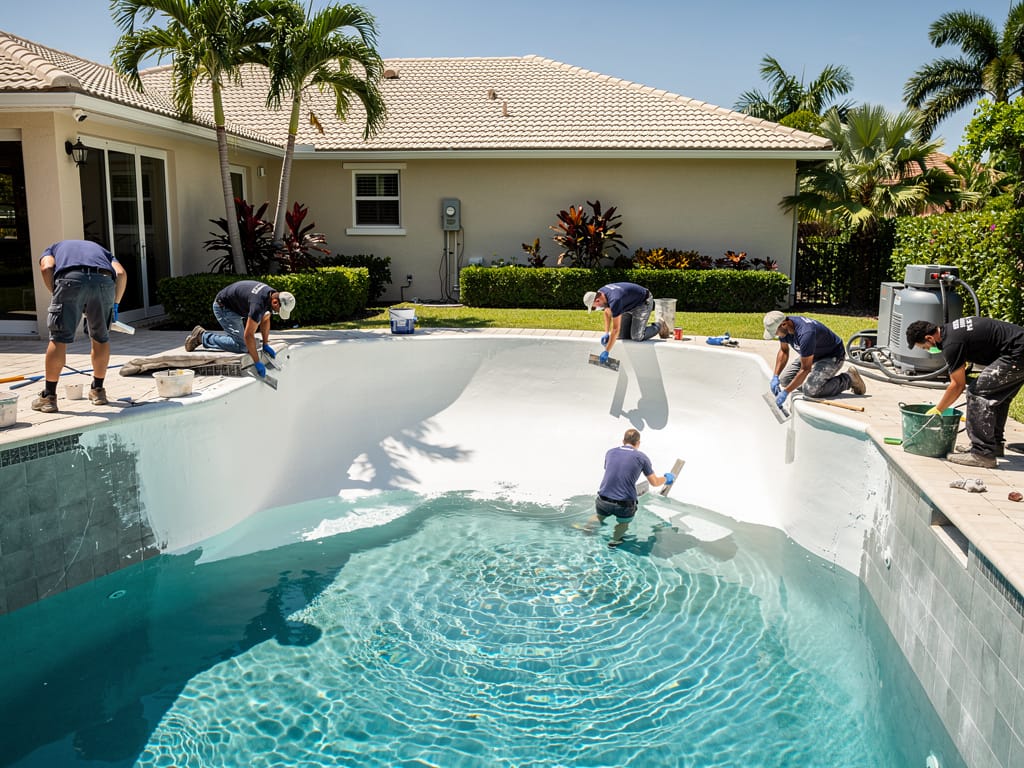
Pompano Beach’s established neighborhoods — Crystal Lake, Rock Island, McNab, and the corridors east of US-1 that developed through the 1960s, 70s, and 80s — are home to thousands of pools that predate modern pool surface technology. These pools were typically finished in white marcite (basic Portland cement plaster), which is durable but not permanent. In Florida’s climate, with its aggressive water chemistry demands and high UV exposure, plaster surfaces have a finite lifespan.
At Pool Service Fort Lauderdale, we see aging pool surfaces throughout Pompano Beach regularly. This guide explains how to evaluate your pool’s condition, what resurfacing options work best for Pompano’s specific water chemistry, and what to expect during the process.
How Long Does Pool Plaster Last in Pompano Beach?
Industry estimates typically cite 10-15 years for pool plaster. In Pompano Beach and the broader Broward County area, that window is shorter — expect 8-12 years under normal conditions, 6-10 years with aggressive water chemistry history.
Broward County’s municipal water supply is moderately hard (calcium hardness typically 200-350 ppm when delivered), and the high evaporation rate in South Florida means calcium and mineral concentrations in pool water climb over time. Plaster surfaces repeatedly exposed to low-pH water (which etches the surface) or heavy scaling (high pH and high calcium saturation) deteriorate faster than surfaces maintained in a well-balanced chemical range.
For homeowners who inherited a pool in Crystal Lake or Rock Island with no clear maintenance history, the surface age may be unknown. Physical assessment is the only reliable way to determine resurfacing need.
Signs Your Pompano Beach Pool Needs Resurfacing
Rough, Sandpaper-Like Texture
Run your hand along the pool wall below the waterline. New plaster is smooth. If the surface feels like medium-grit sandpaper, the plaster has been significantly etched by chemical imbalance and calcium leaching. This texture scratches feet and arms during normal pool use and is a reliable indicator of surface degradation that patching won’t address.
Persistent Staining That Won’t Respond to Acid Washing
Plaster surfaces develop staining over time from minerals, metals in the water (iron, copper from corroding equipment), and organic material (tannins from leaves, algae pigment). Most surface staining can be addressed with professional acid washing — a controlled dilute muriatic acid wash applied to the drained pool surface.
However, acid washing is a surface removal process. Once a surface has been acid washed multiple times, it becomes too thin to safely acid wash again. If your pool staining isn’t responding to acid washing, or your contractor tells you another acid wash would compromise the surface thickness, resurfacing is the appropriate next step.
Visible Pitting and Crazing
Pitting appears as small pockmarks in the surface, typically caused by sustained low pH or low calcium hardness that draws minerals directly from the plaster. Crazing is a network of fine surface cracks often caused by the pool being drained improperly or by incorrect water chemistry during initial plaster curing decades ago.
Both conditions create rough texture, harbor algae in their crevices, and indicate structural surface compromise. They cannot be patched effectively at scale — resurfacing is the appropriate remedy.
Chronic Cloudy Water Despite Balanced Chemistry
When a pool plaster surface deteriorates significantly, it begins to leach calcium and other minerals directly into the water, continuously disrupting chemistry balance. If you’re chasing cloudy water week after week despite correct chemical readings, the surface itself may be contributing to the turbidity. This is an advanced sign of surface failure.
Resurfacing Options for Pompano Beach Pools
Basic White Plaster (Marcite)
The original finish on most Crystal Lake-era pools, white marcite (Portland cement with marble dust aggregate) remains the lowest-cost resurfacing option. Typical cost: $4,500-$7,500 for a standard 15,000-18,000 gallon residential pool. Lifespan: 8-12 years in Broward’s water chemistry environment.
White plaster gives the classic pool appearance but is the softest and most chemical-sensitive surface. It requires careful water chemistry management — particularly calcium hardness and pH — to avoid premature scaling or etching. For homeowners who are diligent about chemistry maintenance, it’s a cost-effective option.
Quartz Aggregate (Bead or Float Finish)
Quartz aggregate surfaces blend Portland cement with crushed quartz crystals, producing a harder, more durable finish than basic plaster. The quartz adds significant hardness and resistance to chemical etching. Popular options include Diamond Brite, Sunstone, and similar products offered by Florida surface contractors.
Typical cost: $6,500-$10,000. Lifespan: 12-18 years in Broward County conditions. For most Crystal Lake and Rock Island homeowners who want a significant durability upgrade without the premium price of pebble finishes, quartz aggregate represents the best value proposition.
Pebble Aggregate (Pebble Tec and Similar)
Pebble finishes embed small river pebbles or glass beads into a cement matrix, creating the hardest, most durable, and most visually distinctive pool surface available. The aggregate is significantly harder than cement or quartz, making pebble surfaces highly resistant to etching and staining.
Typical cost: $9,000-$15,000+. Lifespan: 20-25 years under good maintenance conditions. In Pompano Beach’s hard water environment, pebble aggregate is the most resilient long-term choice for homeowners who want maximum surface lifespan before the next resurfacing cycle.
What the Resurfacing Process Looks Like
A standard residential pool resurfacing in Pompano Beach takes 5-8 days from drain to swim-ready:
- Pool is drained (6-8 hours)
- Old surface is pressure-washed and chipped where adhesion is compromised
- Structural cracks are repaired; plumbing fittings checked and replaced if needed
- New surface material is applied (hand trowel for plaster; spray-applied for pebble and quartz aggregate)
- Pool is filled with fresh water immediately after application
- Startup chemistry process takes 3-7 days — frequent brushing during the first week removes plaster dust and alkalinity levels are gradually adjusted
During the first 30 days after resurfacing, careful water chemistry maintenance is critical to ensure proper curing and prevent premature scaling or staining on the new surface.
Pool Service Fort Lauderdale provides startup chemistry management for newly resurfaced pools throughout Pompano Beach — ensuring your new surface gets the careful water balance it needs in the first critical weeks. Call (954) 501-2754 or see our Pompano Beach service page. All service areas are listed at poolservicefortlauderdale.us.
Frequently Asked Questions
{
“@context”: “https://schema.org”,
“@type”: “FAQPage”,
“mainEntity”: [
{
“@type”: “Question”,
“name”: “How long does pool plaster last in Pompano Beach, FL?”,
“acceptedAnswer”: {
“@type”: “Answer”,
“text”: “In Pompano Beach’s hard water environment and South Florida climate, pool plaster typically lasts 8 to 12 years — shorter than the 15-year estimates sometimes cited in softer-water markets. Pools with poorly managed water chemistry may need resurfacing sooner.”
}
},
{
“@type”: “Question”,
“name”: “How do I know if my Crystal Lake pool needs resurfacing?”,
“acceptedAnswer”: {
“@type”: “Answer”,
“text”: “Key signs: rough or sandpaper-like surface texture, persistent staining that does not respond to acid washing, visible pitting or crazing (surface cracking network), or water that continually turns cloudy despite balanced chemistry. Any of these indicate the surface is near or past the end of its useful life.”
}
},
{
“@type”: “Question”,
“name”: “What does pool resurfacing cost in Pompano Beach?”,
“acceptedAnswer”: {
“@type”: “Answer”,
“text”: “Basic white plaster: $4,500-$7,500. Quartz aggregate (Diamond Brite, Sunstone): $6,500-$10,000. Pebble aggregate (Pebble Tec and similar): $9,000-$15,000+. Prices depend on pool size, surface material, and extent of repairs needed before resurfacing.”
}
},
{
“@type”: “Question”,
“name”: “How long does pool resurfacing take in Pompano Beach?”,
“acceptedAnswer”: {
“@type”: “Answer”,
“text”: “Typically 5-8 days from draining to swimming-ready, including the application and initial chemistry startup process. The first 30 days after resurfacing require careful water chemistry management to ensure proper surface curing.”
}
},
{
“@type”: “Question”,
“name”: “Which pool surface material is best for Pompano Beach’s hard water?”,
“acceptedAnswer”: {
“@type”: “Answer”,
“text”: “Pebble aggregate surfaces are the most durable option for Broward County’s moderately hard water, as the natural stone material resists the etching and scaling that plaster surfaces are prone to. Quartz aggregate is a mid-range option that significantly outperforms basic plaster in hard water environments.”
}
}
]
}
How long does plaster last in Pompano Beach? 8-12 years typically in Broward County’s hard water — shorter than softer-water markets.
What are the signs I need resurfacing? Rough texture, staining that won’t respond to acid wash, visible pitting or crazing, chronic cloudy water.
What does it cost? Plaster: $4,500-$7,500. Quartz: $6,500-$10,000. Pebble: $9,000-$15,000+.
How long does it take? 5-8 days from drain to swim-ready, with careful chemistry startup management for 30 days after.
Which surface is best for hard water? Pebble aggregate is most durable; quartz aggregate is the mid-range value option for Broward’s water chemistry.