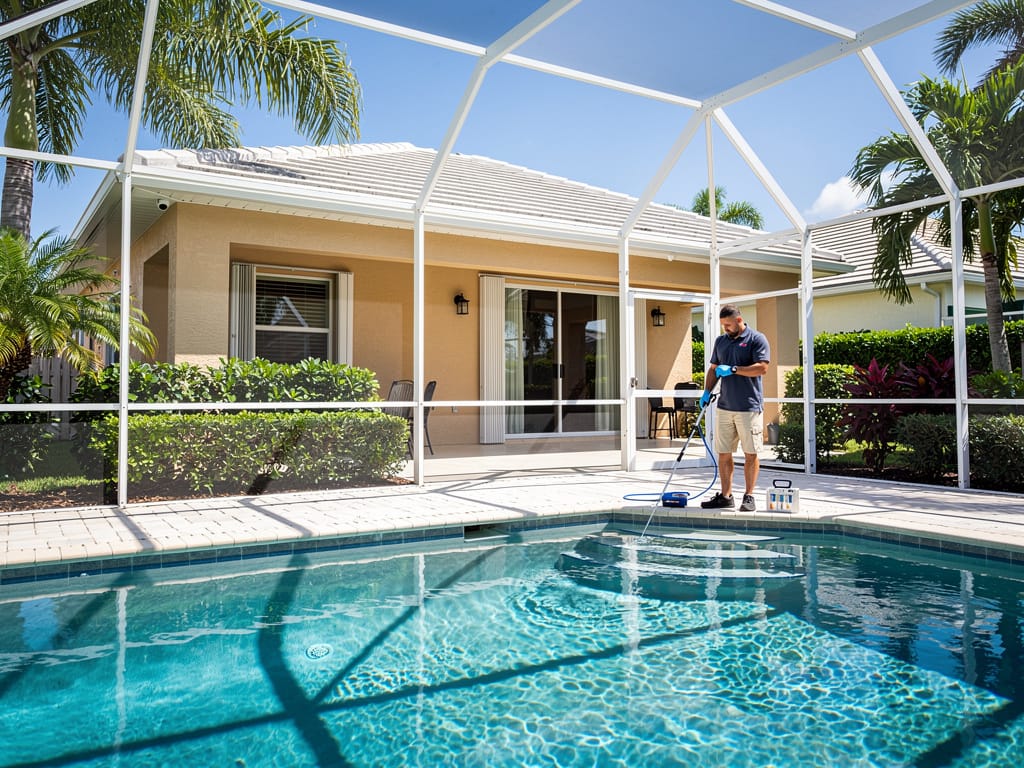
Pool screen enclosures — “pool cages” in local terminology — are a defining feature of Pompano Beach backyard living. They keep insects out, reduce debris in the pool, provide partial UV shade, and are almost universally present on older Pompano Beach residential pools. In Palm Aire, Crystal Lake, Ramblewood Estates, and throughout the city’s established neighborhoods, a pool without a screen enclosure is the exception.
But screen enclosures are not maintenance-free. In Pompano Beach’s coastal climate — UV exposure, salt air, tropical storms, and year-round humidity — screen fabric and aluminum frames both face accelerated degradation compared to what manufacturers rate in less demanding environments.
How Long Do Pool Screen Enclosures Last in Pompano Beach?
Standard screen fabric (fiberglass-based, typical in residential Pompano Beach enclosures) has a rated service life of 10–15 years. In practice, Pompano Beach’s environment — UV intensity, salt air exposure especially in eastern neighborhoods, and the mechanical stress of summer storm wind events — typically produces visible screening degradation within 7–10 years. Signs the screen fabric is due for replacement:
- Visible holes or tears (often from storm debris, tree branches, or birds)
- Screen that sags or billows rather than sitting taut in its frame
- Discoloration — original light grey screens turning dark or developing patchy discoloration
- Fibers that crumble or powder when touched (UV degradation)
- Increased insect entry despite intact-looking screen (microscopic failures in degraded screen material)
Screen Types Available for Pompano Beach Enclosures
Standard fiberglass screen (18×14 mesh): The most common and most affordable option. Good insect exclusion, adequate UV reduction. Typical cost for re-screening a standard enclosure: $800–$1,500. Service life in Pompano Beach: 7–10 years.
Pet-resistant screen (PetScreen): Heavy-duty vinyl-coated polyester designed for areas with dog doors or active pets. Approximately 7× stronger than standard screen. More expensive ($1,200–$2,200 for re-screening) but significantly longer-lasting in households with dogs that push against the screen.
Solar/privacy screen (80–90% shade): Denser weave that blocks significantly more UV and provides visual privacy. Popular in Pompano Beach for west-facing enclosures that get intense afternoon sun. Costs similar to standard screen; the trade-off is reduced airflow and a darker interior ambiance.
No-see-um screen (20×20 mesh): Finer mesh that excludes the tiny biting midges (“no-see-ums”) common in South Florida coastal areas. Notably reduces airflow compared to standard screen, which can make the enclosed area noticeably warmer. Worth the airflow trade-off in Pompano Beach neighborhoods near waterways where no-see-um pressure is higher.
Frame Maintenance and Storm Damage Repair
Screen enclosure frames are typically extruded aluminum — lightweight, non-rusting, and appropriate for Florida’s environment. However, Pompano Beach’s salt air accelerates aluminum oxidation, which manifests as white powdery deposits on frame members (similar to how calcium appears on pool tile). This oxidation is cosmetic but can weaken the surface coating over time.
Storm damage to pool cage frames in Pompano Beach typically falls into three categories:
Screen spline and anchor damage: The rubber spline that holds screen in the frame channels can be blown out by high winds. Spline replacement is the least expensive repair — a DIY-accessible fix using a spline roller tool and replacement spline cord. Cost: $20–$80 in materials, or $100–$200 for professional service.
Cross-member bending or detachment: Mid-level horizontal or diagonal frame members can be bent or disconnected by falling debris or excessive wind load. Frame member replacement runs $200–$500 per section depending on accessibility and extent of damage.
Major structural failure: Rare but significant — when a large tree falls on an enclosure or hurricane-force winds collapse a frame section, the repair can escalate to $1,000–$5,000+ or full enclosure replacement. Document all storm damage with photos immediately for insurance purposes.
Broward County Building Code Requirements
Pool screen enclosures in Pompano Beach are subject to Broward County building code requirements, which specify minimum wind load ratings for enclosure structures. Any new enclosure installation or significant repair requires a permit and must meet the current High Velocity Hurricane Zone (HVHZ) requirements that apply to Broward County.
This matters practically when choosing a re-screening or repair contractor: work done without permits on a structure that doesn’t meet code can create issues at property sale (buyers’ inspectors check permit history) and insurance claims. Use licensed contractors who pull permits for structural enclosure work.
Pool Service and Screen Enclosures: The Connection
A well-maintained screen enclosure significantly reduces pool maintenance work and chemical consumption — it keeps out leaves, debris, birds, and insects that add organic load to the water. Pool owners who defer enclosure re-screening and end up with a deteriorating screen often see increased pool service frequency needs as debris input rises.
We encounter enclosure-related pool issues frequently in Pompano Beach. For pool maintenance service that accounts for your specific enclosure condition, contact Pool Service Fort Lauderdale throughout Pompano Beach at (954) 501-2754.
Frequently Asked Questions
How much does re-screening a pool enclosure cost in Pompano Beach?
Re-screening a standard residential pool enclosure in Pompano Beach runs $800–$2,500 depending on enclosure size, screen type selected, and whether any frame repairs are needed simultaneously. Standard-screen rescreening on a typical 12×24 foot pool cage is typically $900–$1,400. Larger enclosed pool areas or premium screen types add cost.
Can I patch screen enclosure holes instead of re-screening the whole enclosure?
Screen patch kits are available and work for small isolated holes in otherwise sound screen fabric. However, if screen fabric is showing general UV degradation (sagging, powdering, widespread small holes), patches are a short-term fix. Patching degraded fabric doesn’t address the underlying UV failure — the rest of the screen will continue to deteriorate. Full re-screening is the right answer when general fabric condition is poor.
Do I need a permit to re-screen my Pompano Beach pool enclosure?
Re-screening only (replacing screen fabric in existing frames with no structural changes) typically does not require a permit in Broward County. Frame repairs that involve replacing structural members may require permits depending on scope. Full enclosure replacement or significant structural modification requires permits. Ask your contractor specifically about permit requirements for your planned scope of work.
My screen enclosure frame is leaning slightly after a storm. Is this dangerous?
A leaning or racked enclosure frame indicates that the structural anchoring or a corner connection has been compromised. This is a structural issue, not just a cosmetic one — a compromised frame is more vulnerable to failure in subsequent wind events. Have a licensed screen enclosure contractor inspect and assess the structural integrity before the next storm season. Do not leave a structurally compromised enclosure unaddressed through hurricane season.
Should I remove my pool screen panels before a hurricane?
Building codes in Broward County generally do not require panel removal before storms, and the current design philosophy for HVHZ-compliant enclosures is to leave them in place (they’re engineered to withstand design wind loads). However, older enclosures not built to current code standards may not withstand hurricane-force winds. If your enclosure is pre-2004 (pre-updated building code requirements) and shows signs of age or structural compromise, consult with a licensed contractor before storm season about whether removal or supplemental anchoring is advisable.