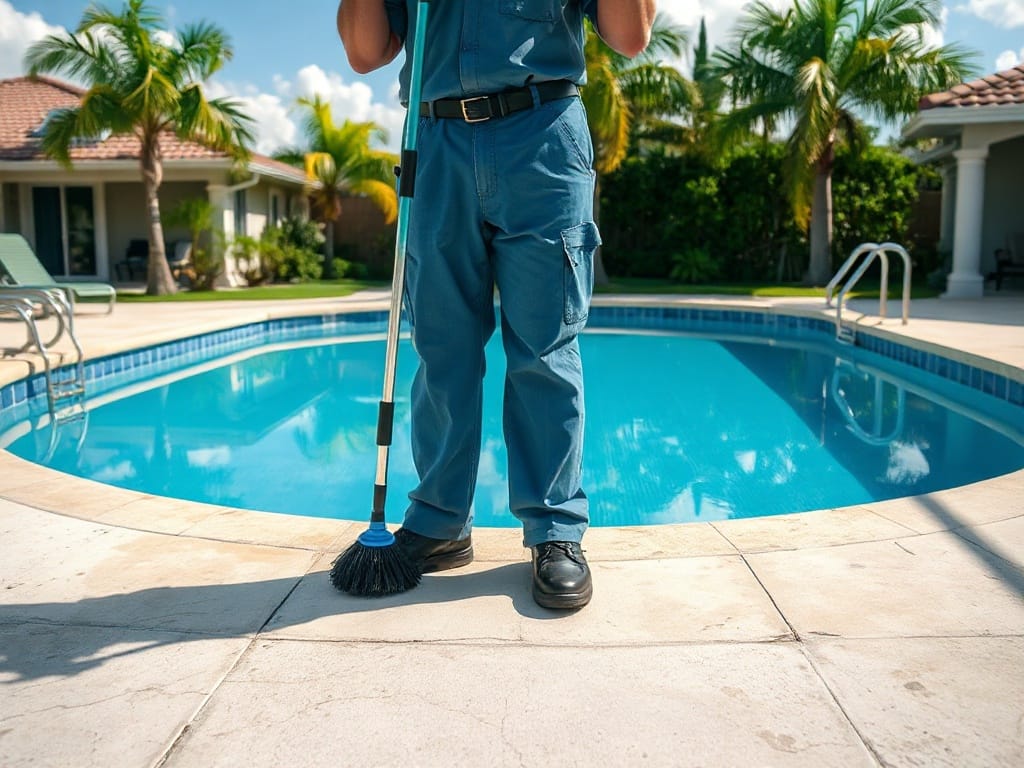
Pembroke Pines is one of Broward County’s largest cities by population — a broad, planned suburban community in southwestern Broward spanning from the Florida Turnpike to the western conservation areas near the Everglades. Its residential neighborhoods range from the established subdivisions of its eastern zones, built through the 1970s and 1980s, to the newer planned communities of Chapel Trail, Silver Lakes, and the areas west of I-75 developed through the 1990s and 2000s. Private pool ownership is widespread throughout Pembroke Pines, and the city’s mix of construction eras means pool service needs span from older installations with aging equipment to modern pools with full automation and saltwater systems. For Pembroke Pines homeowners, pool service Pembroke Pines FL means consistent weekly chemistry management calibrated to Broward’s hard water, equipment awareness matched to the specific vintage and configuration of each pool, and the year-round service discipline South Florida’s climate demands. This guide covers what Pembroke Pines pool owners need to know to maintain their pool properly.
What Professional Pool Service Covers in Pembroke Pines
A complete weekly service visit in Pembroke Pines includes full water chemistry testing — free chlorine, combined chlorine, pH, total alkalinity, calcium hardness, cyanuric acid, and salt for saltwater systems — with all parameters adjusted to target before the technician leaves. Physical service covers surface skimming, wall and step brushing, floor vacuuming or automatic cleaner inspection, skimmer and pump basket emptying, filter pressure check, and a visual equipment inspection. For pools with spas, the spa is tested and adjusted independently given its different chemistry dynamics under heating.
Items billed separately from the weekly rate include equipment repairs, filter media replacement, algae remediation requiring heavy chemical treatment and follow-up visits, and post-storm recovery. Clarifying scope and billing in writing before starting service prevents the most common disputes about what the monthly rate includes.
Water Chemistry in Pembroke Pines: Hard Water Across All Neighborhoods
Pembroke Pines pool water comes from Broward County’s Biscayne Aquifer — hard, calcium-rich water that creates scale formation risk on tile lines, plaster surfaces, and salt cell plates throughout the city regardless of neighborhood or construction era. Calcium hardness should be maintained between 200 and 400 ppm. Summer evaporation in Pembroke Pines’ inland western location drives calcium concentration upward in pools that do not receive periodic dilution through partial drain-and-refill cycles. The endpoint of unmanaged calcium buildup is visible scale on pool surfaces and equipment — an aesthetic and mechanical problem that is far easier to prevent through chemistry management than to correct after it appears.
pH management is the weekly chemistry anchor. Pembroke Pines pools should be maintained between 7.4 and 7.6. The Biscayne Aquifer’s alkaline source water and aeration from filtration equipment consistently push pH upward, requiring weekly acid additions in most accounts. Pools with spas, water features, or extended daily automation run times experience pH rise more quickly. High pH reduces chlorine effectiveness, accelerates scale formation, and causes swimmer discomfort even when the free chlorine test result looks adequate.
Cyanuric acid tracking is particularly important in Pembroke Pines’ older eastern neighborhoods where traditional stabilized tablet chlorination remains the norm. CYA builds steadily with each tablet dissolution and does not break down under pool conditions. Once it climbs above 80 ppm — which happens within one to two years of continuous tablet use without dilution — chlorine effectiveness drops substantially. A service company that tracks CYA quarterly and recommends partial drain timing proactively is managing the pool’s chemistry future, not just its current weekly readings.
Eastern Pembroke Pines: Older Pool Stock and Equipment Age
Pembroke Pines’ eastern neighborhoods — developed primarily through the 1970s and 1980s — contain a significant share of the city’s older pool installations. Pools from this era present the same equipment age and plaster condition considerations common throughout central and northern Broward’s older residential stock: single-speed pumps operating beyond designed service life, filter media that may not have been replaced in years, plaster surfaces that have deteriorated to the rough, porous stage that makes algae attachment more persistent, and automation systems that range from none at all to early-generation units no longer supported by manufacturers.
A service company beginning a relationship with an eastern Pembroke Pines pool should conduct an honest first-visit equipment assessment — documenting pump age and condition, filter media age, plaster condition, and any equipment configuration concerns — and communicating clearly what weekly service can maintain versus what requires capital investment in the pool system. This is the foundational service value for older pool accounts: an honest picture of where the pool stands, not a standard service start without looking closely at what the pool actually needs.
Western Pembroke Pines: Chapel Trail, Silver Lakes, and Newer Communities
The western communities of Pembroke Pines — Chapel Trail, Silver Lakes, Pembroke Falls, and the neighborhoods developed through the 1990s and 2000s west of I-75 — represent a different pool service profile than the city’s eastern zones. These are newer installations with modern equipment: variable-speed pumps, saltwater chlorination systems, cartridge filter housings, and automation controllers that were standard features of the construction era rather than upgrades. Pool shells from this period are in their first or second resurfacing cycle, and equipment is generally younger than in eastern Pembroke Pines.
The proximity of western Pembroke Pines to conservation areas creates the same elevated organic and phosphate loading that affects Parkland — windblown debris from wetland buffer areas introduces phosphates at a higher rate than in more urbanized eastern Broward communities. Quarterly phosphate testing and removal treatment is appropriate for western Pembroke Pines pools near the conservation boundary. Canal-backed lots throughout the western communities carry the same canal-adjacent debris and phosphate loading profile seen throughout Broward’s western residential zones.
Pembroke Pines Neighborhoods We Serve
Chapel Trail is one of western Pembroke Pines’ most established planned communities — a large single-family neighborhood with homes built primarily through the 1990s. Pools in Chapel Trail are mostly late 1990s to early 2000s installations with modern equipment, including saltwater systems and variable-speed pumps in many updated accounts.
Silver Lakes in southwestern Pembroke Pines is a master-planned community near Sheridan Street, with residential product ranging from townhomes to larger single-family homes. Private pool configurations throughout Silver Lakes reflect the community’s 1990s and 2000s construction era.
Pembroke Falls along the Pembroke Road corridor features established single-family homes with private pools in a range of construction vintages. The community’s tree canopy in more mature sections contributes to higher organic debris loads in skimmer baskets than in more recently developed areas.
East Pembroke Pines neighborhoods along Flamingo Road and toward the Hollywood border contain the city’s oldest residential construction, with the older pool equipment and plaster conditions that require honest assessment and proactive communication from service companies working these accounts.
We serve pool owners throughout Pembroke Pines, including Chapel Trail, Silver Lakes, Pembroke Falls, and all residential areas in zip codes 33024, 33025, 33026, 33027, 33028, and 33029.
Hurricane Season Pool Preparation in Pembroke Pines
Pembroke Pines’ central and western Broward location provides significant buffer from direct coastal storm surge, but tropical storms and hurricanes affecting the Broward coast deliver sustained rainfall and wind well inland. Standard pre-storm protocol: lower pool water level 12 to 18 inches, add shock and triple-dose algaecide, remove all loose deck furniture and pool accessories, and shut off equipment circuit breakers. For western Pembroke Pines canal-adjacent properties, a larger water level reduction is prudent given drainage canal behavior during major rainfall events.
Post-storm recovery: test chemistry before adding chemicals, inspect equipment before restarting, schedule a service visit as soon as possible to reset chemistry before algae can establish in the warm water following storm-related chlorine dilution.
Choosing a Pool Service Company in Pembroke Pines
Florida DBPR license verification is the starting point. For eastern Pembroke Pines homeowners with older pools, ask prospective service companies whether they conduct a documented equipment condition assessment on new accounts — and whether they will communicate aging equipment concerns proactively rather than waiting for failure. For western Pembroke Pines homeowners with saltwater systems, ask about quarterly salt cell inspection protocols. Chemistry logging that makes visit records accessible to you is a service standard worth confirming before committing to a monthly program.
Pricing for weekly full-service with chemicals in Pembroke Pines runs $120 to $175 per month for standard residential pools. Pools with spas, automation, or water features run toward the upper end. Chemistry-separate pricing starts at $75 to $95 per month.
Pool Service Fort Lauderdale: Serving Pembroke Pines Year-Round
At Pool Service Fort Lauderdale, we serve Pembroke Pines pool owners from Chapel Trail to the eastern neighborhoods — older pools and newer installations, traditional chlorine systems and saltwater, screened enclosures and open decks. Chemistry is documented every visit. Equipment concerns are communicated before repair work is authorized. Contact us to discuss a service program built around your pool.
Frequently Asked Questions About Pool Service in Pembroke Pines
How often should a Pembroke Pines pool be serviced? Weekly service is the correct standard throughout Pembroke Pines. South Florida’s year-round warm water temperatures and the consistent bather load of a full-occupancy household create chemistry demand that bi-weekly service cannot manage reliably in this climate. Weekly visits also catch equipment issues early — a pump making an unusual noise, a filter pressure reading higher than normal — before they become failures during peak summer swim season.
Our Pembroke Pines pool is from the 1980s — what should the first service visit address? The first visit should include a documented assessment of pump age and condition, filter media age, plaster condition, and overall equipment configuration. A pool from the 1980s has almost certainly had at least one generation of pump replacement, but the current pump may itself be aging. Plaster from this era that has not been resurfaced is almost certainly rough and porous. Honest documentation of these conditions — and a clear conversation about what weekly service maintains versus what requires capital investment — is the most valuable thing a first service visit provides for an older Pembroke Pines account.
Does the western Pembroke Pines location near conservation areas affect pool chemistry? Yes. Properties in Chapel Trail, Silver Lakes, and the areas near the western conservation boundary accumulate higher organic and phosphate loading from windblown debris than eastern Pembroke Pines pools. Canal-adjacent lots throughout the western communities add phosphate from the waterway. Quarterly phosphate testing and removal treatment is the standard preventive protocol for these accounts. Eastern Pembroke Pines pools are less affected by this loading but still require the same basic Broward hard-water chemistry management.
What does pool service cost in Pembroke Pines? Weekly full-service with chemicals runs $120 to $175 per month for standard residential pools. Pools with spas, automation, or water features run toward the upper end. Chemistry-separate pricing starts at $75 to $95 per month. Equipment repairs and filter media replacement are billed separately.
How do I know if my Pembroke Pines pool needs a drain-and-refill? The primary trigger is cyanuric acid above 80 ppm, which reduces chlorine effectiveness to the point where algae suppression becomes difficult even with adequate chlorine levels. Secondary triggers include total dissolved solids affecting water clarity and responsiveness to chemistry corrections. CYA should be tested quarterly; in a pool using stabilized tablets continuously, it can reach the 80 ppm threshold within one to two years. Your service company should be tracking this and recommending a partial drain before the threshold is reached.
Our new Pembroke Pines saltwater pool — what maintenance does the salt system require beyond weekly chemistry? The salt cell should be inspected quarterly — removed from its housing, plates checked for calcium scale accumulation, and cleaned with dilute acid when needed. Salt levels should be tested monthly and maintained in the manufacturer’s recommended range (typically 2,700 to 3,400 ppm). The automation controller’s salt cell output setting should be reviewed seasonally and adjusted for actual cell efficiency, which declines if scale builds between cleanings. A saltwater pool that is not receiving these three maintenance practices is not being managed to its design standard.
Get Started with Pool Service in Pembroke Pines
Pembroke Pines pool owners — whether in a 1980s eastern neighborhood or a newer western community — deserve consistent, knowledgeable service that matches their pool’s specific age, configuration, and location. Contact Pool Service Fort Lauderdale today to discuss a weekly maintenance program built around your Pembroke Pines pool.